 Top, Cortical foci active during the observation of painful video clips. Bottom, Cortical foci active during the observation of disgusting video clips.
Wednesday, February 13, 2008
Painful or disgusting? - ask parietal and cingulate cortex
Benuzzi et al. find brain activity specific for disgusting scenes in the posterior cingulate cortex. Signal changes in perigenual cingulate and left anterior insula are linearly related to the perceived unpleasantness. Painful scenes selectively induce activation of left parietal foci including the parietal operculum, the postcentral gyrus, and adjacent portions of the posterior parietal cortex. Their abstract is here, and here is one figure from the paper:
 Top, Cortical foci active during the observation of painful video clips. Bottom, Cortical foci active during the observation of disgusting video clips.
Top, Cortical foci active during the observation of painful video clips. Bottom, Cortical foci active during the observation of disgusting video clips.
Are today's young people really more narcissistic?
A comment by Trzesniewski et al. on the idea that today's young people have inflated impressions of themselves compared with previous generations. They:
..investigated secular trends in narcissism and self-enhancement over the past three decades. Despite recent claims about the impact of the "self-esteem movement" on the current generation of young people, we found no evidence that college students' scores on the Narcissistic Personality Inventory increased from the 1980s through 2007 (N = 26,867), although we did find small changes in specific facets of narcissism. Similarly, we found no evidence that high school students' level of self-enhancement, defined by the discrepancy between their perceived intelligence and their actual academic achievements, increased from 1976 to 2006 (N = 410,527). These results cast doubt on the belief that today's young people have increasingly inflated impressions of themselves compared with previous generations.
Tuesday, February 12, 2008
100% accuracy in automatic face detection.
A problem with the automatic face recognition systems being tested in some airport security screening systems is that none can cope with the kind of image variability encountered in the real world. Jenkins and Burton have used a simple averaging technique to increase the accuracy of an industry standard face-recognition algorithm from 54% to 100%. They averaged the images from 20 different photographs for each of 25 male celebrities who were also in a large public online database of 31,077 photographs of famous faces, comprising an average of nine different photos for each of 3628 celebrities - these images were highly variable in their quality and covered a wide range of lighting conditions, facial expressions, poses, and age. Using the FaceVACS (Cognitec Systems GmbH, Dresden, Germany)industry standard face-recognition system that has been widely adopted, they fed this database their averaged images for each of 25 male celebrities who were also in the online database (excluding photos that were both in their sample and in the database). With the averaged images, the database returned the correct identification 100% of the time. When individual photographs were presented to the database the correct identification was returned only ~50% of the time. From their text:
We demonstrated this improvement with a commercially available algorithm and an online face database over which we had no control. We suggest that image averaging enhances performance by stabilizing the face image. With standard photographs, the match tends to be dominated by aspects of the image that are not diagnostic of identity (e.g., lighting and pose). Averaging together multiple photographs of the same person dilutes these transients while preserving aspects of the image that are consistent across photos. The resulting images capture the visual essence of an individual's face and elevate machine performance to the standard of familiar face recognition in humans. It would be technically straightforward to incorporate an average image into identification documents. Doing so would greatly reduce the incidence of face-recognition errors and raise the prospect of a viable automatic face-recognition infrastructure.
Example photographs of Bill Clinton and their average (right). [Image 1, photo by Marc Nozell (www.flickr.com/photos/marcn/534512066); image 2, photo by Roger Goun (www.flickr.com/photos/sskennel/829574139); image 20, photo by Nelson Pavlosky (www.flickr.com/photos/skyfaller/26752190). All photos were used under a Creative Commons license.] Different pictures of a single face can vary enormously, making automatic recognition difficult. Averaging together multiple photos of the same face stabilizes the image, improving performance dramatically.

Could a presidential debate on science backfire?
An interesting essay by David Goldston argues that a debate on science by presidential candidates might do more harm than good.
Monday, February 11, 2008
Sharing posts, bookmarking, related content, etc.
 My friend Kelly Doering who does internet consulting and website design, has just helped me dink around a bit with the mechanics of MindBlog. You will now notice a single icon after each post that lets you bookmark or share a post using more than 30 of the major services like StumbleUpon, Reddit, Del.icio.us, Reddit, etc. If you haven't already, you should try the sphere:related content link that may appear just below the bookmark icon with a post that interests you. It sometimes does a very nice job of bringing up related material on other websites.
Your brain is shrinking sooner than you thought...
Here is a chilling little item from Pieperhoff et al., who examined MRI images of the brains of 51 healthy male subjects from 18 to 51 years old. They found age-related volume declines in circumscribed brain regions: the sensorimotor system, encompassing the cerebellum, thalamus, somatosensory and motor cortices, and the prefrontal system, encompassing the anterior cingulate as well as the lateral and basomedial frontal cortices. Regions belonging to other functional systems, such as the auditory system or the visual system, did not show such age–volume relationships.
 Horizontal sections of the reference brain with statistical maps, showing the t values of age-related volume decline and increase. t values were calculated by a two-sided t test for a linear regression in the voxels of the LVR maps, depending on age.
 Horizontal sections of the reference brain with statistical maps, showing the t values of age-related volume decline and increase. t values were calculated by a two-sided t test for a linear regression in the voxels of the LVR maps, depending on age.
The incubator of suicide attacks - Fictive Kinship
 Anthropologist Scott Atran (Author of "In Gods We Trust") writes an essay laying out his change of mind about why people are willing to die for a cause. He has moved from thinking that individual cognition and personality, influences from broad socio-economic factors, and degree of devotion to religious or political ideology were determinant, to seeing friendship and others aspects of small group dynamics, especially acting together, trumping most everything else.
...people don't kill and die simply for a cause. They do it for friends — campmates, schoolmates, workmates, soccer buddies, body-building buddies, pin-ball buddies — who share a cause. Some die for dreams of jihad — of justice and glory — but nearly all in devotion to a family-like group of friends and mentors, of "fictive kin." (Atran gives a number of explicit examples of such groups)
... it is no accident that nearly all religious and political movements express allegiance through the idiom of the family — Brothers and Sisters, Children of God, Fatherland, Motherland, Homeland, and the like. Nearly all such movements require subordination, or at least assimilation, of any real family (genetic kinship) to the larger imagined community of "Brothers and Sisters." Indeed, the complete subordination of biological loyalty to ideological loyalty for the Ikhwan, the "Brotherhood" of the Prophet, is Islam's original meaning, "Submission."
...Social psychology tends to support the finding that "groupthink" often trumps individual volition and knowledge, whether in our society or any other. But for Americans bred on a constant diet of individualism the group is not where one generally looks for explanation.
Sunday, February 10, 2008
Back in Wisconsin....
I am SO grateful that I am able to be a snowbird, now in Ft. Lauderdale. Here is a picture of my home in Wisconsin, where more snow has fallen this winter than in any year since recordings of snowfall began in the 19th century.


Friday, February 08, 2008
MindBlog's second anniversary
I just realized that today is MindBlog's second anniversary. It is hard for me to believe that there have been 902 postings since Feb. 8, 2006. Back then I had just read an article in the New York Times on the rising blogging fad and thought to myself, "Since I am reading and thinking about all this stuff anyway, I might as well take the small extra effort to clean it up a bit and present it." The extra effort turns out to be not so small. The number of subscribers to the MindBlog feed has risen to over 400, and on a given day there are 300-1,500 views of individual postings. Being a borderline (or maybe not even borderline) obsessive-compulsive, I've become yoked to the lockstep production of at least two blog postings a day. The retired professor isn't feeling all that retired..... Anyway, I am grateful for the kind emails I have received, and I've enjoyed responding to requests for further analysis or information.
Middle Age Misery
 Blanceflower and Oswald have done a fascinating study (PDF here) showing that across cultures, from Azerbaijan to Zimbabwe, we are happiest towards the beginning and end of our lives, leaving us most miserable in middle years between 40 and 50. For both men and women in the UK, the probability of depression peaked at around the age of 44. In the US, men were most likely to be unhappiest at 50, while for women the age was 40. The cause of the apparent U-shaped curve is not known. Quoting Oswald (the graphic is from his website):
...one possibility is that individuals learn to adapt to their strengths and weaknesses, and in mid-life quell their infeasible aspirations. Another possibility is that cheerful people live systematically longer...A third possibility is that older people might compare their lives with their peers'. Seeing their friends die could mean people value their remaining years more highly...It looks from the data like something happens deep inside humans. For the average person in the modern world, the dip in mental health and happiness comes on slowly, not suddenly in a single year...Only in their 50s do most people emerge from the low period. But encouragingly, by the time you are 70, if you are still physically fit then on average you are as happy and mentally healthy as a 20-year-old. Perhaps realising that such feelings are completely normal in mid-life might even help individuals survive this phase better.
The World in the Brain
Here are a few excerpts from a brief essay by Steve Kosslyn in the Edge.org series "What have you changed your mind about?
There is a really elegant solution to the problem that the genes can't know in advance how far apart the eyes will be. To cope with this problem, the genes overpopulate the brain, giving us options for different environments (where the distance between eyes and length of the arms are part of the brain's "environment," in this sense), and then the environment selects which connections are appropriate, and the useless connections are pruned away. In other words, the genes take advantage of the environment to configure the brain.A similar, more brief, response to the edge.org question was offered by Jeffrey Epstein, A science Philanthropist:
This overpopulate-and-select mechanism is not limited to stereovision. In general, the environment sets up the brain (above and beyond any role it may have had in the evolution of the species), configuring it to work well in the world a person inhabits. And by environment I'm including everything outside the brain — including the social environment. For example, it's well known that children can learn multiple languages without an accent and with good grammar, if they are exposed to the language before puberty. But after puberty, it's very difficult to learn a second language so well.
This perspective leads me to wonder whether we can assume that the brains of people living in different cultures process information in precisely the same ways. Yes, people the world over have much in common (we are members of the same species, after all), but even small changes in the wiring may lead us to use the common machinery in different ways. If so, then people from different cultures may have unique perspectives on common problems, and be poised to make unique contributions toward solving such problems... to understand how any specific brain functions, we need to understand how that person was raised, and currently functions, in the surrounding culture.
The question presupposes a well defined "you", and an implied ability that is under "your" control to change your "mind". The "you" I now believe is distributed amongst others (family friends , in hierarchal structures,) i.e. suicide bombers, believe their sacrifice is for the other parts of their "you". The question carries with it an intention that I believe is out of one's control. My mind changed as a result of its interaction with its environment. Why? because it is a part of it.
Thursday, February 07, 2008
Nicholas Humphrey on consciousness...
 I have always admired Nicholas Humphrey's perspectives on sensing and consciousness, and referenced his ideas on evolution of the nervous system in my Biology of Mind book. He has now written a nice essay in Seed Magazine, and I strongly recommend that you read it. He argues against the idea:
...that consciousness must be helping us do something that we can do only by virtue of being conscious, in the way that, say, a bird can fly only because it has wings, or you can understand this sentence only because you know English.Rather,
...I want to suggest the role of phenomenal consciousness may not be like this at all. Its role may not be to enable us to do something we could not do otherwise, but rather to encourage us to do something we would not do otherwise: to make us take an interest in things that otherwise would not interest us, or to mind things we otherwise would not mind, or to set ourselves goals we otherwise would not set.
I will not hold back from telling you my own main conclusion from a lifetime's interest in what consciousness does. I may shock you by what may seem the naivety of my conclusion (I've shocked myself): I think the plain and simple fact is that consciousness—on various levels—makes life more worth living.
We like being phenomenally conscious. We like the world in which we're phenomenally conscious. We like ourselves for being phenomenally conscious. And the resulting joie de vivre, the enchantment with the world we live in, and the enhanced sense of our own metaphysical importance have, in the course of evolutionary history, turned our lives around.
Added note 11/16/08: I just found a later published version of this article. PDF here.
Evolutionary psychology on steroids...
Here are Steven Pinker's comments on recent data showing that the human genome has undergone strong recent selection, rendering invalid evolutionary psychology's initial assumption that human evolution halted 10,000 - 50,000 years ago.
New results from the labs of Jonathan Pritchard, Robert Moyzis, Pardis Sabeti, and others have suggested that thousands of genes, perhaps as much as ten percent of the human genome, have been under strong recent selection, and the selection may even have accelerated during the past several thousand years. The numbers are comparable to those for maize, which has been artificially selected beyond recognition during the past few millennia.
If these results hold up, and apply to psychologically relevant brain function (as opposed to disease resistance, skin color, and digestion, which we already know have evolved in recent millennia), then the field of evolutionary psychology might have to reconsider the simplifying assumption that biological evolution was pretty much over and done with 10-000 — 50,000 years ago.
And if so, the result could be evolutionary psychology on steroids. Humans might have evolutionary adaptations not just to the conditions that prevailed for hundreds of thousands of years, but also to some of the conditions that have prevailed only for millennia or even centuries. Currently, evolutionary psychology assumes that any adaptation to post-agricultural ways of life are 100% cultural.
Though I suspect some revisions will be called for, I doubt they will be radical, for two reasons. One is that many aspects of the human (and ape) environments have been constant for a much longer time than the period in which selection has recently been claimed to operate. Examples include dangerous animals and insects, toxins and pathogens in spoiled food and other animal products, dependent children, sexual dimorphism, risks of cuckoldry and desertion, parent-offspring conflict, risk of cheaters in cooperation, fitness variation among potential mates, causal laws governing solid bodies, presence of conspecifics with minds, and many others. Recent adaptations would have to be an icing on this cake -- quantitative variations within complex emotional and cognitive systems.
The other is the empirical fact that human races and ethnic groups are psychologically highly similar, if not identical. People everywhere use language, get jealous, are selective in choosing mates, find their children cute, are afraid of heights and the dark, experience anger and disgust, learn names for local species, and so on. If you adopt children from a technologically undeveloped part of the world, they will fit in to modern society just fine. To the extent that this is true, there can't have been a whole lot of uneven psychological evolution postdating the split among the races 50-100,000 years ago (though there could have been parallel evolution in all the branches).
Wednesday, February 06, 2008
Staying a Step Ahead of Aging
Being a person who exercises daily at moderate levels, the New York Times article with the title of this post was not a welcome read. It argues that blowing yourself away every few days is a better deal - i.e., that exercising intensely is more important than exercising often. I've always been suspicious of the 'no pain, no gain' school of exercise, thinking that while it might work for younger folks, it might not be taking enough account of potential long term inflammatory responses in people over 50.
Accurate visual movement without visual perception in normal subjects
An interesting article by Christensen et al. demonstrates blindsight in normal subjects:
Clinical cases of blindsight have shown that visually guided movements can be accomplished without conscious visual perception. Here, we show that blindsight can be induced in healthy subjects by using transcranial magnetic stimulation over the visual cortex. Transcranial magnetic stimulation blocked the conscious perception of a visual stimulus, but subjects still corrected an ongoing reaching movement in response to the stimulus. The data show that correction of reaching movements does not require conscious perception of a visual target stimulus, even in healthy people.Here is part of their analysis:
It has been suggested that an important mechanism for the ability to perform fast corrections of goal-directed movement is an efference copy (i.e. a parallel signal indicating the expected sensory consequence of a motor command)... The argument is that the initial motor reaction time, when the subject reaches toward the first target, requires that the visual signal is processed via the visual cortex to motor regions of the brain. The advantage of an efference copy is that already at a very early point in the movement process any deviation in the performed movement from the intended movement can be adjusted. Hence, lower reaction time during the correction can be accomplished compared with the initial motor reaction time.
Furthermore, our results suggest that the mechanism responsible for fast visually guided corrective movements lies outside visual cortex and that the visual signals used for correction of movements bypass visual cortex. There may be subcortical routes for visually guided reaching that bypass the cortical regions affected by TMS.
Tuesday, February 05, 2008
Our left hemisphere is superior at perceiving global topology.
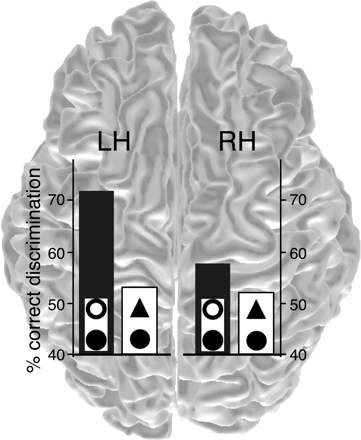
Most theories on how we extract visual information from our environment start with the sensible hierarchy of detecting features first and then integrating them to build objects. Li Chen and colleagues have also argued for the importance of extracting global topological properties as primitives in object perception, and they now have reported the intriguing discovery that the human visual system's sensitivity to topological properties is superior in the left hemisphere, at least for right-handers. Here is a graphic showing the basic conclusion of their work, from the commentary by He:
Figure - Schematic depiction of the left hemisphere's superiority in topological discrimination. A pair of shapes was briefly presented in either the right or the left visual field, projecting initially to the left or right hemispheres (LH or RH), respectively. Observers were asked to respond to whether the two shapes were the same or different. Although the triangle may appear more different from the disk than the ring does, human observers are more sensitive to the difference between the disk and the ring, which are topologically different, but are less sensitive to the difference between the triangle and the disk, which are topologically equivalent. Now, the authors show that the ability to discriminate topological differences is more superior in the left hemisphere than in the right hemisphere, as indicated by the bar plots showing the percent correct discrimination
Poetry in your genome?
Now that we are able to synthesize complete genomes for organisms, we can also write what we want in its individual genes. Andrew Pollack describes several such literary efforts:
You were expecting poetry, perhaps? The secret messages hidden in J. Craig Venter’s synthetic bacterial genome have now been revealed. They are Dr. Venter’s name, and that of his research institute and co-workers....Dr. Venter announced last week in the journal Science that his team had become the first to synthesize the complete DNA of a bacterium. He revealed that the genome had five “watermarks,” sequences of genetic code that would spell words using the letters for the amino acids that would be produced by the DNA...Wired Science reported Monday that it had ferreted out the messages, with help from government scientists. One watermark said “VenterInstitvte,” using the unusual spelling because there is no amino acid represented by the letter “u.”...The other messages were CraigVenter, HamSmith, GlassandClyde and CindiandClyde for his co-authors Hamilton O. Smith, Clyde A. Hutchison III, John I. Glass and Cynthia Andrews-Pfannkoch. A Venter spokeswoman confirmed them...In 2003, scientists from Icon Genetics, a German biotechnology company, engineered the plant Arabidopsis thaliana to contain a line from Virgil’s “Georgics,” with the meaning “Neither can every soil bear every fruit.”

Monday, February 04, 2008
Stronger or weaker brain synapses after sleep?
 Why do we spend a third of our lives asleep? The answers suggested so far are varied and controversial. It is well documented that improvement in learning and memory accompanies a night of sleep. One idea is that most new information is discarded during sleep, as diurnal animals are bombarded by stimuli during the day, most of which we want to (or need to) forget. Synapses need to recover. If this is the dominant reason why we sleep, then decreased numbers of synapses or synapse weakening should be a prominent neuronal feature of sleep. Fountain points to an article by Tonini and colleagues (Nature Neuroscience 11, pp. 200 - 208, 2008) that provides evidence for this option. Tononi suggests that after sleep "“we get a leaner brain — there’s a gain in terms of energy, space and supplies, and you are ready to learn anew.” Here is their abstract:
Plastic changes occurring during wakefulness aid in the acquisition and consolidation of memories. For some memories, further consolidation requires sleep, but whether plastic processes during wakefulness and sleep differ is unclear. We show that, in rat cortex and hippocampus, GluR1-containing AMPA receptor (AMPAR) levels are high during wakefulness and low during sleep, and changes in the phosphorylation states of AMPARs, CamKII and GSK3beta are consistent with synaptic potentiation during wakefulness and depression during sleep. Furthermore, slope and amplitude of cortical evoked responses increase after wakefulness, decrease after sleep and correlate with changes in slow-wave activity, a marker of sleep pressure. Changes in molecular and electrophysiological indicators of synaptic strength are largely independent of the time of day. Finally, cortical long-term potentiation can be easily induced after sleep, but not after wakefulness. Thus, wakefulness appears to be associated with net synaptic potentiation, whereas sleep may favor global synaptic depression, thereby preserving an overall balance of synaptic strength.
The algorithms of love...
 John Tierney writes an interesting article on internet match finding services in the Jan 29 New York Times.
Online matchmaking has become a boom industry as rival scientists test their algorithms for finding love...The leading yenta is eHarmony, which pioneered the don’t-try-this-yourself approach eight years ago by refusing to let its online customers browse for their own dates. It requires them to answer a 258-question personality test and then picks potential partners...Another company, Perfectmatch.com, is using an algorithm designed by Pepper Schwartz, a sociologist at the University of Washington at Seattle. Match.com, which became the largest online dating service by letting people find their own partners, set up a new matchmaking service, Chemistry.com, using an algorithm created by Helen E. Fisher, an anthropologist at Rutgers who has studied the neural chemistry of people in love.On reading that Chemistry.com didn't discriminate against gay match making, I naturally decided to give it a spin and went through their series of questions (including one on the relative lengths of one's index and ringer finger). It included psychological profile questions and some interesting tests of susceptibility to visual illusions. Alas, the list of prospective mates for a 65 yr. old retired professor was rather lean, and I ended my experiment by withdrawing my chemistry.com profile after one day.
As the matchmakers compete for customers — and denigrate each other’s methodology — the battle has intrigued academic researchers who study the mating game. On the one hand, they are skeptical, because the algorithms and the results have not been published for peer review. But they also realize that these online companies give scientists a remarkable opportunity to gather enormous amounts of data and test their theories in the field. EHarmony says more than 19 million people have filled out its questionnaire...In the battle of the matchmakers, Chemistry.com has been running commercials faulting eHarmony for refusing to match gay couples (eHarmony says it can’t because its algorithm is based on data from heterosexuals), and eHarmony asked the Better Business Bureau to stop Chemistry.com from claiming its algorithm had been scientifically validated. The bureau concurred that there was not enough evidence, and Chemistry.com agreed to stop advertising that Dr. Fisher’s method was based on “the latest science of attraction.”
Dr. Fisher now says the ruling against her last year made sense because her algorithm at that time was still a work in progress as she correlated sociological and psychological measures, as well as indicators linked to chemical systems in the brain. But now, she said, she has the evidence from Chemistry.com users to validate the method, and she plans to publish it along with the details of the algorithm...“I believe in transparency,” she said, taking a dig at eHarmony. “I want to share my data so that I will get peer review.”
Sunday, February 03, 2008
Super Bowl preliminaries....the anthropoligist from Mars
The description in the header of this blog includes the phrase "and random curious stuff." Well....this post qualifies. I show you one of the videos used Sunday to warm patrons up for the super bowl orgy at my happy hour bar. "Macho Man", the Village People. Watching this did make me feel like Oliver Sacks' anthropologist from Mars.
Friday, February 01, 2008
Will cognition-enhancing drugs become as acceptable as coffee?
 In my backlog of blog-postings-to-do is one on an article in the Dec. 27 issue of Nature on the use of cognition-enhancing drugs not only to treat cognitive disabilities, but also to enhance performance in those without medical issues (Nature 450, 1157–1159; 2007). Two drugs commonly used to reduced extraneous activity and focus attention are methylphenidate (Ritalin) and atomoxetine; both increase brain levels of the neurotransmitter noradrenaline. Sahakia and Morein-Zamir pose a series of questions whose answers become increasingly less obvious, and invite responses in an online forum:
-Should adults with severe memory and concentration problems from neuropsychiatric disorders be given cognitive-enhancing drugs?I have now received a message from the Nature people, sent to a number of bloggers in the brain and behavior area, suggesting that readers check out some responses to this article and also participate in a survey.
-If drugs can be shown to have mild side effects, should they be prescribed more widely for other psychiatric disorders?
-Do the same arguments apply for young children and adolescents with neuropsychiatric disorders, such as those with ADHD?
-Would you boost your own brain power?
-How would you react if you knew your colleagues — or your students — were taking cognitive enhancers?
-How should society react?
Faith and Healing
 Jerome Groopman reviews Anne Harrington's new book "The Cure Within - A History of Mind-Body Medicine" in the NY Times Book review of Jan. 27. Harrington is professor and chair of the History of Science department at Harvard. Here is the final section of that review:
Harrington offers close observations of the interactions between the Harvard cardiologist Herbert Benson (and later the neuroscientist Richard Davidson of the University of Wisconsin) and the Dalai Lama and his Tibetan monks. She admits longing for scientific support for what is, in essence, an “Orientalist” conception, that the “Other” holds wisdom and therapeutic treasures beyond those imaginable to us in the West. Some of Harrington’s wish is fulfilled in the biology of the placebo response. Recent studies show that belief, even in inert treatments, can have profound benefits in relieving pain, likely via release of endorphins and other mediators in the brain. But despite several decades of concerted research in the field of psychoneuroimmunology, to my scrutiny no robust effects of meditation or other relaxation techniques that could combat illnesses like cancer or AIDS have been identified.
Harrington concludes with the questions that her students at Harvard regularly ask: Which mind-body narratives are “true”? Are all the stories we tell ourselves about illness equally valuable? Harrington has already answered these queries in part in the voice of the woman with breast cancer in the Stanford study. Yet, she has still been “haunted” over the years by unusual events, like the case of a man whose tumors seemed to melt “like snowballs on a hot stove” in response to a “worthlesss” cancer treatment that he nonetheless believed in. The physicist Freeman Dyson once noted that, to a scientist, an event like the spontaneous remission of a tumor is viewed as occurring at the asymptote of probability, one in several million, but through the eyes of a believer it becomes not mathematics but a miracle. Harrington shows us that, whatever science reveals about the cause and course of disease, we will continue to tell ourselves stories, and try to use our own metaphors to find meaning in randomness.
The fruits of promiscuity...more dancing and food
From the research highlights section of the Jan. 24 issue of Nature, summarizing work by Matilla et al:
A honeybee colony led by a promiscuous queen does better than one led by a faithful queen: the colony forages more, stores more food and grows faster. Heather Mattila and her colleagues at Cornell University in Ithaca, New York, think this happens because genetically diverse colonies dance more....Honeybees 'waggle dance' to tell each other where to fly to find food. Mattila's team compared colonies in which the queen always bred with the same male to colonies ruled by a queen that had been inseminated by 15 drones. On average, worker bees from the latter category performed 36% more dances daily, kept waggling for 62% longer and communicated about food discoveries farther from the nest than did workers from single-father colonies.

Thursday, January 31, 2008
Why men are at the top.
 Helena Cronin presents an interesting idea about why men walk off with most of the top positions and prizes that sidesteps the usual assumption of average differences between men and women in innate talents, tastes and temperaments. She notes that there not only more Nobels, but also more dumbbells among men, and suggests that it is a fourth "T" that most decisively shapes the distinctive structure of male — female differences. Some clips from her essay:
That T is Tails — the tails of these statistical distributions. Females are much of a muchness, clustering round the mean. But, among males, the variance — the difference between the most and the least, the best and the worst — can be vast. So males are almost bound to be over-represented both at the bottom and at the top...Consider the mathematics sections in the USA's National Academy of Sciences: 95% male. Which contributes most to this predominance — higher means or larger variance? One calculation yields the following answer. If the sex difference between the means was obliterated but the variance was left intact, male membership would drop modestly to 91%. But if the means were left intact but the difference in the variance was obliterated, male membership would plummet to 64%. The overwhelming male predominance stems largely from greater variance...Similarly, consider the most intellectually gifted of the USA population, an elite 1%. The difference between their bottom and top quartiles is so wide that it encompasses one-third of the entire ability range in the American population, from IQs above 137 to IQs beyond 200. And who's overwhelmingly in the top quartile? Males. Look, for instance, at the boy:girl ratios among adolescents for scores in mathematical-reasoning tests: scores of at least 500, 2:1; scores of at least 600, 4:1; scores of at least 700, 13.1.
The legacy of natural selection is twofold: mean differences in the 3 Ts and males generally being more variable; these two features hold for most sex differences in our species and, as Darwin noted, greater male variance is ubiquitous across the entire animal kingdom...The upshot? When we're dealing with evolved sex differences, we should expect that the further out we go along the right curve, the more we will find men predominating. So there we are: whether or not there are more male dumbbells, there will certainly be — both figuratively and actually — more male Nobels.
Unfortunately, however, this is not the prevailing perspective in current debates, particularly where policy is concerned. On the contrary, discussions standardly zoom in on the means and blithely ignore the tails. So sex differences are judged to be small. And thus it seems that there's a gaping discrepancy: if women are as good on average as men, why are men overwhelmingly at the top? The answer must be systematic unfairness — bias and barriers. Therefore, so the argument runs, it is to bias and barriers that policy should be directed. And so the results of straightforward facts of statistical distribution get treated as political problems
Creationists launch 'science' journal
 Oh my gawd........ a new Creationist 'scientific' journal. This from the Jan. 23 online Nature News:
Papers will be peer reviewed by those who “support the positions taken by the journal”, according to editor-in-chief Andrew Snelling, a geologist based in Brisbane, Australia.The Answers Research Journal makes life simple. You start with the result you want, and work from there. Much more efficient than conventional science.
George Lakoff on Obama vs. Hillary
Here are some succinct points made by George Lakoff, who has written on the power of metaphors in politics, and the importance of 'framing' political debates.
Wednesday, January 30, 2008
Newborn humans: predisposition for biological motion
This work demonstrates that when we are born, we have an innate bias towards attending to motions characteristic of other living things. Newborn chickens do this also. The abstract, a figure, and a video from Simion et al. :
An inborn predisposition to attend to biological motion has long been theorized, but had so far been demonstrated only in one animal species (the domestic chicken). In particular, no preference for biological motion was reported for human infants of less than 3 months of age. We tested 2-day-old babies' discrimination after familiarization and their spontaneous preferences for biological vs. nonbiological point-light animations. Newborns were shown to be able to discriminate between two different patterns of motion (Exp. 1) and, when first exposed to them, selectively preferred to look at the biological motion display (Exp. 2). This preference was also orientation-dependent: newborns looked longer at upright displays than upside-down displays (Exp. 3). These data support the hypothesis that detection of biological motion is an intrinsic capacity of the visual system, which is presumably part of an evolutionarily ancient and nonspecies-specific system predisposing animals to preferentially attend to other animals.Figure: Three sample frames taken from the animation sequences used in the study: the biological motion stimulus (i.e., the walking hen) (Top), the nonbiological motion stimulus (random motion) (Middle), and the inverted biological motion display (upside-down walking hen) (Bottom). Squares indicate the point-lights.

Songbirds also have mirror neurons.
Mirror neurons in humans and other primates fire both when a given action is either performed or observed (see the 'mirror neuron' category in the left column of this blog.) Now Prather et al. have found similar neurons in the swamp sparrow, which like humans depends on auditory experience to learn its vocal repertoire. These forebrain neurons are specialized for auditory-vocal monitoring and have virtually the same response to a given note sequence, whether performed or heard. They also innervate striatal structures important for song learning, raising the possibility that singing-related activity in these cells is compared to auditory feedback to guide vocal learning. Here is a graphic from a New and Views article on this work by Tchernichovski1 & Wallman in the same issue of Nature.
 (click to enlarge) Figure legend: The neurons identified by Prather and colleagues could be involved in three sensorimotor processes. a, The delayed corollary discharge of song patterns can be simultaneously compared with auditory feedback of the bird's own song, allowing tuning. b, The auditory responses (in the mirroring neurons) to songs of a neighbour might be compared with the memory of the corollary discharge produced during singing. This might allow the bird to identify an imitation by that neighbour. c, Corollary discharges while singing might be compared with a memory of the mirroring neurons' response to the parent's song. The error may then feed back to the song generator and guide vocal learning during song development, in addition to guidance from auditory input during singing (lowest arrow).
 (click to enlarge) Figure legend: The neurons identified by Prather and colleagues could be involved in three sensorimotor processes. a, The delayed corollary discharge of song patterns can be simultaneously compared with auditory feedback of the bird's own song, allowing tuning. b, The auditory responses (in the mirroring neurons) to songs of a neighbour might be compared with the memory of the corollary discharge produced during singing. This might allow the bird to identify an imitation by that neighbour. c, Corollary discharges while singing might be compared with a memory of the mirroring neurons' response to the parent's song. The error may then feed back to the song generator and guide vocal learning during song development, in addition to guidance from auditory input during singing (lowest arrow).
Tuesday, January 29, 2008
More on the evils of multitasking.
In a comment below, MindBlog reader Gregory points to a great article in the Atlantic on the toxic mental effects of multitasking. I wanted to bring the link into this separate post so that more of you will see it. It is by culture/technology commentator Walter Kirn:
Neuroscience is confirming what we all suspect: Multitasking is dumbing us down and driving us crazy. One man’s odyssey through the nightmare of infinite connectivity
...Multitasking messes with the brain in several ways. At the most basic level, the mental balancing acts that it requires—the constant switching and pivoting—energize regions of the brain that specialize in visual processing and physical coordination and simultaneously appear to shortchange some of the higher areas related to memory and learning. We concentrate on the act of concentration at the expense of whatever it is that we’re supposed to be concentrating on.
What does this mean in practice? Consider a recent experiment at UCLA, where researchers asked a group of 20-somethings to sort index cards in two trials, once in silence and once while simultaneously listening for specific tones in a series of randomly presented sounds. The subjects’ brains coped with the additional task by shifting responsibility from the hippocampus—which stores and recalls information—to the striatum, which takes care of rote, repetitive activities. Thanks to this switch, the subjects managed to sort the cards just as well with the musical distraction—but they had a much harder time remembering what, exactly, they’d been sorting once the experiment was over.
Even worse, certain studies find that multitasking boosts the level of stress-related hormones such as cortisol and adrenaline and wears down our systems through biochemical friction, prematurely aging us. In the short term, the confusion, fatigue, and chaos merely hamper our ability to focus and analyze, but in the long term, they may cause it to atrophy.
The next generation, presumably, is the hardest-hit. They’re the ones way out there on the cutting edge of the multitasking revolution, texting and instant messaging each other while they download music to their iPod and update their Facebook page and complete a homework assignment and keep an eye on the episode of The Hills flickering on a nearby television.

Pinker et al. on the logic of indirect speech.
Pinker, Nowak, and Lee do an interesting perspectives article in PNAS that looks more rigorously at why we don't just blurt out what we mean, as in:
- Would you like to come up and see my etchings? [a sexual come-on]Here is their abstract:
- If you could pass the guacamole, that would be awesome. [a polite request]
- Nice store you got there. Would be a real shame if something happened to it. [a threat]
- We're counting on you to show leadership in our Campaign for the Future. [a solicitation for a donation]
- Gee, officer, is there some way we could take care of the ticket here? [a bribe]
When people speak, they often insinuate their intent indirectly rather than stating it as a bald proposition. Examples include sexual come-ons, veiled threats, polite requests, and concealed bribes. We propose a three-part theory of indirect speech, based on the idea that human communication involves a mixture of cooperation and conflict. First, indirect requests allow for plausible deniability, in which a cooperative listener can accept the request, but an uncooperative one cannot react adversarially to it. This intuition is supported by a game-theoretic model that predicts the costs and benefits to a speaker of direct and indirect requests. Second, language has two functions: to convey information and to negotiate the type of relationship holding between speaker and hearer (in particular, dominance, communality, or reciprocity). The emotional costs of a mismatch in the assumed relationship type can create a need for plausible deniability and, thereby, select for indirectness even when there are no tangible costs. Third, people perceive language as a digital medium, which allows a sentence to generate common knowledge, to propagate a message with high fidelity, and to serve as a reference point in coordination games. This feature makes an indirect request qualitatively different from a direct one even when the speaker and listener can infer each other's intentions with high confidence.
More Retro Video
After last week's Disco flashback, I can't resist giving you a little more nostalgia (this ought to make you cringe)... The Partridge Family's "I think I love you" from their popular sitcom in the early 1970s.
Monday, January 28, 2008
Are you holding your breath?
 I notice - if I am maintaining awareness of my breathing - that the breathing frequently stops as I begin a skilled activity such as piano or computer keyboarding. At the same time I can begin to sense an array of unnecessary (and debilitating) pre-tensions in the muscle involved. If I just keep breathing and noticing those tensions, they begin to release. (Continuing to let awareness return to breathing when it drifts is a core technique of mindfulness meditation). Several sources note that attending to breathing can raise one's general level of restfulness relative to excitation, enhancing parasympathetic (restorative) over sympathetic (arousing) nervous system activities. These personal points make me feel like passing on some excerpts from a recent essay which basically agrees with these points: "Breathtaking New Technologies," by Linda Stone, a former Microsoft VP and Co-Founder and Director of Microsoft's Virtual Worlds Group/Social Computing Group. It is a bit simplistic, but does point in a useful direction.
I believe that attention is the most powerful tool of the human spirit and that we can enhance or augment our attention with practices like meditation and exercise, diffuse it with technologies like email and Blackberries, or alter it with pharmaceuticals...but... the way in which many of us interact with our personal technologies makes it impossible to use this extraordinary tool of attention to our advantage...the vast majority of people hold their breath especially when they first begin responding to email. On cell phones, especially when talking and walking, people tend to hyper-ventilate or over-breathe. Either of these breathing patterns disturbs oxygen and carbon dioxide balance...breath holding can contribute significantly to stress-related diseases. The body becomes acidic, the kidneys begin to re-absorb sodium, and as the oxygen and CO2 balance is undermined, our biochemistry is thrown off.
The parasympathetic nervous system governs our sense of hunger and satiety, flow of saliva and digestive enzymes, the relaxation response, and many aspects of healthy organ function. Focusing on diaphragmatic breathing enables us to down regulate the sympathetic nervous system, which then causes the parasympathetic nervous system to become dominant. Shallow breathing, breath holding and hyper-ventilating triggers the sympathetic nervous system, in a "fight or flight" response...Some breathing patterns favor our body's move toward parasympathetic functions and other breathing patterns favor a sympathetic nervous system response. Buteyko (breathing techniques developed by a Russian M.D.), Andy Weil's breathing exercises, diaphragmatic breathing, certain yoga breathing techniques, all have the potential to soothe us, and to help our bodies differentiate when fight or flight is really necessary and when we can rest and digest.
I've changed my mind about how much attention to pay to my breathing patterns and how important it is to remember to breathe when I'm using a computer, PDA or cell phone...I've discovered that the more consistently I tune in to healthy breathing patterns, the clearer it is to me when I'm hungry or not, the more easily I fall asleep and rest peacefully at night, and the more my outlook is consistently positive...I've come to believe that, within the next 5-7 years, breathing exercises will be a significant part of any fitness regime.
Why you think that $100 bottle of wine is better...
 This little bit of work notes the neural basis of some of our 'refined aesthetic preferences'...what your brain might be doing when you feel that something that costs more is better (even when you are unknowingly comparing identical items). Here is the abstract from Plassmann et al.:
Despite the importance and pervasiveness of marketing, almost nothing is known about the neural mechanisms through which it affects decisions made by individuals. We propose that marketing actions, such as changes in the price of a product, can affect neural representations of experienced pleasantness. We tested this hypothesis by scanning human subjects using functional MRI while they tasted wines that, contrary to reality, they believed to be different and sold at different prices. Our results show that increasing the price of a wine increases subjective reports of flavor pleasantness as well as blood-oxygen-level-dependent activity in medial orbitofrontal cortex, an area that is widely thought to encode for experienced pleasantness during experiential tasks. The paper provides evidence for the ability of marketing actions to modulate neural correlates of experienced pleasantness and for the mechanisms through which the effect operates.Figure: Neural correlates of liking ratings. (A) Activity in the mOFC and the midbrain correlated with the reported pleasantness of the six liquids at degustationtime. (B) Correlationof pleasantness ratings and BOLD responses

Friday, January 25, 2008
The new commonwealth
Some interesting comments by Kevin Kelly on possible political consequences of the Wikipedia phenomenon, excerpted from his brief essay. He changed his initial assumption that an encyclopedia editable by anyone would be an impossibility. This commentary has a rather different spirit than yesterday's post on the internet phenomenon.
It has always been clear that collectives amplify power — that is what cities and civilizations are — but what's been the big surprise for me is how minimal the tools and oversight are needed. The bureaucracy of Wikipedia is relatively so small as to be invisible. It's the Wiki's embedded code-based governance, versus manager-based governance that is the real news. Yet the greatest surprise brought by the Wikipedia is that we still don't know how far this power can go. We haven't seen the limits of wiki-ized intelligence. Can it make textbooks, music and movies? What about law and political governance?
The reality of a working Wikipedia has made a type of communitarian socialism not only thinkable, but desirable. Along with other tools such as open-source software and open-source everything, this communtarian bias runs deep in the online world...In other words it runs deep in this young next generation. It may take several decades for this shifting world perspective to show its full colors. When you grow up knowing rather than admitting that such a thing as the Wikipedia works; when it is obvious to you that open source software is better; when you are certain that sharing your photos and other data yields more than safeguarding them — then these assumptions will become a platform for a yet more radical embrace of the commonwealth. I hate to say it but there is a new type of communism or socialism loose in the world, although neither of these outdated and tinged terms can accurately capture what is new about it.
The Wikipedia has changed my mind, a fairly steady individualist, and lead me toward this new social sphere. I am now much more interested in both the new power of the collective, and the new obligations stemming from individuals toward the collective. In addition to expanding civil rights, I want to expand civil duties. I am convinced that the full impact of the Wikipedia is still subterranean, and that its mind-changing power is working subconsciously on the global millennial generation, providing them with an existence proof of a beneficial hive mind, and an appreciation for believing in the impossible.

Immune system subjugation of the brain
Research on links between brain, behavior, and the immune system is expanding rapidly. It has long been known that depression lowers immunity, and Dantzer et al. offer a review of causality in the opposite direction: release of cytokines by the innate immune system during infection which in the short term triggers sickness behaviors in the long term can cause depression. Here is their abstract and a PDF.
In response to a peripheral infection, innate immune cells produce pro-inflammatory cytokines that act on the brain to cause sickness behaviour. When activation of the peripheral immune system continues unabated, such as during systemic infections, cancer or autoimmune diseases, the ensuing immune signalling to the brain can lead to an exacerbation of sickness and the development of symptoms of depression in vulnerable individuals. These phenomena might account for the increased prevalence of clinical depression in physically ill people. Inflammation is therefore an important biological event that might increase the risk of major depressive episodes, much like the more traditional psychosocial factors.
Thursday, January 24, 2008
Does the internet liberate or enslave us?
A book by Lee Siegel "Against the Machine," reviewed by Janet Maslin in the NY Times, and an essay by Nicholas Carr raise a related set of arguments that challenge the assumption that the internet is a liberating force, a force for freedom, diffusing power and information among the many, rather than the few. At the same time web traffic in increasing, it is becoming more centralized. Carr notes:
 Graphical depiction of the Internet as consisting of a dense core of 80 or so critical nodes surrounded by an outer shell of 5,000 sparsely connected, isolated nodes that are very much dependent upon this core. (Shai Carmi, Bar Ilan University)
Siegel deals with socially toxic effects of the internet. From Maslin's review, describing Siegle's account of Starbucks, as one is:
-During the five years from 2002 through 2006, the number of Internet sites nearly doubled, yet the concentration of traffic at the ten most popular sites nonetheless grew substantially, from 31% to 40% of all page views
-Google continues to expand its hegemony...In March 2006, the company's search engine was used to process a whopping 58% of all searches in the United States, according to Hitwise. By November 2007, the figure had increased yet again, to 65%. The results of searches are also becoming more, not less, homogeneous. Do a search for any common subject, and you're almost guaranteed to find Wikipedia at or near the top of the list of results.
-Executives of Yahoo and Sun Microsystems have recently predicted that control over the net's computing infrastructure will ultimately lie in the hands of five or six organizations.
-To what end will the web giants deploy their power? They will, of course, seek to further their own commercial or political interests by monitoring, analyzing, and manipulating the behavior of "users." ...What's different, in comparison to the physical world, is that acts of control are more difficult to detect.
 Graphical depiction of the Internet as consisting of a dense core of 80 or so critical nodes surrounded by an outer shell of 5,000 sparsely connected, isolated nodes that are very much dependent upon this core. (Shai Carmi, Bar Ilan University)
Siegel deals with socially toxic effects of the internet. From Maslin's review, describing Siegle's account of Starbucks, as one is:
...surrounded by Internet zombies, laptop-addicted creatures who have so grievously lost their capacity for human interaction “that social space has been contracted into isolated points of wanting, all locked into separate phases of inwardness.”...the semblance of a shared Starbucks experience masks endemic computer-generated isolation, a condition that has prompted psychic and ethical breakdowns that go well beyond the collapse of community....why we are living so gullibly through what would have been the plot of a science-fiction movie 15 years ago. Why does the freedom promised by the Internet feel so regimented and constricting? Why do its forms of democracy have their totalitarian side? What happens to popular culture when its sole emphasis is on popularity? How have we gone “from ‘I love that thing he does!’ to ‘Look at all those page views!’ in just a few years”?
Remember Disco??
I saw this video (So Many Men, So Little Time - Miquel Brown) during happy hour at the local bar (Georgie's Alibi) several evenings ago and was totally transported back to my days of disco dancing in the late 1970's, early 1980's, getting hot and sweaty, tearing off the shirt, etc. The same moves at my current age would probably be life-threatening. I'll bet a number of you remember this kind of energy...
Wednesday, January 23, 2008
The myth of the mid-life crisis.
 Here is an engaging article by Richard Freedman on the supposed crisis around age 50 (mainly in men) when the first signs of physical decline and the questions and doubts about one’s personal and professional accomplishments emerge.
..some find themselves seized by a seemingly irresistible impulse to do something dramatic, even foolish. Everything, it appears, is fair game for a midlife crisis: one’s job, spouse, lover — you name it.Freedman outlines:
a garden-variety case of a middle-aged narcissist grappling with the biggest insult he had ever faced: getting older...But you have to admit that “I’m having a midlife crisis” sounds a lot better than “I’m a narcissistic jerk having a meltdown.”Another source of the midlife 'crisis' :
...reaching a situation...of having to seriously take account of someone else’s needs, such as those of children, for the first time.Further clips:
Why do we have to label a common reaction of the male species to one of life’s challenges — the boredom of the routine — as a crisis? True, men are generally more novelty-seeking than women, but they certainly can decide what they do with their impulses.
The main culprit, I think, is our youth-obsessed culture, which makes a virtue of the relentless pursuit of self-renewal. The news media abound with stories of people who seek to recapture their youth simply by shedding their spouses, quitting their jobs or leaving their families. Who can resist?..Most middle-aged people, it turns out, if we are to believe the definitive survey...Except, of course, for the few — mainly men, it seems — who find the midlife crisis a socially acceptable shorthand for what you do when you suddenly wake up and discover that you’re not 20 anymore.
Terror alerts kill more people than terrorists in the US?
 I have long held the opinion, reinforced by this article in the NYTimes, that the absurd terror alert system devised by the department of "homeland security" kills more people than the potential terrorist threat, given that "the chances of the average person dying in America at the hands of international terrorists to be comparable to the risk of dying from eating peanuts, being struck by an asteroid or drowning in a toilet." The article describes studies on a cohort of 2,700 people studied before and after the Sept. 11 attack which indicate a correlation (which is not a cause) between expressed anxiety over a terrorist attack and subsequent cardiovascular ailments.
Tuesday, January 22, 2008
The Impressionable Brain
I want to pass on this essay by Marcel Kinsbourne, which is an interesting exegesis of the implication of mirror neuron systems in our brain, especially with respect to possibly making moot the issue of brain versus environmental effects:
When the phenomenon of "mirror neurons" that fire both when a specific action is perceived and when it is intended was first reported, I was impressed by the research but skeptical about its significance...I have come to realize that mirror neurons are not only less than meets the eye but also more. Instead of being a specific specialization, they play their role as part of a fundamental design characteristic of the brain; that is, when percepts are activated, relevant intentions, memories and feelings automatically fall into place.
That an individual is likely to act in the same ways that others act is seen in the documented benefit for sports training of watching experts perform. "Emotional contagion" occurs when someone witnesses the emotional expressions of another person and therefore experiences that mood state oneself. People's viewpoints can subtly and unconsciously converge when their patterns of neural activation match, in the total absence of argument or attempts at persuasion. When people entrain with each other in gatherings, crowds, assemblies and mobs, diverse individual views reduce into a unified group viewpoint.
People's views are surreptitiously shaped by their experiences, and rationality comes limping after, downgraded to rationalization. Once opinions are established, they engender corresponding anticipations. People actively seek those experiences that corroborate their own self-serving expectations. This may be why as we grow older, we become ever more like ourselves. Insights become consolidated and biases reinforced when one only pays attention to confirming evidence. Diverse mutually contradictory "firm convictions" are the result.
If I am correct in my changed views as to what mirror neurons stand for and how representation routinely merges perception, action, memory and affect into dynamic reciprocal interaction, these views would have a bearing on currently disputed issues. Whether an effect is due to the brain or the environment would be moot if environmental causes indeed become brain causes, as the impressionable brain resonates with changing circumstances. What we experience contributes mightily to what we are and what we become.
What people experience indeed changes their brain, for better and for worse. In turn, the changed brain changes what is experienced. Regardless of its apparent stability over time, the brain is in constant flux, and constantly remodels. Heraclitus was right: "You shall not go down twice to the same river". The river will not be the same, but for that matter, neither will you. We are never the same person twice. The past is etched into the neural network, biasing what the brain is and does in the present. William Faulkner recognized this: "The past is never dead. In fact, it's not even past".

Antidepressant effects of exercise - a mechanism
Here is an interesting bit from Hunsberger et al. in Nature Medicine, which suggests that a nerve growth factor pathway might be a target for antidepressant drug development (exercise might do the same thing, but depressed people usually aren't that keen on working out):
Exercise has many health benefits, including antidepressant actions in depressed human subjects, but the mechanisms underlying these effects have not been elucidated. We used a custom microarray to identify a previously undescribed profile of exercise-regulated genes in the mouse hippocampus, a brain region implicated in mood and antidepressant response. Pathway analysis of the regulated genes shows that exercise upregulates a neurotrophic factor signaling cascade that has been implicated in the actions of antidepressants. One of the most highly regulated target genes of exercise and of the growth factor pathway is the gene encoding the VGF nerve growth factor, a peptide precursor previously shown to influence synaptic plasticity and metabolism. We show that administration of a synthetic VGF-derived peptide produces a robust antidepressant response in mice and, conversely, that mutation of VGF in mice produces the opposite effects. The results suggest a new role for VGF and identify VGF signaling as a potential therapeutic target for antidepressant drug development.

GENES R US
 This clip from the Jan. 20 issue of Science:
Personal genomics revved into high gear last year thanks to DNA chips that make it possible to cheaply scan the entire genome (Science, 21 December 2007, p. 1842). You can track the flood of new discoveries at SNPedia (www.snpedia.com), a Web site run by two biotech veterans in Bethesda, Maryland, that catalogs SNPs culled from the literature.
SNPs are single-nucleotide polymorphisms: single-base variations in DNA that researchers are tying to traits and disease risks. Browse by medical conditions (77 so far) and discover, for example, that carrying two copies of the T version of a SNP called rs2273535 raises your risk of colon cancer by 50%; another SNP, rs6152, is associated with baldness. Visitors can also search by genetically influenced drug reactions (48) and genes (128). There are links to relevant papers and sites (including James Watson's and J. Craig Venter's respective genomes) and to blogs by people who are sending their DNA to a lab to be "SNP chipped." The site is also a wiki, which means anyone can contribute.
The site "could be a very valuable research tool," says computational biologist Mark Daly of the Broad Institute in Cambridge, Massachusetts. "It will be great to see how this develops."
Monday, January 21, 2008
A Debussy Ballade - music for the start of the week
The only downside of being in Ft. Lauderdale FL. (sunny, 81 degress on Saturday) versus Madison, WI. (-7 degress, cloudy) is that my Steinway B grand piano stays in Madison. I have now installed a credible Steinway upright in the Ft. Lauderdale condo and have decided to continue on it the sort of video recordings I had been doing in Madison. I may re-record this piece on the better piano when I get back to Madison in the spring.
The bouncer in the brain...
In the January issue of Nature Neuroscience a review with the title of this post by Awh & Vogel discusses experiments by McNab & Klingberg that may explain why there are significant differences between individuals in working memory, which is known to be limited to about three or four items. Individual differences in this memory capacity correlate robustly with measures of fluid intelligence and scholastic aptitude. The experiments explore the idea that variations in the efficiency with which information is selected to fill this limited workspace are involved. From Awh and Vogel:

One perspective on individual differences in memory capacity views variation in terms of the number of 'slots' that are available for short-term storage. However, apparent capacity differences might also be explained by variations in the efficiency with which information is selected to fill this limited workspace. A useful analogy for understanding the difference between these two ideas is the difference between the space that is available in an exclusive nightclub and the effectiveness of the bouncer who grants admission. From this perspective, high-capacity individuals may have a better bouncer rather than a larger nightclub...brain imaging evidence from McNab and Klingberg implicates a specific neural region that may serve as the bouncer for the mind.Here is the abstract from McNab and Klingberg:
This hypothesis is consistent with a growing body of evidence that shows tight links between attention and working memory. Some theorists have even suggested that they are essentially the same mechanism. This viewpoint is supported by the strong overlap in the cortical areas that are active during attention and working-memory tasks, as well as evidence that directly implicates attention in the active maintenance of information in working memory. Furthermore, an individual's working-memory capacity is highly predictive of his or her performance on a wide range of attention tasks

Our capacity to store information in working memory might be determined by the degree to which only relevant information is remembered. The question remains as to how this selection of relevant items to be remembered is accomplished. Here we show that activity in the prefrontal cortex and basal ganglia preceded the filtering of irrelevant information and that activity, particularly in the globus pallidus, predicted the extent to which only relevant information is stored. The preceding frontal and basal ganglia activity were also associated with inter-individual differences in working memory capacity. These findings reveal a mechanism by which frontal and basal ganglia activity exerts attentional control over access to working memory storage in the parietal cortex in humans, and makes an important contribution to inter-individual differences in working memory capacity.
Meditation Research
The Mind and Life Institute offers a quarterly bibliography with short descriptions of research work done of the effects of mindfulness-based cognitive therapy.
Friday, January 18, 2008
Pinker on the 'moral instinct'
 It would have been nice to put a discussion of Pinker's NY Times Magazine article alongside the post on Metzinger's essay "There are no moral facts" but I didn't get around to it in time. Pinker is an exceptionally bright and clear writer. Even so, a bit of nit-picking can't be resisted, a few of his sentences have hidden land mines. Take for example:
...dissecting moral intuitions is no small matter. If morality is a mere trick of the brain, some may fear, our very grounds for being moral could be eroded. Yet as we shall see, the science of the moral sense can instead be seen as a way to strengthen those grounds, by clarifying what morality is and how it should steer our actions.A continuous drumbeat throughout this blog has been to make the point that even our sense of having a purposeful "I" is a 'mere trick of the brain' (See also The "I" Illusion). A damned useful one, to be sure, that has resulted in a our dominance as a species on this planet. Seen in the light of evolution, an evolved moral sense can also be viewed as a yet more refined way of passing on or genes, and influencing the competition between groups of humans that has driven recent human evolution. Pinker's "how morality should steer our actions" flirts with the "naturalistic fallacy" (because this is what our biology gives us, it is the way things should be.) That "should" is relevant to passing on our genes, not to any ultimate criteria for morality. Metzinger's essay nails it:
...all we have to go by are the contingent moral intuitions evolution has hard-wired into our emotional self-model. If we choose to simply go by what feels good, then our future is easy to predict: It will be primitive hedonism and organized religion.Or, take this gem from Pinker's article:
Though no one has identified genes for morality, there is circumstantial evidence they exist. The character traits called “conscientiousness” and “agreeableness” are far more correlated in identical twins separated at birth (who share their genes but not their environment) than in adoptive siblings raised together (who share their environment but not their genes). People given diagnoses of “antisocial personality disorder” or “psychopathy” show signs of morality blindness from the time they are children.The villain here is the phrase "genes for morality". By now, most popularizers have left behind phrases like this, because it implies a causality that does not exist. Genes are not for anything by themselves, but have an unfolding expression that requires vastly complex interactions with other genes and the environment. They can be "permissive of..." or "increase the probability of..." a particular outcome, but they don't run the show. This why the phrase "genes for X" (where X is any complex behavior) should not be used.
Pinker proceeds through of very elegant and structured review of moralization switches, reasoning and rationalizing (including examples such as the well known "Trolley Problem" - for other examples see MindBlog's 'morality' category in the left column of the web page your are viewing.)
One of his best lines is: "When psychologists say “most people” they usually mean “most of the two dozen sophomores who filled out a questionnaire for beer money.”
Further topics include the idea of a universal morality, varieties of moral experience, and the genealogy of morals. He does a nice discussion of the five spheres of moral behavior that are shared by humans and many animals living in groups, suggesting ancient evolutionary origins of the behaviors (doing harm, fairness, community, authority, purity).
My favorite section in the esay is "Is morality a figment", where Pinker partially, but not completely addresses the first issue I raised above. Here is a clip, on where moral reasons might come from:
They certainly aren’t in the physical world like wavelength or mass. The only other option is that moral truths exist in some abstract Platonic realm, there for us to discover, perhaps in the same way that mathematical truths (according to most mathematicians) are there for us to discover. On this analogy, we are born with a rudimentary concept of number, but as soon as we build on it with formal mathematical reasoning, the nature of mathematical reality forces us to discover some truths and not others. (No one who understands the concept of two, the concept of four and the concept of addition can come to any conclusion but that 2 + 2 = 4.) Perhaps we are born with a rudimentary moral sense, and as soon as we build on it with moral reasoning, the nature of moral reality forces us to some conclusions but not others.
Moral realism, as this idea is called, is too rich for many philosophers’ blood. Yet a diluted version of the idea — if not a list of cosmically inscribed Thou-Shalts, then at least a few If-Thens — is not crazy. Two features of reality point any rational, self-preserving social agent in a moral direction. And they could provide a benchmark for determining when the judgments of our moral sense are aligned with morality itself.
One is the prevalence of nonzero-sum games. In many arenas of life, two parties are objectively better off if they both act in a nonselfish way than if each of them acts selfishly. ... Any neutral observer, and you and I if we could talk it over rationally, would have to conclude that the state we should aim for is the one in which we both are unselfish. These spreadsheet projections are not quirks of brain wiring, nor are they dictated by a supernatural power; they are in the nature of things.
The other external support for morality is a feature of rationality itself: that it cannot depend on the egocentric vantage point of the reasoner. If I appeal to you to do anything that affects me — to get off my foot, or tell me the time or not run me over with your car — then I can’t do it in a way that privileges my interests over yours (say, retaining my right to run you over with my car) if I want you to take me seriously. Unless I am Galactic Overlord, I have to state my case in a way that would force me to treat you in kind. I can’t act as if my interests are special just because I’m me and you’re not, any more than I can persuade you that the spot I am standing on is a special place in the universe just because I happen to be standing on it.
Not coincidentally, the core of this idea — the interchangeability of perspectives — keeps reappearing in history’s best-thought-through moral philosophies, including the Golden Rule (itself discovered many times); Spinoza’s Viewpoint of Eternity; the Social Contract of Hobbes, Rousseau and Locke; Kant’s Categorical Imperative; and Rawls’s Veil of Ignorance. It also underlies Peter Singer’s theory of the Expanding Circle — the optimistic proposal that our moral sense, though shaped by evolution to overvalue self, kin and clan, can propel us on a path of moral progress, as our reasoning forces us to generalize it to larger and larger circles of sentient beings.
Exercise effects on brain and cognition
Hillman et al., provide an interesting review article (PDF here) that examines the positive effects of aerobic physical activity on cognition and brain function, at the molecular, cellular, systems and behavioral levels.
The results of a meta-analysis of the effects of fitness training on cognition showed that the benefits of fitness training on four different cognitive tasks were significant. As illustrated in the figure, fitness training has both broad and specific effects. The effects are broad in the sense that individuals in aerobic fitness training groups (represented by the red bars) showed larger fitness training effects across the different categories of cognitive processes illustrated on the x-axis. They are specific in the sense that fitness training effects were larger for some cognitive processes, in particular executive control processes, than for other cognitive processes.
Physical activity has been found to enhance cognition, with a selectively larger effect on executive control functions compared with other cognitive processes. Accordingly, brain structures that mediate executive functions would be expected to show disproportionate changes as a result of participation in physical activity. One such structure is the anterior cingulate cortex (ACC), which is part of the brain's limbic system and has connections with multiple brain structures that process sensory, motor, emotional and cognitive information. Two convergent lines of research indicate that physical activity exerts a substantial influence on the ACC and the concomitant executive processes that it mediates.


Thursday, January 17, 2008
Permanent Reincarnation
Here are some clips from an interesting essay by science writer Tor Norretranders:
My body is not like a typical material object, a stable thing. It is more like a flame, a river or an eddie. Matter is flowing through it all the time. The constituents are being replaced over and over again...98 percent of the atoms in the body are replaced every year. 98 percent! Water molecules stays in your body for two weeks (and for an even shorter time in a hot climate), the atoms in your bones stays there for a few months. Some atoms stay for years. But almost not one single atom stay with you in your body from cradle to grave...What is constant in you is not material. An average person takes in 1.5 ton of matter every year as food, drinks and oxygen. All this matter has to learn to be you. Every year. New atoms will have to learn to remember your childhood.
These numbers has been known for half a century or more, mostly from studies of radioactive isotopes. Physicist Richard Feynman said in 1955: "Last week's potatoes! They now can remember what was going on in your mind a year ago."
But digital media now makes it possible to think of all this in a simple way. The music I danced to as a teenager has been moved from vinyl-LPs to magnetic audio tapes to CDs to Pods and whatnot. The physical representation can change and is not important — as long as it is there. The music can jump from medium to medium, but it is lost if it does not have a representation. This physics of information was sorted out by Rolf Landauer in the 1960'ies. Likewise, out memories can move from potato-atoms to burger-atoms to banana-atoms. But the moment they are on their own, they are lost.We reincarnate ourselves all the time. We constantly give our personality new flesh. I keep my mental life alive by making it jump from atom to atom. A constant flow. Never the same atoms, always the same river. No flow, no river. No flow, no me...This is what I call permanent reincarnation: Software replacing its hardware all the time. Atoms replacing atoms all the time. Life. This is very different from religious reincarnation with souls jumping from body to body (and souls sitting out there waiting for a body to take home in).

Coevolution of choosiness and cooperation
 An interesting modeling article by McNamara et al. suggests a novel evolutionary mechanism based on a positive coevolutionary feedback between cooperativeness and choosiness. If individuals vary in their degree of cooperativeness, and if they can decide whether or not to continue interacting with each other on the basis of their respective levels of cooperativeness, then cooperation can gradually evolve from an uncooperative state. When an individual's cooperativeness is used by other individuals as a choice criterion, there can be competition to be more generous than others (competetive altruism). The evolution of cooperation between non-relatives can then be driven by a positive feedback between increasing levels of cooperativeness and choosiness. In this model, individual behavioural differences are the key to the evolution of cooperation. Because the model does not invoke complex mechanisms such as negotiation behaviour, it can be applied to a wide range of species.
The model calculations use an infinite population where, in each of a discrete series of time steps (rounds), pairs of individuals engage in a game that can be described as a social dilemma. Each individual is characterized by two traits: a cooperativeness trait x, which specifies the amount of effort that the individual devotes to generating benefits available (at least in part) to its co-player; and a choosiness trait y, which specifies the minimum degree of cooperativeness that the focal individual is prepared to accept from its co-player. The traits x and y are genetically determined and are not adjusted in response to the co-player's behaviour. Thus, unlike in many models in which flexible effort adjustment is a key ingredient1, individuals in their model are consistent in their degree of cooperativeness.
Subscribe to:
Posts (Atom)