..comments the friend who emailed me this video of a Guiness commercial: Married to a Man
Thursday, May 31, 2007
Why don’t we do what we know works better?
I mull frequently about an issue that I’m sure readers of this blog are familiar with. Having assembled a fairly extensive toolkit of techniques to maintain personal poise, sanity, vitality, etc. (tools of the sort mentioned in the essay on my website titled “Mindstuff: a guide for the curious user.”), how is it that I don’t use them more religiously to maintain those desired qualities? Well…. there are some limits intrinsic to the fact that they are constructions of my adult mind, mainly over the past 15—20 years. They require attention and energy for their maintenance, unlike the pandora’s box of less useful older habits and ways-to-be-in-the-world that formed in my youth, and are more hard wired into place. During periods of inattention or low energy, I don’t notice the these older autopilots and temperaments slipping back into place to resume their residency. This, I suppose, is why practitioners of various healthy mind regimes (schools of meditation, cognitive therapies, or whatever) keep saying: “How do you get to Carneige Hall? Practice, practice, practice!”
Joseph LeDoux perhaps puts it better in some recent comments:
Joseph LeDoux perhaps puts it better in some recent comments:
One of the things I've learned about the brain is that anxiety and stress breed anxiety and stress. So, it makes sense that we should do things to reduce anxiety and stress in our daily lives, like the sorts of breathing exercises that are used in meditation. These are effective in part because they push the autonomic nervous system toward its parasympathetic side, slowing the driving force of the sympathetic system and reducing the arousal level of the body and the brain. Do I do these exercises? Not as often or as effectively as I probably should. But cardiologists probably don't always eat the right things or exercise as much as they should, either. It's one thing to know what to do, and another to do it. (If we could figure out that discordance, we'd really know something.)
Guide to psychology blogs...
PsyBlog publishes the first part of a two part guide to other psychology blog.
Wednesday, May 30, 2007
3rd and 1st person narrative in personality change
 Benedict Carey writes a piece in the Tuesday NY Times science section (PDF here) reviewing work done by a number of researchers on on how the stories people tell themselves (and others) about themselves do or don't help with making adaptive behavior changes. Third person narratives, in which subjects view themselves from a distance - as actors in their own narrative play - correlate with a higher sense of personal power and ability to make personality changes. First person narratives - in which the subject describes the experience of being immersed in their personal plays - are more likely than third person narratives to correlate with passivity and feeling powerless to effect change. This reminds me of Marc Hauser's distinction of being a moral agent or a moral patient. The third person can be a more metacognitive stance, thinking about oneself in a narrative script while the first person can be a less reflective acting out of the script.
"The Secret" scam....
More of Michael Schermer's terrific debunking of popular myth in the June Scientific American... Some clips:
An old yarn about a classic marketing con game on the secret of wealth instructs you to write a book about how to make a lot of money and sell it through the mail. When your marks receive the book, they discover the secret--write a book about how to make a lot of money and sell it through the mail.
A confidence scheme similar to this can be found in The Secret (Simon & Schuster, 2006), a book and DVD by Rhonda Byrne and a cadre of self-help gurus that, thanks to Oprah Winfrey's endorsement, have now sold more than three million copies combined. The secret is the so-called law of attraction. Like attracts like. Positive thoughts sally forth from your body as magnetic energy, then return in the form of whatever it was you were thinking about. Such as money.
A pantheon of shiny, happy people assures viewers that The Secret is grounded in science: "It has been proven scientifically that a positive thought is hundreds of times more powerful than a negative thought." No, it hasn't. "Our physiology creates disease to give us feedback, to let us know we have an imbalanced perspective, and we're not loving and we're not grateful." Those ungrateful cancer patients. "You've got enough power in your body to illuminate a whole city for nearly a week." Sure, if you convert your body's hydrogen into energy through nuclear fission. "Thoughts are sending out that magnetic signal that is drawing the parallel back to you." But in magnets, opposites attract--positive is attracted to negative. "Every thought has a frequency.... If you are thinking that thought over and over again you are emitting that frequency."
The brain does produce electrical activity from the ion currents flowing among neurons during synaptic transmission, and in accordance with Maxwell's equations any electric current produces a magnetic field...The brain's magnetic field... quickly dissipates from the skull and is promptly swamped by other magnetic sources, not to mention the earth's magnetic field ... which overpowers it by 10 orders of magnitude!
Ceteris paribus, it is undoubtedly better to think positive thoughts than negative ones. But in the real world, all other things are never equal, no matter how sanguine your outlook. Just ask the survivors of Auschwitz. If the law of attraction is true, then the Jews--along with the butchered Turkish-Armenians, the raped Nanking Chinese, the massacred Native Americans and the enslaved African-Americans--had it coming.
Oprah, please, withdraw your support of this risible twaddle--as you did when you discovered that James Frey's memoir was a million little lies--and tell your vast following that prosperity comes from a good dollop of hard work and creative thinking, the way you did it.
Tuesday, May 29, 2007
Neural correlates of social cognition
Vittorio Gallese writes an interesting summary in Proc. Roy. Soc. B titled "Before and below ‘theory of mind’: embodied simulation and the neural correlates of social cognition." (PDF here). His abstract:
The automatic translation of folk psychology into newly formed brain modules specifically dedicated to mind-reading and other social cognitive abilities should be carefully scrutinized. Searching for the brain location of intentions, beliefs and desires—as such—might not be the best epistemic strategy to disclose what social cognition really is. The results of neurocognitive research suggest that in the brain of primates, mirror neurons, and more generally the premotor system, play a major role in several aspects of social cognition, from action and intention understanding to language processing. This evidence is presented and discussed within the theoretical frame of an embodied simulation account of social cognition. Embodied simulation and the mirror neuron system underpinning it provide the means to share communicative intentions, meaning and reference, thus granting the parity requirements of social communication.
Why Americans resist scientific ideas.
Paul Bloom and Deena Skolnick Weisberg offer a fascinating review of the childhood origins of adult resistance to science (PDF here), pointing out that it derives from clinging to incorrect intuitive physics and psychology assumptions that are a normal part of child develpment. They review developmental data that suggests:
...that resistance to science will arise in children when scientific claims clash with early emerging, intuitive expectations. This resistance will persist through adulthood if the scientific claims are contested within a society, and it will be especially strong if there is a nonscientific alternative that is rooted in common sense and championed by people who are thought of as reliable and trustworthy. This is the current situation in the United States, with regard to the central tenets of neuroscience and evolutionary biology. These concepts clash with intuitive beliefs about the immaterial nature of the soul and the purposeful design of humans and other animals, and (in the United States) these beliefs are particularly likely to be endorsed and transmitted by trusted religious and political authorities. Hence, these fields are among the domains where Americans' resistance to science is the strongest.
Monday, May 28, 2007
Adding labels or keywords to MindBlog for indexing... some glitches
I'm going to be adding labels (keywords) to new and older blog posting over the next period of time, and it appears that any change in an old posting makes it appear to some RSS readers as a new posting. Sorry about that.
I hope then to figure out how to install one of the widgets that lets you click on a keyword in the list of keywords or labels and see a list of all the relevant blog postings. If any of you are expert at this and could point me in the right direction I would be grateful.
I hope then to figure out how to install one of the widgets that lets you click on a keyword in the list of keywords or labels and see a list of all the relevant blog postings. If any of you are expert at this and could point me in the right direction I would be grateful.
The New Synthesis in Moral Psychology
The article of this title by Haidt is worth passing on to those of you who are interested in this area (PDF here). Here is the abstract:
People are selfish, yet morally motivated. Morality is universal, yet culturally variable. Such apparent contradictions are dissolving as research from many disciplines converges on a few shared principles, including the importance of moral intuitions, the socially functional (rather than truth-seeking) nature of moral thinking, and the coevolution of moral minds with cultural practices and institutions that create diverse moral communities. I propose a fourth principle to guide future research: Morality is about more than harm and fairness. More research is needed on the collective and religious parts of the moral domain, such as loyalty, authority, and spiritual purity.
Embodying emotion
This is the title of an interesting review by Niedenthal (PDF here) on how manipulations of facial expression and posture in the laboratory can influence how emotions are processed. Whether we are similing or frowning, or hunched over or upright, can profoundly influence our emotional reactions to positive or negative input. Here is the abstract:

Two ways in which facial expression has been manipulated in behavioral experiments. (Top) In order to manipulate contraction of the brow muscle in a simulation of negative affect, researchers have affixed golf tees to the inside of participants' eyebrows. Participants in whom negative emotion was induced were instructed to bring the ends of the golf tees together, as in the right panel. [Photo credit: Psychology Press]. (Bottom) In other research, participants either held a pen between the lips to inhibit smiling, as in the left panel, or else held the pen between the teeth to facilitate smiling.
Recent theories of embodied cognition suggest new ways to look at how we process emotional information. The theories suggest that perceiving and thinking about emotion involve perceptual, somatovisceral, and motoric reexperiencing (collectively referred to as "embodiment") of the relevant emotion in one's self. The embodiment of emotion, when induced in human participants by manipulations of facial expression and posture in the laboratory, causally affects how emotional information is processed. Congruence between the recipient's bodily expression of emotion and the sender's emotional tone of language, for instance, facilitates comprehension of the communication, whereas incongruence can impair comprehension. Taken all together, recent findings provide a scientific account of the familiar contention that "when you're smiling, the whole world smiles with you."

Two ways in which facial expression has been manipulated in behavioral experiments. (Top) In order to manipulate contraction of the brow muscle in a simulation of negative affect, researchers have affixed golf tees to the inside of participants' eyebrows. Participants in whom negative emotion was induced were instructed to bring the ends of the golf tees together, as in the right panel. [Photo credit: Psychology Press]. (Bottom) In other research, participants either held a pen between the lips to inhibit smiling, as in the left panel, or else held the pen between the teeth to facilitate smiling.
Sunday, May 27, 2007
A Wedding in Mexico
Pictures: Deric and his son Jonathan in exile while the women are getting ready; the ceremony; Jonathan and Shana in the sunset.


Friday, May 25, 2007
A neural link between hand muscle excitability and numerical counting
Sato et al. do an interesting experiment showing that excitability of our hand muscles changes when we perform a visual (non-numerical) counting task, reinforcing the idea that finger counting represents an basic embodied strategy for number learning. (PDF here.) Their abstract:
Developmental and cross-cultural studies show that finger counting represents one of the basic number learning strategies. However, despite the ubiquity of such an embodied strategy, the issue of whether there is a neural link between numbers and fingers in adult, literate individuals remains debated. Here, we used transcranial magnetic stimulation to study changes of excitability of hand muscles of individuals performing a visual parity judgment task, a task not requiring counting, on Arabic numerals from 1 to 9. Although no modulation was observed for the left hand muscles, an increase in amplitude of motor-evoked potentials was found for the right hand muscles. This increase was specific for smaller numbers (1 to 4) as compared to larger numbers (6 to 9). These findings indicate a close relationship between hand/finger and numerical representations.
Gene crucial to learning and memory unique in humans
Zu et al report that a human-specific gene mutation (not seen in other primates) leads to the origin of a novel splice form of neuropsin (KLK8), a protein involved in learning and memory. This may be one of the genes that have been positively selected during human evolution Their abstract:
Neuropsin (kallikrein 8, KLK8) is a secreted-type serine protease preferentially expressed in the central nervous system and involved in learning and memory. Its splicing pattern is different in human and mouse, with the longer form (type II) only expressed in human. Sequence analysis suggested a recent origin of type II during primate evolution. Here we demonstrate that the type II form is absent in nonhuman primates, and is thus a human-specific splice form. With the use of an in vitro splicing assay, we show that a human-specific T to A mutation (c.71-127T>A) triggers the change of splicing pattern, leading to the origin of a novel splice form in the human brain. Using mutation assay, we prove that this mutation is not only necessary but also sufficient for type II expression. Our results demonstrate a molecular mechanism for the creation of novel proteins through alternative splicing in the central nervous system during human evolution.
Thursday, May 24, 2007
Boundaries of Experience and Self
I've been slogging through journals that accumulated during my snow-bird phase last winter, and am going through a pile of back issues of the Journal of Consciousness Studies. I came across a review by Chris Nunn of a conference held by the consciousness and experiential psychology section of the British Psychological Association, St. Anne's College at Oxford in Sept. of 2006. on "Exploring the Boundaries of Experience and Self." Nunn notes that a more appropriate title for the conference might have been "Demonstrating Ambiguities of Language and Meaning Used in Relation to Experience and Self." I think his brief review (PDF here) is worth reading.


View from my window - Isla Mujeres

 Turns out I can get wireless in the hotel lobby. I'm at the Playa Media Luna on Isla Mujeres, off of Cancun, the occasion being my 33 year old son's destination wedding (costs a lot less than the U.S.). I want to thank readers who sent annonymous or personal comments on this blog. If I needed any reinforcement to continue the effort, it certainly was there! Also, a number of people indicated they liked the personal material I put in the blog (music, personal attitudes and experience). This is why I'm inflicting the pictures in today's posts on you.
Wednesday, May 23, 2007
Schermer on happiness - science and history
An essay by Michael Schermer in the March 2007 issue of the Scientific American (PDF here), briefly notes several recent books on happiness research and emphasizes the point that assumptions about what constitutes happiness vary over time. Take sex:
"A century ago, an average man who had not had sex in three years might have felt proud of his health and forbearance, and a woman might have praised herself for the health and happiness benefits of ten years of abstinence."
Tuesday, May 22, 2007
Deric, a vacation, and thinking about MindBlog-opps!
(NOTE - somehow the comments got turned off for this post initially, I'm grateful to a reader for pointing this out to me.)
I will be in Mexico for a week, starting Wednesday May 23, to attend my son's wedding, and am uncertain whether it will be practical to continue doing blog postings. This potential hiatus makes me pause for a moment to mull over how this whole blog trip is going. I am a relative newbie to the business, having started this up in Febuary of 2006. On reading about the blog phenomenon in the New York Times, I thought to myself "Here I am doing all this reading and scanning about mind and brain stuff for my own pleasure, and also to prepare the occasional lecture...I might as well make the small extra effort of putting it online in case others are interested." I meant it to be an optional, casual activity. I also meant it to be fun, i.e. , not like work. For a retired academic type, with major obsessive compulsive tendencies, that is easier said than done. I've become addicted to the daily ritual, as well as paying the Feedburner.com site a few bucks a month to show me that by now that there are approximately 170 daily subscriptions to the site's RSS feed, and 350-400 views of individual postings (this is more people that I was reaching in my live university lectures). I have no idea how this compares with other sites out there that deal with similar stuff (and there are a lot of them - I don't look at them that much because I'm too busy reading the new material I find in the literature...).
I do get the occasional email and comment - there have been a few "thank you for doing this" emails that I really appreciated - but in general I'm surprised at how little feedback there is. I scratch my head and think, "I guess this thing is keeping me off the streets; yet, is it worth the energy I'm putting into it? Would getting out of the lockstep of two posts/day increase the perceived fun/work ratio and open up time for more thoughtful writing?" No resolution on any of this.... but, I thought I would put down these wandering thoughts. Comments welcomed.
I will be in Mexico for a week, starting Wednesday May 23, to attend my son's wedding, and am uncertain whether it will be practical to continue doing blog postings. This potential hiatus makes me pause for a moment to mull over how this whole blog trip is going. I am a relative newbie to the business, having started this up in Febuary of 2006. On reading about the blog phenomenon in the New York Times, I thought to myself "Here I am doing all this reading and scanning about mind and brain stuff for my own pleasure, and also to prepare the occasional lecture...I might as well make the small extra effort of putting it online in case others are interested." I meant it to be an optional, casual activity. I also meant it to be fun, i.e. , not like work. For a retired academic type, with major obsessive compulsive tendencies, that is easier said than done. I've become addicted to the daily ritual, as well as paying the Feedburner.com site a few bucks a month to show me that by now that there are approximately 170 daily subscriptions to the site's RSS feed, and 350-400 views of individual postings (this is more people that I was reaching in my live university lectures). I have no idea how this compares with other sites out there that deal with similar stuff (and there are a lot of them - I don't look at them that much because I'm too busy reading the new material I find in the literature...).
I do get the occasional email and comment - there have been a few "thank you for doing this" emails that I really appreciated - but in general I'm surprised at how little feedback there is. I scratch my head and think, "I guess this thing is keeping me off the streets; yet, is it worth the energy I'm putting into it? Would getting out of the lockstep of two posts/day increase the perceived fun/work ratio and open up time for more thoughtful writing?" No resolution on any of this.... but, I thought I would put down these wandering thoughts. Comments welcomed.
Genetic basis for vulnerability to drug addiction.
Yacubian et al.(link to full text) demonstrate that human genetic variations that alter dopamine neurotransmission involved in reward pathways correlate with change in sensitivity to rewards and also with activity in the ventral striatum reward system. The data suggest a potential genetic basis for drug vulnerability. Here is their abstract:
Reward processing depends on dopaminergic neurotransmission and is modulated by factors affecting dopamine (DA) reuptake and degradation. We used fMRI and a guessing task sensitive to reward-related activation in the prefrontal cortex and ventral striatum to study how individual variation in genes contributing to DA reuptake [DA transporter (DAT)] and degradation [catechol-o-methyltransferase (COMT)] influences reward processing. Prefrontal activity, evoked by anticipation of reward irrespective of reward probability and magnitude, was COMT genotype-dependent. Volunteers homozygous for the Met allele, associated with lower enzyme activity and presumably greater DA availability, showed larger responses compared with volunteers homozygous for the Val allele. A similar COMT effect was observed in the ventral striatum. As reported previously, the ventral striatum was also found to code gain-related expected value, i.e., the product of reward magnitude and gain probability. Individual differences in ventral striatal sensitivity for value were in part explained by an epistatic gene–gene interaction between COMT and DAT. Although most genotype combinations exhibited the expected activity increase with more likely and larger rewards, two genotype combinations (COMT Met/Met DAT 10R and COMT Val/Val 9R) were associated with blunted ventral striatal responses. In view of a consistent relationship between reduced reward sensitivity and addiction, our findings point to a potential genetic basis for vulnerability to addiction.
Fantastic Dances...
Three of them, by Shostakovitch, which I recorded on my Steinway B at Twin Valley, Middleton Wisconsin.
Monday, May 21, 2007
Brain imaging that reflects moral responsibility.
 In the common law tradition, criminal conviction depends on both actus reus (a harmful consequence and mens rea (the intent to harm). Young et al. (PDF here) set up an experimental test using different small stories to demonstrate that a subject's belief that he/she has caused intentional harm causes a larger increase in the activation of a region of the right temporal parietal junction (RTPJ in the figure.) than attempted harm, unknowing harm, and neutral effect.) The study suggests that moral judgments depend on the cognitive processes mediated by the RTPJ, previously associated with belief attribution, and, to a lesser extent, the PC, LTPJ, and MPFC, which compose a network of brain regions implicated in theory of mind.
The discussion of the paper is well worth reading. Here is one clip:
The current results also reveal an asymmetry between moral judgments of incompetent criminals (whose false beliefs prevent intended harm from occurring) and unlucky innocents (whose false beliefs lead them to cause unintended harms. Judgments of incompetent criminals were harsh, made on the basis of beliefs alone, and associated with enhanced recruitment of circuitry involved in belief attribution. By contrast, unlucky innocents were not entirely exculpated for causing harm on the basis of their false beliefs. Instead of showing an increased response in brain regions associated with belief attribution, whole-brain analyses revealed recruitment of brain regions associated with cognitive conflict: right inferior parietal cortex, PC, bilateral middle frontal gyrus, and bilateral anterior cingulate sulcus. All of these regions have been implicated in cognitive conflict associated with moral dilemmas, specifically where subjects endorse emotionally salient harmful acts to prevent greater harm. Here subjects had to override judgments against harm in favor of utilitarian considerations (e.g., the greatest good for the greatest number). Analogously, in the context of unknowing harm, subjects may partially override judgments against harm to exculpate agents on the basis of their false beliefs. Moral judgment may therefore represent the product of two distinct and at times competing processes, one responsible for representing harmful outcomes and another for representing beliefs and intentions.
Potential drug for chronic pain?
A new era in pain research may be coming. A particular class of sodium nerve channels (resistant to tetrodotoxin) are central in generating pain signals. Extensive screening for drugs that block this channel have yielded A-803467, a furan-amide. Jarvis et al. show that this drug attenuates neuropathic and inflammatory pain in a rat model. Chronic pain affects about 1.5 million people worldwide, and is currently treated with sodium channel blockers originally developed as anticonvulsants or antiarrhythmics. While beneficial for some patients, their clinical usefulness has been limited.
Friday, May 18, 2007
A magnet for your sleep?
Massimini et al. show that the deep sleep important in brain restoration and memory consolidation (associated with EEG slow-wave activity of 0.5–4.5 Hz) can be triggered and deepened by appropriate transcranial magnetic stimulation at less than 1 Hz. (PDF here.) How long will it be before we are being offered electromagnetic "sleep caps" to improve our memory and brain restoration during sleep?
Here is their abstract:
Here is their abstract:
During much of sleep, cortical neurons undergo near-synchronous slow oscillation cycles in membrane potential, which give rise to the largest spontaneous waves observed in the normal electroencephalogram (EEG). Slow oscillations underlie characteristic features of the sleep EEG, such as slow waves and spindles. Here we show that, in sleeping subjects, slow waves and spindles can be triggered noninvasively and reliably by transcranial magnetic stimulation (TMS). With appropriate stimulation parameters, each TMS pulse at less than 1 Hz evokes an individual, high-amplitude slow wave that originates under the coil and spreads over the cortex. TMS triggering of slow waves reveals intrinsic bistability in thalamocortical networks during non-rapid eye movement sleep. Moreover, evoked slow waves lead to a deepening of sleep and to an increase in EEG slow-wave activity (0.5–4.5 Hz), which is thought to play a role in brain restoration and memory consolidation.
Videos on How the Mind Works.
Check out this link for interesting talks by Dennett, Gilbert, Schwartz, Savage-Rumbaugh, and others.
High speeding mapping of neural circuits with optical techniques.
Before I was seduced by studying how the brain works, I used to be a membrane biophysics, cellular, molecular biologist, and occasionally I come across a bit of work that is so neat and powerful that I want to mention it.
Wang et al. engineer the genetic delivery into neurons of a light sensitive rhodopsin membrane channel protein (ChR2), from an algae. Illumination of ChR2-positive neurons in cortical slices produces rapid photocurrents that can elicit action potentials. The timing, number, and spatial location of these action potentials can be controlled precisely by light, allowing functional mapping of cortical circuits. Here is their abstract:
 Fluorescence image of dye-filled layer VI pyramidal neuron; circles indicate locations where light-evoked synaptic responses were evoked.
Wang et al. engineer the genetic delivery into neurons of a light sensitive rhodopsin membrane channel protein (ChR2), from an algae. Illumination of ChR2-positive neurons in cortical slices produces rapid photocurrents that can elicit action potentials. The timing, number, and spatial location of these action potentials can be controlled precisely by light, allowing functional mapping of cortical circuits. Here is their abstract:
To permit rapid optical control of brain activity, we have engineered multiple lines of transgenic mice that express the light-activated cation channel Channelrhodopsin-2 (ChR2) in subsets of neurons. Illumination of ChR2-positive neurons in brain slices produced photocurrents that generated action potentials within milliseconds and with precisely timed latencies. The number of light-evoked action potentials could be controlled by varying either the amplitude or duration of illumination. Furthermore, the frequency of light-evoked action potentials could be precisely controlled up to 30 Hz. Photostimulation also could evoke synaptic transmission between neurons, and, by scanning with a small laser light spot, we were able to map the spatial distribution of synaptic circuits connecting neurons within living cerebral cortex. We conclude that ChR2 is a genetically based photostimulation technology that permits analysis of neural circuits with high spatial and temporal resolution in transgenic mammals.
 Fluorescence image of dye-filled layer VI pyramidal neuron; circles indicate locations where light-evoked synaptic responses were evoked.
Thursday, May 17, 2007
A parietal EEG signal reflects social coordination
Tognoli et al. offer an interesting study (PDF here). They employed a rhythmic task in which pairs of subjects move their fingers at their own preferred frequency and amplitude with and without vision of the other's movements. Previous behavioral studies had shown that unintended spontaneous coupling may occur (transitions from independent to phase-locking behavior) when subjects see each other's hand movements. They were able to identify three distinct EEG rhythms [alpha - (mean frequency of 10.61 Hz); mu - (mean frequency of 9.63 Hz); and a lateralized centro-parietal component that they call phi (spanning the range 9.2–11.5 Hz; Fig. 2B)], one of which (phi, located over right centro-parietal cortex) "neuromarked" the presence or absence of social coordination. Here is their abstract:
Many social interactions rely upon mutual information exchange: one member of a pair changes in response to the other while at the same time producing actions that alter the behavior of the other. However, little is known about how such social processes are integrated in the brain. Here, we used a specially designed dual-electroencephalogram system and the conceptual framework of coordination dynamics to identify neural signatures of effective, real-time coordination between people and its breakdown or absence. High-resolution spectral analysis of electrical brain activity before and during visually mediated social coordination revealed a marked depression in occipital alpha and rolandic mu rhythms during social interaction that was independent of whether behavior was coordinated or not. In contrast, a pair of oscillatory components (phi1 and phi2) located above right centro-parietal cortex distinguished effective from ineffective coordination: increase of phi1 favored independent behavior and increase of phi2 favored coordinated behavior. The topography of the phi complex is consistent with neuroanatomical sources within the human mirror neuron system. A plausible mechanism is that the phi complex reflects the influence of the other on a person's ongoing behavior, with phi1 expressing the inhibition of the human mirror neuron system and phi2 its enhancement.Identification of spectral components in the brain activity of participants. (A) The dual-EEG of pairs was recorded with two caps each containing 60 channels. The head schematic of the subject on the right shows the 60 electrodes color-coded to reflect their spatial location. Circled areas indicate regions of peak rhythmic activity: mu (electrodes colored brown situated above Rolandic fissure); phi (burgundy above right centro-parietal area); and alpha (blue above the occipital pole). Spectral plots were used to identify mu, phi, and alpha components during visual contact.

A Fantasia
This week's bit of relief...by Joseph Haydn, recorded on my Steinway B at Twin Valley, Middleton Wisconsin.
Wednesday, May 16, 2007
Neuroimaging of Subliminal Motivation
Pessiglione et al. (PDF here) do an interesting experiment in which they flash a picture of either a penny or a pound coin for 17, 50, 100 msec. followed by a masking picture. Subjects can report seeing the last, but not the first two images, so these first two are assumed to be subliminal. To characterize the effects of the monetary stakes, they recorded not only brain activity but also skin conductance and hand-grip force. Skin conductance response (SCR) is linked to autonomic sympathetic arousal and is interpreted as reflecting an affective evaluation of the monetary stake. Online visual feedback of the force exerted was displayed as a fluid level moving up and down within a thermometer depicted on the screen (see figure). Subjects were instructed that the higher the fluid level rose, the more of the monetary stake they would get to keep. At the end of the trial, subjects were given visual feedback of the amount of money that they had accumulated.
 The incentive force task. Successive screens displayed in one trial are shown from left to right, with durations in ms. Coin images, either one pound (£1) or one penny (1p), indicate the monetary value attributed to the top of the thermometer image. The fluid level in the thermometer represents the online force exerted on the hand grip. The last screen indicates cumulative total of the money won so far...
The data show that the 50 msec stimulus of a pound coin image, which is not reported as seen, causes an increase in skin conductance and activity in the ventral pallidum that is almost as large as the increase caused by the 100 msec stimulus, which is seen. Both activities are much lower for the one penny stimulus. (Ventral pallidal neurons encode rewarding properties of environmental stimuli, and are thought to play a role in incentive motivation.)
 Caudate, putamen, and accumbens are shown in green; external and internal pallidum are shown in blue, with limbic sectors in violet.
 The incentive force task. Successive screens displayed in one trial are shown from left to right, with durations in ms. Coin images, either one pound (£1) or one penny (1p), indicate the monetary value attributed to the top of the thermometer image. The fluid level in the thermometer represents the online force exerted on the hand grip. The last screen indicates cumulative total of the money won so far...
The data show that the 50 msec stimulus of a pound coin image, which is not reported as seen, causes an increase in skin conductance and activity in the ventral pallidum that is almost as large as the increase caused by the 100 msec stimulus, which is seen. Both activities are much lower for the one penny stimulus. (Ventral pallidal neurons encode rewarding properties of environmental stimuli, and are thought to play a role in incentive motivation.)
 Caudate, putamen, and accumbens are shown in green; external and internal pallidum are shown in blue, with limbic sectors in violet.
Cortical networks while the brain is at rest...
Pinsk and Kastner, review work (PDF here) of Vincent and colleagues (PDF here) on spontaneous fluctuations of neural activity in monkey brains during anaesthesia.
....studies have shown that the main human cortical networks exhibit correlated spontaneous activity while subjects are at rest. Vincent and colleagues provide the first evidence that such activity is neither restricted to the human brain nor tied to a conscious state. Their findings suggest that fluctuations of spontaneous activity across anatomically interconnected brain regions constitute a fundamental principle of brain organization. Such an interpretation is supported by the fact that organized patterns of brain activity are present in both humans and non-human primates.
As to the functional significance of correlated signal fluctuations, it may be that they maintain the integrity of the networks by reinforcing the synaptic connections between neurons that are essential for network operations in the awake state. Indeed, in stroke patients, the functional connectivity of a brain network has been found to break down when one of its parts is damaged. This loss of connectivity seemed to be correlated with the patients' behavioural impairments. Thus, the new findings may help in understanding both normal and pathological brain function.
Vincent et al. also investigated a possible monkey homologue of a cortical network that thus far has been studied only in humans. This human 'default' network exhibits BOLD activations when subjects are not performing any particular task, and is thought to support uniquely human functions — for example, thinking about ourselves and others, imagining the future, and daydreaming. The authors chose to study a seed region in the posterior cingulate cortex of the monkey brain; this brain region is anatomically similar in both species and is part of the human default network. They identified correlated activity in discrete regions of the frontal, parietal and temporal cortex, which may thus form an analogous default network in the monkey brain.
These findings challenge the view that the default network is uniquely human and is tied to human mental capabilities. But that challenge depends on the assumption that the posterior cingulate cortex is analogous in both species: despite the anatomical similarities, it is not known whether this area serves similar brain functions in the two species. Furthermore, the human default network has been defined in the awake state, whereas this possible monkey homologue was investigated under deep anaesthesia.
Tuesday, May 15, 2007
Do computer games keep you young?
Ichiko Fuyuno canvasses the opinion of neuroscientists on what brain training ploys can achieve. (PDF here).
A pill to boost or restore memory?
David Sweatt describes recent experiments by Fischer et al. on a compound that enhances memory performance in mice.
a, (click on figure to enlarge it.) Mouse models of age-dependent neurodegeneration exhibit poor learning and memory performance in spatially based learning tasks. However, when Fischer et al. administered HDAC inhibitors for 4 weeks before training, the performance of the mice was restored to essentially normal levels. b, After receiving HDAC inhibitors, the mice could even recall memories that had been formed and then apparently lost through neurodegeneration.
The authors provide a convincing proof-of-principle demonstrating that the inhibition of histone deacetylases can improve memory capabilities in a genetically engineered mouse model of neurodegeneration in the central nervous system (CNS).
Histone deacetylases (HDACs) are enzymes that remove acetyl groups from lysine amino acids in proteins, including proteins in the nucleus called histones. Histones interact with DNA to form a complex known as chromatin and control the accessibility of DNA for gene transcription. Generally, acetylated histones form active chromatin complexes with DNA, which makes the DNA accessible to RNA polymerases, thereby regulating gene transcription. Inhibitors of HDACs block the ability of these enzymes to deacetylate histones, promoting histone acetylation in the nucleus and thus altering gene expression. Because altered transcription is known to be necessary for the formation of long-term memories, HDAC inhibitors have the potential to boost memory formation. This has been demonstrated in normal rats and mice; and the effectiveness of HDAC inhibitors in restoring memory function in mouse models of a human learning disability called Rubinstein–Taybi syndrome has also been documented.
Fischer and colleagues extend these findings through their studies of a genetically manipulated mouse model that they have generated. Such animals show age-dependent neurodegeneration in the hippocampus, a brain region that is essential for long-term spatial-memory formation in rodents. Indeed, using a variety of behavioural assays, the authors previously showed that these mice have pronounced deficits in recalling long-term spatial memories.
In their present work, Fischer et al. demonstrate that HDAC inhibitors restore the capacity for spatial memory. They also show that another known memory-boosting manipulation — environmental enrichment through exposing the animals to a variety of experiences over their lifetime — improves the memory of the genetically engineered mice by increasing the levels of histone acetylation in their hippocampi. Together, these findings provide compelling evidence that increased histone acetylation can overcome the diminution of memory function seen in this mouse model of age-dependent neurodegeneration.

Monday, May 14, 2007
Drink milk and live longer?
An interesting article is summarized in the Research Highlights section of the May 10 issue of Nature Magazine:
In yeast at least, the molecular pathway that extends an organism's life when it is put on a diet can be induced — without calorie restriction — by a vitamin found in milk. So says a team led by Charles Brenner from Dartmouth Medical School in Lebanon, New Hampshire, and Jeffrey Smith from the University of Virginia Health System in Charlottesville. (Cell, Volume 129, Issue 3, Pages 473-484)
The researchers showed that the vitamin, called nicotinamide riboside, raises in yeast the levels of a molecule known as NAD (nicotinamide adenine dinucleotide). This, in turn, activates the anti-ageing protein Sir2. Yeast make use of the vitamin through molecular pathways that have some genes in common with humans, raising the possibility that supplements could be designed to enhance humans' longevity.
Coding gains and losses in the striatum...
Seymour et al. examine differential encoding of losses and gains in the human striatum:

Studies on human monetary prediction and decision making emphasize the role of the striatum in encoding prediction errors for financial reward. However, less is known about how the brain encodes financial loss. Using Pavlovian conditioning of visual cues to outcomes that simultaneously incorporate the chance of financial reward and loss, we show that striatal activation reflects positively signed prediction errors for both. Furthermore, we show functional segregation within the striatum, with more anterior regions showing relative selectivity for rewards and more posterior regions for losses. These findings mirror the anteroposterior valence-specific gradient reported in rodents and endorse the role of the striatum in aversive motivational learning about financial losses, illustrating functional and anatomical consistencies with primary aversive outcomes such as pain.

fMRI - a, Aversive prediction error, right ventral striatum This contrast also revealed a peak in the right anterior insula. b, Reward prediction error, right ventral striatum. Yellow corresponds to c, Sagittal view showing the two peaks, reward (green) and aversive (red).
Friday, May 11, 2007
Integrating different theory of mind models.
Keysers and Gazzola propose a speculative model (Trends in Cognitive Sciences
Volume 11, Issue 5, May 2007, Pages 194-196. PDF here) that attempts to integrate the perspective of two polarized camps:
Volume 11, Issue 5, May 2007, Pages 194-196. PDF here) that attempts to integrate the perspective of two polarized camps:
The simulation camp focuses on so-called shared circuits (SCs) that are involved in one's own actions, sensations and emotions and in perceiving those of others. The theory of mind (ToM) camp emphasizes the role of midline structures in mentalizing about the states of others.
Social cognitions range from the intuitive examples studied by simulationists to the reflective ones used by ToM investigators. Witnessing someone drink a glass of milk with a face contracting in an expression of disgust is an example at the intuitive extreme of this continuum. In such cases, premotor and parietal areas for actions, the insula for emotions and and SII for sensations form SCs that translate the bodily states of others into the neural language of our own states. These SCs seem to implement a pre-reflective, intuitive and empathic level of representation: neural activity in these areas does not require specific instructions that encourage conscious reflections.
Thinking about what gift would please a foreign colleague is an example at the more reflective extreme. In such cases, we must browse consciously through what we know about his country and culture to deduce what he might like. Such explicit knowledge about the inner life of others is the product of reflecting upon the states of others and is linked with activity in midline structures and the temporoparietal junction. False beliefs are prototypical examples of such reflective representations.
They suggest a working hypothesis:
While dealing with states of the self, areas of the SCs represent pre-reflective bodily states. If asked to introspect and report these states, subjects additionally activate (v)mPFC structures. When dealing with states of other individuals, activity in SCs might represent the empathic transformation of the bodily states of others into pre-reflective neural representations of similar states of the self. These simulated pre-reflective representations correlate with empathy and might provide an intuitive understanding of what goes on in others. If asked to reflect on the states of others, the pathways that are normally used to reflect on the bodily representations of the self are now used on simulated bodily states of others, leading to simulated reflective representations. Thus, SCs and midline structures form an integrated system that applies to cases where we perceive the other as similar enough for simulation to be useful. In this view, both SCs and vmPFC reflect simulation, albeit at different levels (pre-reflective versus reflective), rather than radically different processes (SC versus ToM).Illustration of the model (click to enlarge). The self is shown in red, the other is shown in green and candidate brain areas that are thought to implement representation are shown in blue. During our own experiences, pre-reflective representations can lead, through introspection, to reflective representations (red). While witnessing the states of others, mirroring leads to activations that simulate pre-reflective representations of our own bodily states. A process of social introspection, utilizing the mechanisms of introspection, activates representations that simulate reflective representations of our own bodily states. A more cognitive route leads to more abstract knowledge about the other that escapes from the constraints of our own experiences.

Emotion and Consciousness
Tsuchiyaa and Adolphs offer a review of brain structures central to emotion and consciousness, and how they overlap in several areas. (Trends in Cognitive Sciences, Volume 11, Issue 4, April 2007, Pages 158-167. PDF here). Here I reproduce their useful summary of the time stages in emotional processing.

Microgenesis of emotional processing. Emotional responses span a large temporal range (from 100 ms or less, to minutes). (a) Responses to emotional visual stimuli can occur rapidly in prefrontal cortex [50] or amygdala, in part mediated by subcortical inputs. Emotional response in the amygdala also influences early visual processing and is modulated by volitional self-regulation. (b) At later time slices (100–200 ms), sensory cortices provide more detailed input to emotion-inducing structures like the amygdala. Two components that are important to face processing are shown: the superior temporal cortex (green), important for encoding dynamic information such as facial expression, and the fusiform gyrus (blue), important for encoding static information such as identity. (c) Once the emotional meaning of a stimulus has been evaluated by the brain, emotional responses are triggered in the body via projections from amygdala and medial prefrontal cortex to brainstem nuclei and hypothalamus (not shown), and are in turn represented in structures such as the insula. This figure emphasizes that what we refer to as an ‘emotion state’ throughout this article is in fact a complex set of processes that unfold at various points in time. Color key: black, primary visual cortex; blue, fusiform gyrus; green, superior temporal cortex; purple, insula; faint red, orbitofrontal cortex; solid red, amygdala; yellow, superior colliculus.

Microgenesis of emotional processing. Emotional responses span a large temporal range (from 100 ms or less, to minutes). (a) Responses to emotional visual stimuli can occur rapidly in prefrontal cortex [50] or amygdala, in part mediated by subcortical inputs. Emotional response in the amygdala also influences early visual processing and is modulated by volitional self-regulation. (b) At later time slices (100–200 ms), sensory cortices provide more detailed input to emotion-inducing structures like the amygdala. Two components that are important to face processing are shown: the superior temporal cortex (green), important for encoding dynamic information such as facial expression, and the fusiform gyrus (blue), important for encoding static information such as identity. (c) Once the emotional meaning of a stimulus has been evaluated by the brain, emotional responses are triggered in the body via projections from amygdala and medial prefrontal cortex to brainstem nuclei and hypothalamus (not shown), and are in turn represented in structures such as the insula. This figure emphasizes that what we refer to as an ‘emotion state’ throughout this article is in fact a complex set of processes that unfold at various points in time. Color key: black, primary visual cortex; blue, fusiform gyrus; green, superior temporal cortex; purple, insula; faint red, orbitofrontal cortex; solid red, amygdala; yellow, superior colliculus.
Thursday, May 10, 2007
Brain abnormalities and responsibility
Mobbs et al offer an excellent article reviewing how alterations of prefrontal or limbic cortex can influence pro- and anti-social behaviors. They discuss issues of responsibility and law.
Prefrontal regions associated with pro-social behavior.


(click to enlarge)
(A) Medial and lateral view of the PFC.
(B) View of the ventral surface of the PFC and temporal poles.
(C) Coronal slice illustrating the amygdalar and insular cortex.
ACC, anterior cingulate cortex; dlPFC, dorsolateral PFC; MFd, medial PFC; oMFC, orbitomedial PFC; TP, temporal pole; vlPFC, ventrolateral PFC; vmPFC, ventromedial PFC.
Regions associated with atypical social behavior:
Using positron emission tomography scanning, neuroscientists have found attenuated resting regional cerebral blood flow in the frontal lobes of violent individuals and convicted criminals. In healthy volunteers, evoked anger and imagined aggressive transgressions are associated with reduced modulation of the orbital and medial PFC. Collectively, these studies suggest that impulsive violent acts stem from diminished recruitment of the PFC's “inhibition” systems....In humans, brain-imaging and lesion studies have suggested a role of the amygdala in theory of mind, aggression, and the ability to register fear and sadness in faces . According to the violence inhibition model, both sad and fearful facial cues act as important inhibitors if we are violent towards others. In support of this model, recent investigations have shown that individuals with a history of aggressive behaviour have poorer recognition of facial expressions, which might be due to amygdala dysfunction.
Prefrontal regions associated with pro-social behavior.


(click to enlarge)
(A) Medial and lateral view of the PFC.
(B) View of the ventral surface of the PFC and temporal poles.
(C) Coronal slice illustrating the amygdalar and insular cortex.
ACC, anterior cingulate cortex; dlPFC, dorsolateral PFC; MFd, medial PFC; oMFC, orbitomedial PFC; TP, temporal pole; vlPFC, ventrolateral PFC; vmPFC, ventromedial PFC.
Regions associated with atypical social behavior:
Using positron emission tomography scanning, neuroscientists have found attenuated resting regional cerebral blood flow in the frontal lobes of violent individuals and convicted criminals. In healthy volunteers, evoked anger and imagined aggressive transgressions are associated with reduced modulation of the orbital and medial PFC. Collectively, these studies suggest that impulsive violent acts stem from diminished recruitment of the PFC's “inhibition” systems....In humans, brain-imaging and lesion studies have suggested a role of the amygdala in theory of mind, aggression, and the ability to register fear and sadness in faces . According to the violence inhibition model, both sad and fearful facial cues act as important inhibitors if we are violent towards others. In support of this model, recent investigations have shown that individuals with a history of aggressive behaviour have poorer recognition of facial expressions, which might be due to amygdala dysfunction.
Religion good for society? It depends....
I've been meaning to point out an interesting essay by Michael Shermer titled "Bowling for God."
A contrast:
A contrast:
"In general, higher rates of belief in and worship of a creator correlate with higher rates of homicide, juvenile and early adult mortality, STD [sexually transmitted disease] infection rates, teen pregnancy, and abortion in the prosperous democracies...Indeed, the U.S. scores the highest in religiosity and the highest (by far) in homicides, STDs, abortions and teen pregnancies."While:
"By providing community meeting places, linking neighbors together, and fostering altruism, in many (but not all) faiths, religious institutions seem to bolster the ties of belonging to civic life."Thus:
Religious social capital leads to charitable generosity and group membership but does comparatively worse than secular social capital for such ills as homicides, STDs, abortions and teen pregnancies. Three reasons suggest themselves: first, these problems have other causes entirely; second, secular social capital works better for such problems; third, these problems are related to what I call moral capital, or the connections within an individual between morality and behavior that are best fostered within families, the fundamental social unit in our evolutionary history that arose long before religions and governments. Thus, moral restraints on aggressive and sexual behavior are best reinforced by the family, be it secular or sacred.
Wednesday, May 09, 2007
Meditation can alter attentional resource allocation
A striking observation from the Wisconsin group on how meditation can improve performace in discriminating closely spaced stimuli. Here is their summary:
Meditation includes the mental training of attention, which involves the selection of goal-relevant information from the array of inputs that bombard our sensory systems. One of the major limitations of the attentional system concerns the ability to process two temporally close, task-relevant stimuli. When the second of two target stimuli is presented within a half second of the first one in a rapid sequence of events, it is often not detected. This so-called “attentional-blink” deficit is thought to result from competition between stimuli for limited attentional resources. We measured the effects of intense meditation on performance and scalp-recorded brain potentials in an attentional-blink task. We found that three months of intensive meditation reduced brain-resource allocation to the first target, enabling practitioners to more often detect the second target with no compromise in their ability to detect the first target. These findings demonstrate that meditative training can improve performance on a novel task that requires the trained attentional abilities.
Personal space in virtual reality
Check out the fascinating video in this link, showing how rules of personal space and eye contact carry over into the Second Life virtual reality game.
Tuesday, May 08, 2007
Discover Magazine on Mind and Brain
A variety of interesting articles in an online Mind and Brain section of Discover Magazine.
Wisdom and the Amygdala...
 The Sunday May 6 New York Times Magazine has an intersting article by Stephen Hall titled "The Older-and-Wiser Hypothesis" describing efforts to define what constitutes wise behavior (PDF here). It describes the "Berlin Paradigm" which in essence defines wisdom as
“an expert knowledge system concerning the fundamental pragmatics of life.” It emphasizes several complementary qualities: expert knowledge of both the “facts” of human nature and the “how” of dealing with decisions and dilemmas; an appreciation of one’s historical, cultural and biological circumstances during the arc of a life span; an understanding of the “relativism” of values and priorities; and an acknowledgment, at the level of both thought and action, of uncertainty.Central to wisdom is emotion regulation:
...despite the well-documented cognitive declines associated with advancing age, older people seem to have figured out how to manage their emotions in a profoundly important way. Compared with younger people, they experience negative emotions less frequently, exercise better control over their emotions and rely on a complex and nuanced emotional thermostat that allows them to bounce back quickly from adverse moments. Indeed, they typically strive for emotional balance, which in turn seems to affect the ways their brains process information from their environment.The article quotes Richard Davidson at Wisconsin:
“Those people who are good at regulating negative emotion, inferred by their ability to voluntarily use cognitive strategies to reappraise a stimulus, show reductions in activation in the amygdala,” says Davidson, who added that such regulation probably results from “something that has been at least implicitly trained over the years.” It is difficult (not to say dangerous) to generalize from such a small, focused study, but the implication is that people who learn, or somehow train themselves, to modulate their emotions are better able to manage stress and bounce back from adversity. Although they can register the negative, they have somehow learned not to get bogged down in it. Whether this learning is a form of “wisdom” accumulated over a lifetime of experience, as wisdom researchers see it, or can be acquired through training exercises like meditation, as Davidson’s previous research has shown, the recent message from neuroscience laboratories is that the optimal regulation of emotion can be seen in the brain.Further clips:
Similarly, several years ago, Carstensen; Mara Mather of the University of California at Santa Cruz; John Gabrieli, a neuroscientist now at the Massachusetts Institute of Technology; and several colleagues performed f.M.R.I. studies of young and old people to see whether the ability to regulate emotions left a trace in the amygdala. The study indicated that the amygdala in young people becomes active when they view both positive and negative images; the amygdala in older people is active only when they view positive images. Put another way, young people tend to cling to the negative information, neurologically speaking, while older people seem better able to shrug it off and focus more on positive images. This neural selectivity, this focus on the positive, is virtually instantaneous, Gabrieli says, and yet probably reflects a kind of emotional knowledge or experience that guides cognitive focus; Carstensen says older people “disattend” negative information. This “disattention” also echoes some very old thoughts on wisdom. In his 1890 book “The Principles of Psychology,” William James observed, “The art of being wise is the art of knowing what to overlook.” In modern neuroscience parlance, Gabrieli says, “you could say that in older people the amygdala is overlooking the negative.”
Much of the research to date has reflected a predominantly Western notion of wisdom, but its definition can be further muddied by cultural vagaries. In one cross-cultural study, researchers found that Americans and Australians essentially equated being wise with being experienced and knowledgeable; being old and discreet were seen as less-than-desirable qualities. People in India and Japan, by contrast, linked wisdom to being discreet, aged and experienced.
Nevertheless, the notion of wisdom is sufficiently universal that it raises other questions: Where does it come from, and how does one acquire it? Surprisingly, a good deal of evidence, both anecdotal and empirical, suggests that the seeds of wisdom are planted earlier in life — certainly earlier than old age, often earlier than middle age and possibly even earlier than young adulthood. And there are strong hints that wisdom is associated with an earlier exposure to adversity or failure. That certainly seems to be the case with emotional regulation and is perfectly consistent with Carstensen’s ideas about shifting time horizons. Karen Parker and her colleagues at Stanford have published several striking animal studies showing that a very early exposure to mild adversity (she calls it a “stress inoculation”) seems to “enhance the development of brain systems that regulate emotional, neuroendocrine and cognitive control” — at least in nonhuman primates. Some researchers are also exploring the genetic basis of resilience.
This week's piano - Suite Bergmanesque
This week's recording, another Debussy piece. The Prelude from Suite Bergmanesque.....
Monday, May 07, 2007
One Clever Raven
Heinrich and Bugnyar have an interesting article in the April 2007 Scientific American titled "Just How Smart Are Ravens?" It reminds me of this video that I have used in my teaching, made by Weir et al., of a Raven who obviously understands a few things about physical forces and causal relations. It takes a straight wire and fashions a hook to lift from a tube a container that contains a piece of meat.
Brain Lessons
Steven Pinker, Oliver Sacks, and others on how learning about their brains changed the way they live. I particularly like the paragraph by Alison Gopnik, author of the critique of the mirror neuron myth that I have posted and co-author of The Scientist in the Crib: Minds, Brains, and How Children Learn.
Consciousness, attention, and brain plasticity all seem to be linked. And attention and plasticity are much more widely distributed in young animals—including human babies—than older ones. For grown-ups, consciousness is like a spotlight; for babies it's like a lantern. I have always loved the childlike moments, however brief, when our minds seem to open to the entire world around us—the experience celebrated by Romantic poets and Zen sages alike. The neuroscience makes me think that these moments aren't just a passing thrill. Cultivating this childlike "lantern consciousness," this broad focus, might help make us almost as good as babies at changing our brains.
Friday, May 04, 2007
Bush's Mistake and Kennedy's Error
This is the title of Michael Shermer's essay in the April 15 issue of the Scientific American, on how self-deception proves itself to be more powerful than deception.
...most members of Congress from both parties, along with President George W. Bush, believe that we have to "stay the course" and not just "cut and run." ...We all make similarly irrational arguments about decisions in our lives: we hang on to losing stocks, unprofitable investments, failing businesses and unsuccessful relationships. If we were rational, we would just compute the odds of succeeding from this point forward and then decide if the investment warrants the potential payoff. But we are not rational--not in love or war or business--and this particular irrationality is what economists call the "sunk-cost fallacy."
The psychology underneath this and other cognitive fallacies is brilliantly illuminated by psychologist Carol Tavris and University of California, Santa Cruz, psychology professor Elliot Aronson in their book Mistakes Were Made (But Not by Me) (Harcourt, 2007). Tavris and Aronson focus on so-called self-justification, which "allows people to convince themselves that what they did was the best thing they could have done." The passive voice of the telling phrase "mistakes were made" shows the rationalization process at work.
What happens in those rare instances when someone says, "I was wrong"? Surprisingly, forgiveness is granted and respect is elevated. Imagine what would happen if George W. Bush delivered the following speech:
This administration intends to be candid about its errors. For as a wise man once said, "An error does not become a mistake until you refuse to correct it." We intend to accept full responsibility for our errors.... We're not going to have any search for scapegoats ... the final responsibilities of any failure are mine, and mine alone.
Bush's popularity would skyrocket, and respect for his ability as a thoughtful leader willing to change his mind in the teeth of new evidence would soar. That is precisely what happened to President John F. Kennedy after the botched Bay of Pigs invasion of Cuba, when he spoke these very words.
Ginkgo Biloba? Forget About It.
Brendan I. Koerner gives a history of the top-selling brain enhancer. Bottom line:
In 2002, a long-anticipated paper appeared in JAMA titled "Ginkgo for memory enhancement: a randomized controlled trial." This Williams College study, sponsored by the National Institute on Aging rather than Schwabe, examined the effects of ginkgo consumption on healthy volunteers older than 60. The conclusion, now cited in the National Institutes of Health's ginkgo fact sheet, said: "When taken following the manufacturer's instructions, ginkgo provides no measurable benefit in memory or related cognitive function to adults with healthy cognitive function.
The impact of this seemingly damning assessment, however, was ameliorated by the almost simultaneous publication of a Schwabe-sponsored study in the less prestigious Human Psychopharmacology. This rival study, conducted at Jerry Falwell's Liberty University, was rejected by JAMA, and came to a very different—if not exactly sweeping—conclusion: There was ample evidence to support "the potential efficacy of Ginkgo biloba EGb 761 in enhancing certain neuropsychological/memory processes of cognitively intact older adults, 60 years of age and over." The two studies canceled each other out in the court of public opinion; ginkgo sales remained strong.
A large-scale, multicenter, multiyear study might clear things up, but no one appears interested in funding such a massive effort. The National Center for Complementary and Alternative Medicine is in the midst of a clinical trial involving 3,000 Alzheimer's patients, but this obviously has no bearing on whether ginkgo can help the healthy.
Thursday, May 03, 2007
Gesture in language evolution - data from Chimps
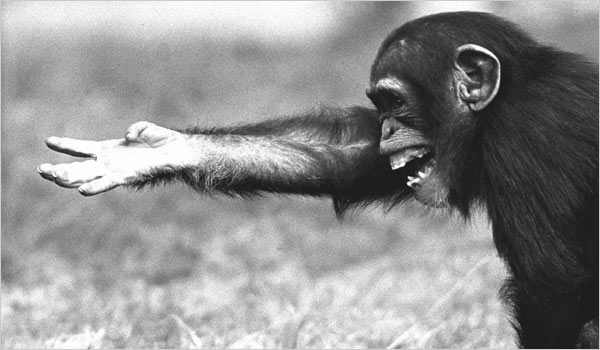 Pollick and de Waal have observed the association of manual and facial/vocal signals in groups of chimpanzees and bonobos, distinguishing 31 manual gestures and 18 facial/vocal signals. Bonobos, which became a separate species from chimpanzees 2.5 million years ago, seem to make special use of hand gestures that elicit a response from other bonobos much more often when included in the mix of sounds and expressions.
"...our closest primate relatives use brachiomanual gestures more flexibly across contexts than they do facial expressions and vocalizations. Gestures seem less closely tied to particular emotions, such as aggression or affiliation, hence possess a more adaptable function. Gestures are also evolutionarily younger, as shown by their presence in apes but not monkeys, and likely under greater cortical control than facial/ vocal signals .... This observation makes gesture a serious candidate modality to have acquired symbolic meaning in early hominins. As such, the present study supports the gestural origin hypothesis of language."
Train Your Brain
Meghan O'Rourke on the new mania for neuroplasticity.
Neuroplasticity certainly has capacious ramifications, but you could be forgiven for thinking that the mania for harnessing its supposed anti-aging benefits is just our latest form of magical thinking, invoked by baby boomers who've turned away from fussing over their children's brains to ward off their own eventual decline.
...the idea that a little mindful meditation could calm down the forgetful, buzzing frenzy of our brains is still an appealing one. Even if the science is less than solid, maybe the placebo effect will kick in; and in any case, my brain seems to enjoy its crossword-puzzle respites and its Sudoku vacations, the way my muscles enjoy a massage. Or so my mind is telling me. Seven-letter word for "memory loss," anyone?
Wednesday, May 02, 2007
The Way We Age Now
This is the title of one the best articles on aging that I have read, written by Atul Gawande (Asst. Prof. in the Harvard School of Public Health, and staff writer for the New Yorker Magazine). The article appears in the April 30 issue of the New Yorker.
Some clips:
Even though some genes have been shown to influence longevity in worms, fruit flies, and mice..
Some clips:
Even though some genes have been shown to influence longevity in worms, fruit flies, and mice..
...scientists do not believe that our life spans are actually programmed into us. After all, for most of our hundred-thousand-year existence—all but the past couple of hundred years—the average life span of human beings has been thirty years or less...Today, the average life span in developed countries is almost eighty years. If human life spans depend on our genetics, then medicine has got the upper hand. We are, in a way, freaks living well beyond our appointed time. So when we study aging what we are trying to understand is not so much a natural process as an unnatural one...Gawande proceeds to a discussion of social and medical consequences of people over 65 becoming 20% of the population.
...complex systems—power plants, say—have to survive and function despite having thousands of critical components. Engineers therefore design these machines with multiple layers of redundancy: with backup systems, and backup systems for the backup systems. The backups may not be as efficient as the first-line components, but they allow the machine to keep going even as damage accumulates...within the parameters established by our genes, that’s exactly how human beings appear to work. We have an extra kidney, an extra lung, an extra gonad, extra teeth. The DNA in our cells is frequently damaged under routine conditions, but our cells have a number of DNA repair systems. If a key gene is permanently damaged, there are usually extra copies of the gene nearby. And, if the entire cell dies, other cells can fill in.
Nonetheless, as the defects in a complex system increase, the time comes when just one more defect is enough to impair the whole, resulting in the condition known as frailty. It happens to power plants, cars, and large organizations. And it happens to us: eventually, one too many joints are damaged, one too many arteries calcify. There are no more backups. We wear down until we can’t wear down anymore.
Improvements in the treatment and prevention of heart disease, respiratory illness, stroke, cancer, and the like mean that the average sixty-five-year-old can expect to live another nineteen years—almost four years longer than was the case in 1970. (By contrast, from the nineteenth century to 1970, sixty-five-year-olds gained just three years of life expectancy.)
The result has been called the “rectangularization” of survival. Throughout most of human history, a society’s population formed a sort of pyramid: young children represented the largest portion—the base—and each successively older cohort represented a smaller and smaller group. In 1950, children under the age of five were eleven per cent of the U.S. population, adults aged forty-five to forty-nine were six per cent, and those over eighty were one per cent. Today, we have as many fifty-year-olds as five-year-olds. In thirty years, there will be as many people over eighty as there are under five.
Americans haven’t come to grips with the new demography. We cling to the notion of retirement at sixty-five—a reasonable notion when those over sixty-five were a tiny percentage of the population, but completely untenable as they approach twenty per cent. People are putting aside less in savings for old age now than they have in any decade since the Great Depression. More than half of the very old now live without a spouse, and we have fewer children than ever before—yet we give virtually no thought to how we will live out our later years alone.
...medicine has been slow to confront the very changes that it has been responsible for—or to apply the knowledge we already have about how to make old age better. Despite a rapidly growing elderly population, the number of certified geriatricians fell by a third between 1998 and 2004.
Spirit Tech
John Horgan on how to wire your brain for religious ecstasy.
Our current mystical technologies are primitive, but one day, neurotheologians may find a technology that gives us permanent, blissful self-transcendence with no side effects. Should we really welcome such a development? Recall that in the 1950s and 1960s, the CIA funded research on psychedelics because of their potential as brainwashing agents and truth serums.
Even setting aside the issue of control, mystical technologies raise troubling philosophical issues. Shulgin, the psychedelic chemist, once wrote that a perfect mystical technology would bring about "the ultimate evolution, and perhaps the end of the human experiment." When I asked Shulgin to elaborate, he said that if we achieve permanent mystical bliss, there would be "no motivation, no urge to change anything, no creativity." Both science and religion aim to eliminate suffering. But if a mystical technology makes us immune to anxiety, grief, and heartache, are we still fully human? Have we gained something or lost something? In short, would a truly effective mystical technology—a God machine that works—save us, or doom us?
Human evolution and migration

I just came across one of the best graphical presentations of human origins and migrations that I have seen, posted by The Bradshaw Foundation, whose website also has other information on human origins. It allows you to click through the various expansions and contractions of human groups as the ice ages came and went.
Tuesday, May 01, 2007
God Is in the Dendrites
George Johnson asks: Can "neurotheology" bridge the gap between religion and science? He gives an excellent summary of relevant experiments that measure or induce brain activity correlated with meditative, religious, or estatic states to conclude:
So it goes, round and round. Either the brain naturally or through a malfunction manufactures religious delusions, or some otherworldly presence speaks to homo sapiens through the language of neurological pulses. Hot in pursuit of this undecidable proposition, neurotheology will keep on churning out data—but when it comes to the biggest questions, it will never have much to say.
An interesting effect of Cochlear Implants - better than normal audiovisual integration
Rouger et al. show that deaf people have superior lip-reading abilities and superior audiovisual integration compared with those with normal hearing and that they maintain superior lip-reading performance even after cochlear implantation.
From Shannon's review of this work:
From Shannon's review of this work:
Cochlear implants are sensory prostheses that restore hearing to deafened individuals by electric stimulation of the remaining auditory nerve. Contemporary cochlear implants generally use 16–22 electrodes placed along the tonotopic axis of the cochlea. Each electrode is designed to stimulate a discrete neural region and thereby present a coarse representation of the frequency-specific neural activation in a normal cochlea. However, within each region of stimulated neurons, the fine spectro-temporal structure of neural activation/response is quite different from that of the normal ear. Despite these differences, modern cochlear implants provide high levels of speech understanding, with most recipients capable of telephone conversation.from Rouger et al.'s abstract:
... recovery goes through long-term adaptative processes to build coherent percepts from the coarse information delivered by the implant.... we analyzed the longitudinal postimplantation evolution of word recognition in a large sample of cochlear implant (CI) users in unisensory (visual or auditory) and bisensory (visuoauditory) conditions. We found that, despite considerable recovery of auditory performance during the first year postimplantation, CI patients maintain a much higher level of word recognition in speechreading conditions compared with normally hearing subjects, even several years after implantation. Consequently, we show that CI users present higher visuoauditory performance when compared with normally hearing subjects with similar auditory stimuli. This better performance is not only due to greater speechreading performance, but, most importantly, also due to a greater capacity to integrate visual input with the distorted speech signal. Our results suggest that these behavioral changes in CI users might be mediated by a reorganization of the cortical network involved in speech recognition that favors a more specific involvement of visual areas. Furthermore, they provide crucial indications to guide the rehabilitation of CI patients by using visually oriented therapeutic strategies.
Subscribe to:
Posts (Atom)