Thursday, July 30, 2009
The "Neuro Revolution"
German cognitive scientist and writer Stephan Schleim writes a review (download here) that is appropriately critical of Zack Lynch's new spiel "The Neuro Revolution: How Brain Science Is Changing Our World."
Wednesday, July 29, 2009
Mapping the human brain "connectome"
 It seems that almost everything can come now with an "-ome" suffix (referring to a totality of some sort. Beyond the original "genome" we now have a long list, including the proteome, speechome, mechanome, etc.). A massive project to establish a human brain connectome, or map of all brain connections, has just received a 30 million dollar cash infusion from the N.I.H. This is an unbelievably daunting task, Over the past century, neuroscientists have used three main sets of anatomical approaches to study neural connectivity: single-cell impregnation, optically based tract-tracing and electron microscopy. More recent techniques involve attaching color markers to intrinsic neuronal labels (shown in figure). Resolution at the electron microscope level, so far done only for the small nervous system of the nematode roundworm, is still technically inaccessible, so that the work will actually be on lower resolution of nerve tracts. But... I wonder then about the minor detail that no two human brains are the same. Even the brains of identical twins have been shown to differ significantly in their activation patterns and connectivity. (The same variability also confounds comparative genome studies.) While it will indeed be exciting, as it was for the human genome, to be told "We now have the first human brain connectome," an awesome amount of work then must follow.
Tuesday, July 28, 2009
The cognitive neuroscience of dyslexia and its repair
John Gabrieli offers a review article in the July 17 issue of Science. Several clips:
Reading is essential in modern societies, but many children have dyslexia, a difficulty in learning to read. Dyslexia often arises from impaired phonological awareness, the auditory analysis of spoken language that relates the sounds of language to print. Behavioral remediation, especially at a young age, is effective for many, but not all, children. Neuroimaging in children with dyslexia has revealed reduced engagement of the left temporo-parietal cortex for phonological processing of print, altered white-matter connectivity, and functional plasticity associated with effective intervention. Behavioral and brain measures identify infants and young children at risk for dyslexia, and preventive intervention is often effective. A combination of evidence-based teaching practices and cognitive neuroscience measures could prevent dyslexia from occurring in the majority of children who would otherwise develop dyslexia.
Brain activation differences in dyslexia and its treatment. Functional magnetic resonance imaging activations shown on the left hemisphere for phonological processing in typically developing readers (left), age-matched dyslexic readers (middle), and the difference before and after remediation in the same dyslexic readers (right). Red circles identify the frontal region, and blue circles identify the temporo-parietal region of the brain. Both regions are hypoactivated in dyslexia and become more activated after remediation.

Brain changes from childhood to young adulthood
Supekar et al. compare large scale brain functional networks in 7-9 and 19-22 year olds and find that they differ significantly in hierarchical organization and interregional connectivity. Subcortical areas are more strongly connected with primary sensory, association, and paralimbic areas in children, whereas young-adults show stronger cortico-cortical connectivity between paralimbic, limbic, and association areas.
National Institutes of Health to be run by a religionist??
Sam Harris doesn't like the idea. Neither do I.
Monday, July 27, 2009
Reason, emotion, and decision-making
Steven Quartz does an opinion piece in Trends in Cognitive Science noting that the tidy separation of our decision making into cognitive and emotional components is not appropriate. Two slightly edited clips:
Many models of judgment and decision-making (JDM) posit distinct cognitive and emotional contributions to decision-making under uncertainty. Cognitive processes typically involve exact computations according to a cost-benefit calculus, whereas emotional processes typically involve approximate, heuristic processes that deliver rapid evaluations without mental effort. However, it remains largely unknown what specific parameters of uncertain decision the brain encodes, the extent to which these parameters correspond to various decision-making frameworks, and their correspondence to emotional and rational processes. A review of basic research suggests that emotional processes encode in a precise quantitative manner the basic parameters of financial decision theory, indicating a reorientation of emotional and cognitive contributions to risky choice.
Despite the popularity and commonsense appeal of distinguishing between cognitive and emotional contributions to JDM, many fundamental issues remain unresolved. Theories can be characterized in terms of the representations and the computations over those representations they posit, and it remains unclear in what ways cognitive and emotional contributions to JDM differ along these dimensions. That is, at the level of representation, what specific parameters of uncertain decision contexts are encoded by the brain, to what extent do such representations correspond to the parameters of various decision-making frameworks, and to what extent do putatively distinct cognitive and emotional contributions to JDM correspond to distinct underlying representations of uncertain decision contexts? Addressing these issues poses several challenges, not least that competing theories are not behaviorally distinguishable. This suggests that adjudicating among different theories requires neural studies that use quantitative and parametric frameworks with suitable resolution to distinguish among the main parameters of these various models and disassociating the representation of their basic parameters from other potential components of uncertain choice, including learning, motivation and salience. Based on recent work using such experimental designs, I suggest that putative distinctions between cognitive and emotional contributions to JDM at the level of representation collapse. Emerging evidence suggests that emotional contributions to JDM do not encode approximate, heuristic evaluations. Rather, it suggests that emotional processes encode the precise, mathematically defined parameters of traditionally cognitive accounts of decision-making from economics and related fields, such as finance. On a more general note, such findings indicate that once-considered basic distinctions, such as that between cognition and emotion, do not map seamlessly onto brain functioning. That is, just as studies of the deep interconnectivity among emotional and cognitive structures suggests that assigning cognitive or emotional specialization to structures is deeply problematic, proposed functional distinctions, such as complexity differences between emotional and cognitive representations and computations, are likewise problematic.
The unconscionable rip-offs of American cell phone companies
 Have an iPhone and fume at AT&T? Get furious over listening to Verizon's long introduction before you can leave a message? (They make 850 million a year by forcing us to sit there and wait).. Pogue writes a nice summary of your frustrations. Also, I can't resist passing on this New Yorker cartoon on the iPhone (click on the cartoon to enlarge it).
Friday, July 24, 2009
Training our minds to move matter
We know that our body schema is plastic (see recent post on this), and that our brain's motor routines can learn stable habits of controlling tools and prostheses as if they were our own actual body parts. Ganguly and Carmena have now taken the obvious step of pairing stable recordings from ensembles of primary motor cortex neurons in macaque monkeys with a constant decoder that transforms neural activity to prosthetic movements. Blakeslee points out that this work suggests that learning to move a computer cursor or robotic arm with nothing but thoughts can be no different from learning how to play tennis or ride a bicycle. The brain can form a motor memory to control a disembodied device in a way that mirrors how it controls its own body. Here is their summary, followed by an illustration:
Brain–machine interfaces (BMIs) have the potential to revolutionize the care of neurologically impaired patients. Numerous studies have now shown the feasibility of direct “brain control” of a neuroprosthetic device, yet it remains unclear whether the neural representation for prosthetic control can become consolidated and remain stable over time. This question is especially intriguing given the evidence demonstrating that the neural representation for natural movements can be unstable: BMIs provide a window into the plasticity of cortical circuits in awake-behaving subjects. Here, we show that long-term neuroprosthetic control leads to the formation of a remarkably stable cortical map. Interestingly, this map has the putative attributes of a memory trace, namely, it is stable across time, readily recalled, and resistant to the storage of a second map. The demonstration of such a cortical map for prosthetic control indicates that neuroprosthetic devices could eventually be controlled through the effortless recall of motor memory in a manner that mimics natural skill acquisition and motor control.
Schematics for manual control (MC) and brain control (BC). During MC, the animal physically performs a two-dimensional center-out task using the right upper extremity while the neural activity is recorded. Under BC, the animal performs a similar center-out task using a computer cursor under direct neural control through a decoder trained during MC.

Why I take an omega-3 supplement before bedtime...
I'm into dietary supplements that might be relevant to aging (as in the previous posts on resveratrol), and so thought this study was interesting, along with this summary from Rabin. (By the way, the 'before bedtime' in the title is chosen because we know that significant renewal and turnover of brain nerve cells membranes - whose fluidity is modulated by omega-3 content - occurs during sleep.)
Cortical thickness, MRI, and early Alzheimer's diagnosis
Alongside today's brief post on diet and aging, I thought I would pass on the links to two open access articles in the neurology journal "Brain." The first deals with early diagnosis of Alzheimer's disease using cortical thickness, and the second uses automated MRI measurements to identify individuals with mild cognitive impairment and Alzheimer's disease. (And, I suppose this is a good post in which to act on a request that I provide a link to Caring.com, "a website dedicated to helping people take care of their aging parents and other loved ones.")
Thursday, July 23, 2009
Thursday morning Grieg, a Berceuse
I just looked up what a Berceuse is.... it's a lullaby, or soothing composition... This version would have to be considered a fairly robust rendering of the style.
Positive self statements: power for some, peril for others
Wood et al. offer an interesting article in Psychological Science. They present experiments showing that positive self-statements have the potential to make one feel worse if they lie outside one's latitude of acceptance, are self-discrepant and thereby highlight one's failures to meet one's standards, and arouse self-verification motives. Positive self-statements are especially likely to backfire for the very people they are meant to benefit: people with low self-esteem. Such people, by definition, see themselves as failing to meet standards in more domains or in more important domains than do people with high self-esteem. Moreover, self-verification motives should bias people with low self-esteem to reject positive self-statements, but encourage people with high self-esteem to accept them. Here is their abstract:
Positive self-statements are widely believed to boost mood and self-esteem, yet their effectiveness has not been demonstrated. We examined the contrary prediction that positive self-statements can be ineffective or even harmful. A survey study confirmed that people often use positive self-statements and believe them to be effective. Two experiments showed that among participants with low self-esteem, those who repeated a positive self-statement ("I'm a lovable person") or who focused on how that statement was true felt worse than those who did not repeat the statement or who focused on how it was both true and not true. Among participants with high self-esteem, those who repeated the statement or focused on how it was true felt better than those who did not, but to a limited degree. Repeating positive self-statements may benefit certain people, but backfire for the very people who "need" them the most.
Masturbation in the animal kingdom
 An interesting piece by Engber from Slate Magazine (The article even includes a link to a YouTube gallery on the subject!):
The recent finding that masturbation improves the quality of human sperm supports the notion that it's an evolved trait and not merely a byproduct of our physiology. According to a branch of evolutionary theory called "sperm competition" that developed in the late-1960s, natural selection can produce just such a change in reproductive behavior. The theory focuses on polyandrous species—i.e., those in which a single female takes multiple partners and the sperm from several potential fathers might end up competing to fertilize the same egg. Under those conditions, the relative quality of male ejaculate very clearly determines whose genes are passed on to the next generation.
Wednesday, July 22, 2009
So....this is how my cat is manipulating me
 If you are a cat person, check out this interesting bit from Gisela Telis (it is open access for the new few weeks). She discusses a new study that reports that our feline friends modify their signature sound when seeking food, adding a higher-frequency element that exploits our sensitivity to infant wails-- thus making it harder to ignore. The article has some sound clips of the effect.
Rapamycin - a midlife longevity drug?
From the Nature 'Editor's Summary' of the paper by Harrison et al.
The antitumour drug rapamycin targets TOR, a kinase that is part of the PI3K–AKT–mTOR cascade, involved in regulating protein translation, cell growth and autophagy. Reducing TOR function is known to extend the life of yeast, worms and flies. Now experiments replicated in three different laboratories demonstrate that rapamycin, fed to male and female mice in a dose that substantially inhibits TOR signalling, can extend their median and maximal lifespan by up to 14%. This life extension was observed in mice fed rapamycin from 270 days of age and also at a late stage in their life, from age 600 days. These findings point to the TOR pathway as a critical point in the control of ageing in mammals and in the pathogenesis of late-life illnesses.
The brain sets fatigue.
Reynolds reviews work showing that fatigue clearly involves more than muscles - the brain also determines how far and hard we can exercise. For example, if the brain's reward center is tricked into thinking more energy is on the way (by swishing a sugar drink in the mouth but not swallowing it, for example), endurance is increased.
Tuesday, July 21, 2009
To Sleep, Perchance to Analyze
 Pogue writes on a neat new sleep monitor that plots and reports back your periods of light sleep, REM sleep, and deep sleep - and then prompts you to note the effects coffee, booze, etc.
Insightful problem solving in birds.
An exchange of letters in PNAS as followup to the subject of the July 3 post on tool use in birds, in which the birds spontaneously use a series of tools to obtain a reward. Lind et al. question whether insight (internal mental modeling of possible problem solutions) or shaping (through successive reinforcement of behaviors) was involved. Authors Bird and Emery respond:
...our study found that rooks not only learned to obtain food by dropping a stone into a tube to collapse a platform, but that they were able to spontaneously choose the correct size and shape tool when presented with subsequent transfer tests and spontaneously solve a completely new task, whereby they had to lift a bucket by using a novel hook tool and manufacture a hook tool from a piece of wire. While we agree that the question of animal “insight” is a complex one in light of studies on chimpanzees and pigeons, we find shaping an unsatisfactory explanation for the spontaneous choice of the correct tool and the bending of the wire. We do not dispute the argument that initial acquisition of stone dropping was brought about through shaping, however, because shaping requires one or more stimulus/behaviour–reward pairings, a novel behaviour such as hook manufacture cannot simply be a case of shaping.
Lost in the internet cloud.
Cautionary sentiments about the idea of moving all of our programs and data from our personal computers to the internet 'cloud.' In the absence of rigid safeguards (which probably won't happen) the erosion of our personal power, autonomy, and privacy will be really scary.
Last week Amazon apparently conveyed a publisher’s change-of-heart to owners of its Kindle e-book reader: some purchasers of Orwell’s “1984” found it removed from their devices, with nothing to show for their purchase other than a refund. (Orwell would be amused.)
Worse, data stored online has less privacy protection both in practice and under the law. A hacker recently guessed the password to the personal e-mail account of a Twitter employee, and was thus able to extract the employee’s Google password. That in turn compromised a trove of Twitter’s corporate documents stored too conveniently in the cloud. Before, the bad guys usually needed to get their hands on people’s computers to see their secrets; in today’s cloud all you need is a password.
Thanks in part to the Patriot Act, the federal government has been able to demand some details of your online activities from service providers — and not to tell you about it. There have been thousands of such requests lodged since the law was passed, and the F.B.I.’s own audits have shown that there can be plenty of overreach — perhaps wholly inadvertent — in requests like these.
Monday, July 20, 2009
Erotica
Pretty mild stuff, by today's standards, but reasonably sensual for Grieg's time - Lyrical Piece Op 43 No 5 - Erotica
The possibility of impossible cultures.
Marc Hauser offers an essay in the 9 July issue of Nature, in which he suggests points of contact between work in the generative tradition of linguistics (Chomsky, etc.) and evolutionary developmental biology research on animal forms. Just as a developing animal form faces a massive range of possible variation:
...children are born with the capacity to acquire a wide range of possible languages, as opposed to specific languages such as English, Korean or French. This implies that a child is equipped with an abstract acquisition device, allowing the 'growth' of many different languages. Furthermore, as the child's acquisition device generates a space of possible languages, something internal or external to the device creates a space of impossible languages — forms that are never entertained by the child because they are poorly designed for acquisition and externalization in linguistic communication.Heuser suggests that only humans have evolved four computational capacities, constituting a phylogenetic mind gap between humans and other animals:
...in the same way that biologists speak of morphospaces — n-dimensional volumes that define the range of existing and potential morphological variation — linguists can speak of 'linguaspaces'. These are n-dimensional environments that constrain the set of possible languages and therefore, by definition, establish the set of impossible languages. What is necessary, therefore, is to establish the set of parameters that allow the range of variation and place constraints on its overall form.
...a point of contact concerns how the internal language system ultimately forms an acquired and externalizable language. If, as discussed earlier, the acquisition device constrains the range of possible languages by providing a set of options, then the role of environmental input is to favour, and thus select, certain options over others. This selective perspective, although uncommon in the mind sciences, aligns more closely with other work in biology, including studies of the immune system, the development of animal forms, the wiring of neurons and the acquisition of bird song. For example, songbirds have evolved brains with a set of developmental options for creating variation in song-relevant acoustic forms. Depending on the environment, certain note types are selected and are then reproduced in particular orders to create population-specific dialects — and so it is for language acquisition by humans. When a child is exposed to a particular linguistic environment, the relevant linguistic input or experience fixes the available options to create an externalizable language that is comprehensible to those who will care for and compete with the child.
Research in the generative tradition of linguistics suggests therefore that, like the variety of animal forms, the sense of unbounded variation in linguistic form is illusory, concealing a suite of universally held, biologically instantiated mechanisms for generating variation, allowing acquisition and constraining the space of possible languages. Although biologists have long sensed the close connection between the generative properties of language and generative biological systems, including the immune system, microbial diversity and proteonomics (the study of protein function and expression) relatively few students of the mind sciences have acknowledged such connections with other domains of human knowledge.
Generative computation Recursive and combinatorial operations provide the only known mechanisms for generating an almost limitless variety of meaningful expressions, whether mathematical, linguistic, musical or moral. Recursion is an iterative operation, in which a rule is called up repeatedly to create new expressions, be they embedded phrases within a sentence, new musical scores with repeating themes, or tools within tools (for example, a Swiss army knife). Each expression has a unique interpretation or function depending on the arrangement of the elements. By contrast, combinatorial operations allow discrete elements to be unified and ordered, thus creating new ideas, which could be expressed as novel words (Walkman from walk and man) or novel musical forms.
Mental symbols Humans readily, without instruction, convert sensory experiences and abstract thoughts into externalized symbols, either as words or images. This capacity cuts across domains of knowledge and sensory experience, enabling humans to express beliefs in sentences, to depict particular melodies with explicit notations, and to provide logos indicating when to turn off the highway for a hamburger or a coffee.
Promiscuous interfaces Humans have unique creative capacities and problem-solving abilities, which stem from the capacity to combine representations promiscuously from different domains of knowledge. For instance, humans can combine the concepts of number, belief, causality and harm in deciding that it is sometimes morally obligatory to harm one person to save the lives of many.
Abstract thought Some thoughts derive from direct sensory experiences: for example, thinking of red items such as cherries and blood requires experience with these, as opposed to non-red objects such as celery and bone. But many human thoughts are abstract, with no explicit or even necessary sensory connection. These include concepts such as infinity, grammatical categories such as nouns and verbs, and ethical judgments such as permissible and forbidden.
Figure - Promiscuous interfaces between different domains of knowledge. An example of deciding whether taking one life is justified if the action saves many other lives. A representation of an action (a finger pulling a trigger) interfaces with a representation of death as a potential consequence, which in turn interfaces with a system of numerical representation that evaluates whether the number of lives killed exceeds the number saved. This then interfaces with a moral evaluative system that judges the permissibility of the initial action, which then interfaces with the human linguistic system to deliver the judgement "forbidden".
The generative mechanisms that underpin so much of human mental life acquire their expressive power because the recursive and combinatorial operations can functionally 'grab' the outputs of different modular systems or domains of knowledge. This capacity for promiscuously creating interfaces between domains is almost absent in animals. Thus, although both human and animal brains are characterized by modular functions and mechanisms, the modular outputs are typically restricted to a single functional problem in animals but are broadly accessible in humans. Non-human animals therefore show a form of myopic intelligence, designed to solve one problem with exquisite efficiency. For example, although honeybees have a symbolic dance that indicates the distance, direction and quantity of food, this communication system is largely restricted to food despite the intricate social lives of bees. Although meerkat adults teach their pups how to kill scorpion prey by providing them with age-appropriate opportunities for handling and dismembering, teaching does not occur in any other context. Although plovers use a deceptive display to lure predators away from their nest of eggs, they do not deceive in any other situation. And although chimpanzees use the direction of another's eyes to guide strategic competition, they are far less skilled at using another's eyes to guide cooperation. By contrast, in humans, neither language, teaching, deception, or the use of seeing to infer knowing are restricted to a single context.

Friday, July 17, 2009
The evolution of misbelief
Below I paste in the abstract (and here is the PDF) of a forthcoming article in Brain and Behavioral Science by McKay and Dennett that examines possible evolutionary rationales for mistaken beliefs, bizarre delusions, instances of self-deception, etc. Of the range of potential candidates for evolved misbelief, they conclude that, among those surveyed, only positive illusions meet their criteria.
From an evolutionary standpoint, a default presumption is that true beliefs are adaptive and misbeliefs maladaptive. But if humans are biologically engineered to appraise the world accurately and to form true beliefs, how are we to explain the routine exceptions to this rule? How can we account for mistaken beliefs, bizarre delusions and instances of self-deception? We explore this question in some detail. We begin by articulating a distinction between two general types of misbelief: those resulting from a breakdown in the normal functioning of the belief formation system (e.g. delusions) and those arising in the normal course of that systems operations (e.g. beliefs based on incomplete or inaccurate information). The former are instances of biological dysfunction or pathology, reflecting culpable limitations of evolutionary design. Although the latter category includes undesirable (but tolerable) by-products of forgivably limited design, our quarry is a contentious subclass of this category: misbeliefs best conceived as design features. Such misbeliefs, unlike occasional lucky falsehoods, would have been systematically adaptive in the evolutionary past. Such misbeliefs, furthermore, would not be reducible to judicious but doxastically noncommittal - action policies. Finally, such misbeliefs would have been adaptive in themselves, constituting more than mere by-products of adaptively biased misbelief-producing systems. We explore a range of potential candidates for evolved misbelief, and conclude that, of those surveyed, only positive illusions meet our criteria.
EEG prediction of lapses in attention.
O'Connell et al. show that EEG signals can predict a forthcoming lapse in attention 20 seconds before it occurs. Could this prove useful for a task (like flying an airplane or operating complex but boring equipment) in which constant attention is required?
Feminize yourself by drinking bottled water....
Kristof does a piece on how the phthalates used in plastic manufacture, found now in our water supply and leached from many plastic bottle products, can nudge the development of humans and other animals towards feminization.
Thursday, July 16, 2009
Melancholy...
Here's a haunting piece: from Grieg's Lyric Pieces, Op 47 No 5 - Melancholy
(I enjoy sitting down at the end of an afternoon and playing these brief Grieg pieces, and it takes only a modest effort to record them, using Apple's Garage Band and iMovie applications.)
(I enjoy sitting down at the end of an afternoon and playing these brief Grieg pieces, and it takes only a modest effort to record them, using Apple's Garage Band and iMovie applications.)
A sixth sense...
A prosthesis that immerses you in the data world, described by Pattie Maes in a TED lecture.
Obamology
From the Random Samples section of the July 10 issue of Science:
Obamology
Hey, they never did this with George W. Bush! The American Sociological Association, meeting in San Francisco, California, in August, will be examining the presidency in-depth in sessions held under the heading "The Sociological Significance of President Barack Obama."
* Plenary Session: "Why Obama Won (and What that Says About Democracy and Change in America)"
* Presidential Panel: "A Defining Moment? Youth, Power and the Obama Phenomenon"
* Presidential Panel: "Through the Lens of Gender, Race, Sexuality and Class: The Obama Family and the American Dream"
* Thematic Session: "Understanding Democratic Renewal: The Movement to Elect Barack Obama"
* Thematic Session: "The Future of Community Organizing During an Obama Presidency"
* Thematic Session: "Asian-American Movements, Identities, and Politics: A New Racial Project in the Obama Years?"
* Open Forum: "Does the Obama Administration Need a Social Science Scholars Council?"
Obamology
Hey, they never did this with George W. Bush! The American Sociological Association, meeting in San Francisco, California, in August, will be examining the presidency in-depth in sessions held under the heading "The Sociological Significance of President Barack Obama."
* Plenary Session: "Why Obama Won (and What that Says About Democracy and Change in America)"
* Presidential Panel: "A Defining Moment? Youth, Power and the Obama Phenomenon"
* Presidential Panel: "Through the Lens of Gender, Race, Sexuality and Class: The Obama Family and the American Dream"
* Thematic Session: "Understanding Democratic Renewal: The Movement to Elect Barack Obama"
* Thematic Session: "The Future of Community Organizing During an Obama Presidency"
* Thematic Session: "Asian-American Movements, Identities, and Politics: A New Racial Project in the Obama Years?"
* Open Forum: "Does the Obama Administration Need a Social Science Scholars Council?"
Narrowing of intersensory speech perception in infancy
From Pons et al.:
The conventional view is that perceptual/cognitive development is an incremental process of acquisition. Several striking findings have revealed, however, that the sensitivity to non-native languages, faces, vocalizations, and music that is present early in life declines as infants acquire experience with native perceptual inputs. In the language domain, the decline in sensitivity is reflected in a process of perceptual narrowing that is thought to play a critical role during the acquisition of a native-language phonological system. Here, we provide evidence that such a decline also occurs in infant response to multisensory speech. We found that infant intersensory response to a non-native phonetic contrast narrows between 6 and 11 months of age, suggesting that the perceptual system becomes increasingly more tuned to key native-language audiovisual correspondences. Our findings lend support to the notion that perceptual narrowing is a domain-general as well as a pan-sensory developmental process.
Wednesday, July 15, 2009
Racial group membership modulates empathic brain responses.
From Xu et al.:
The pain matrix including the anterior cingulate cortex (ACC) mediates not only first person pain experience but also empathy for others' pain. It remains unknown, however, whether empathic neural responses of the pain matrix are modulated by racial in-group/out-group relationship. Using functional magnetic resonance imaging we demonstrate that, whereas painful stimulations applied to racial in-group faces induced increased activations in the ACC and inferior frontal/insula cortex in both Caucasians and Chinese, the empathic neural response in the ACC decreased significantly when participants viewed faces of other races. Our findings uncover neural mechanisms of an empathic bias toward racial in-group members.
Figure - a, Illustration of Caucasian faces receiving painful and non-painful stimuli. b, Illustration of Chinese faces receiving painful and non-painful stimuli. c, Contrast values of the parameter estimates of signal intensity in the ACC and the frontal cortex that differentiated painful and non-painful stimuli in Caucasians. d, Contrast values of the parameter estimates of signal intensity in the ACC and the frontal cortex that differentiated painful and non-painful stimuli in Chinese. e, Correlation between ACC empathic neural responses to racial in-group and out-group members. X and Y axes respectively indicate ACC empathic responses to racial in-group and racial out-group members indexed in contrast values of painful versus non-painful stimulation. f, Increased activations in the ACC and the frontal/insula cortex shown in whole-brain statistical parametric mapping analyses when participants perceived racial in-group faces. The upper figures show the results from Caucasian subjects and the lower figures show the results from Chinese subjects.

Happiness is just around the corner!
I wish I were taking the same happy pill that Betsy Devine seems to have found... seems a bit Pollyanna to me...
Brain changes caused by encouraging expressions.
Martín-Loeches et al. find that encouraging and discouraging messages elicit a similar long-lasting brain emotional response during a visuospatial task. Further, encouraging expressions are able to alter the customary working pattern of the visual attention system for shape selection in the attended location.
Tuesday, July 14, 2009
Growing up blind does not change the neural bases of theory of mind.
An interesting piece of work from Bedny et al.
Humans reason about the mental states of others; this capacity is called Theory of Mind (ToM). In typically developing adults, ToM is supported by a consistent group of brain regions: the bilateral temporoparietal junction (TPJ), medial prefrontal cortex (MPFC), precuneus (PC), and anterior temporal sulci (aSTS). How experience and intrinsic biological factors interact to produce this adult functional profile is not known. In the current study we investigate the role of visual experience in the development of the ToM network by studying congenitally blind adults. In experiment 1, participants listened to stories and answered true/false questions about them. The stories were either about mental or physical representations of reality (e.g., photographs). In experiment 2, participants listened to stories about people's beliefs based on seeing or hearing; people's bodily sensations (e.g., hunger); and control stories without people. Participants judged whether each story had positive or negative valance. We find that ToM brain regions of sighted and congenitally blind adults are similarly localized and functionally specific. In congenitally blind adults, reasoning about mental states leads to activity in bilateral TPJ, MPFC, PC, and aSTS. These brain regions responded more to passages about beliefs than passages about nonbelief representations or passages about bodily sensations. Reasoning about mental states that are based on seeing is furthermore similar in congenitally blind and sighted individuals. Despite their different developmental experience, congenitally blind adults have a typical ToM network. We conclude that the development of neural mechanisms for ToM depends on innate factors and on experiences represented at an abstract level, amodally.
Empathetic accuracy
Zaki et al show that the accuracy of attributions made about the mental state of others track with activity in structures within the human mirror neuron system thought to be involved in shared sensorimotor representations, and also with regions implicated in mental state attribution - the superior temporal sulcus and medial prefrontal cortex.
Gender–science stereotypes predict national sex differences in science and math achievement
From Nosek et al:
About 70% of more than half a million Implicit Association Tests completed by citizens of 34 countries revealed expected implicit stereotypes associating science with males more than with females. We discovered that nation-level implicit stereotypes predicted nation-level sex differences in 8th-grade science and mathematics achievement. Self-reported stereotypes did not provide additional predictive validity of the achievement gap. We suggest that implicit stereotypes and sex differences in science participation and performance are mutually reinforcing, contributing to the persistent gender gap in science engagement.
Monday, July 13, 2009
Boiling the frog.
Krugman is right on, as usual. This material on our inability to admit or perceive slow changes is hardly novel (cf. Ornstein and Erlich's "New World, New Mind" from 1989), and one can only hope that marketing efforts like those of Al Gore will bring this glitch in our thinking abilities into more common awareness.
Caloric restriction enhances longevity in monkeys
It all over the newspapers, but I thought I would pass on the link to work just published by my colleagues at the University of Wisconsin:
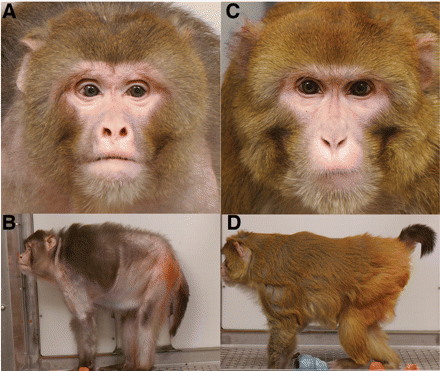
Caloric restriction (CR), without malnutrition, delays aging and extends life span in diverse species; however, its effect on resistance to illness and mortality in primates has not been clearly established. We report findings of a 20-year longitudinal adult-onset CR study in rhesus monkeys aimed at filling this critical gap in aging research. In a population of rhesus macaques maintained at the Wisconsin National Primate Research Center, moderate CR lowered the incidence of aging-related deaths. At the time point reported, 50% of control fed animals survived as compared with 80% of the CR animals. Furthermore, CR delayed the onset of age-associated pathologies. Specifically, CR reduced the incidence of diabetes, cancer, cardiovascular disease, and brain atrophy. These data demonstrate that CR slows aging in a primate species.
Figure - Animal appearance in old age. (A and B) Photographs of a typical control animal at 27.6 years of age (about the average life span). (C and D) Photographs of an age-matched animal on caloric restriction.
Face perception - the "Thacher Effect" in monkeys
 Our talent for recognizing differences in faces relies on how facial features are configured. But, if the image of a face is flipped, alterations as drastic as inverted mouths and eyes aren't as noticeable — a phenomenon known as the Thatcher effect. Adachi et al. have monitored the length of time rhesus monkeys (Macaca mulatta) look at pictures of monkey faces. Over time, the animals become less interested in all images, but they spend significantly more time looking at the strange, upright altered (Thatcherized) photos than they do looking at the same images upside down. This suggests that perceptual mechanisms for individual recognition have been conserved through primate cognitive evolution.
Friday, July 10, 2009
Doing exactly what you don't want to do.
Dan Wegner has generated an interesting review of a phenomenon that we all know too well. (Wegner is another one of my heroes. He wrote "The Illusion of Conscious Will" - a book that I reference extensively in my "I-Illusion" web lecture and podcast). The subject of the review is the "Imp in your mind" that makes you sometimes blurt out exactly what you are trying to suppress. The theory is that to suppress an insult, for example, the brain must first imagine just that; the very presence of that catastrophic insult, which in turn increases the odds that the brain will spit it out.
In slapstick comedy, the worst thing that could happen usually does: The person with a sore toe manages to stub it, sometimes twice. Such errors also arise in daily life, and research traces the tendency to do precisely the worst thing to ironic processes of mental control. These monitoring processes keep us watchful for errors of thought, speech, and action and enable us to avoid the worst thing in most situations, but they also increase the likelihood of such errors when we attempt to exert control under mental load (stress, time pressure, or distraction). Ironic errors in attention and memory occur with identifiable brain activity and prompt recurrent unwanted thoughts; attraction to forbidden desires; expression of objectionable social prejudices; production of movement errors; and rebounds of negative experiences such as anxiety, pain, and depression. Such ironies can be overcome when effective control strategies are deployed and mental load is minimized.
Mate selection: women not more picky than men?
Sarah Arnquist points to some experiments that question the conventional evolutionary psychology picture that women are pickier than men when choosing a mate. They suggest social conditioning is more important than the usual evolutionary argument that because women have a bigger investment in reproduction — they are the ones who have to endure pregnancy, childbirth and breast-feeding — they need to hedge their bets against selecting a dud to be the father.
Thursday, July 09, 2009
Feeling the beat....
An open access article from Grahn and Rowe, on premotor and striatal interactions in musicians and nonmusicians during beat perception:
Little is known about the underlying neurobiology of rhythm and beat perception, despite its universal cultural importance. Here we used functional magnetic resonance imaging to study rhythm perception in musicians and nonmusicians. Three conditions varied in the degree to which external reinforcement versus internal generation of the beat was required. The "volume" condition strongly externally marked the beat with volume changes, the "duration" condition marked the beat with weaker accents arising from duration changes, and the "unaccented" condition required the beat to be entirely internally generated. In all conditions, beat rhythms compared with nonbeat control rhythms revealed putamen activity. The presence of a beat was also associated with greater connectivity between the putamen and the supplementary motor area (SMA), the premotor cortex (PMC), and auditory cortex. In contrast, the type of accent within the beat conditions modulated the coupling between premotor and auditory cortex, with greater modulation for musicians than nonmusicians. Importantly, the response of the putamen to beat conditions was not attributable to differences in temporal complexity between the three rhythm conditions. We propose that a cortico-subcortical network including the putamen, SMA, and PMC is engaged for the analysis of temporal sequences and prediction or generation of putative beats, especially under conditions that may require internal generation of the beat. The importance of this system for auditory–motor interaction and development of precisely timed movement is suggested here by its facilitation in musicians.
Neural correlates of our depth of strategic reasoning.
Here is a clip from the introduction to an interesting open access study by Coricellia and Nagel that shows that high-level reasoning and strategic IQ realted to game winning correlates with the neural activity in the medial prefrontal cortex, demonstrating its crucial role in successful mentalizing. The authors use an experimental competitive game, analogous to Keynes's Beauty Contest described below, to characterize the neural systems that mediate different levels of strategic reasoning and mentalizing.
“Professional investment may be likened to those newspaper competitions [Beauty Contest] in which the competitors have to pick out the 6 prettiest faces from a hundred photographs, the prize being awarded to the competitor whose choice most nearly corresponds to the average preferences of the competitors as a whole. It is not a case of choosing those which are really the prettiest, nor even those which average opinion genuinely thinks the prettiest. We have reached the third degree—to anticipating what average opinion expects the average opinion to be. And there are some, I believe, who practise the fourth, fifth, and higher degrees.”
John Maynard Keynes, one of the most influential economists of the 20th century, describes in the above quote different ways of thinking about others in a competitive environment. This can range from low-level reasoning, characterized by self-referential thinking (choosing what you like without considering others' behavior), to higher levels of reasoning, taking into account the thinking of others about others (“third degree”), and so on.
Many features of social and competitive interaction require this kind of reasoning, for example, deciding when to queue for precious theater tickets or when to sell or buy in the stock market before too many others do it. Psychologists and philosophers define this as theory of mind or mentalizing, the ability to think about others' thoughts and mental states to predict their intentions and actions (2–9). Neuroimaging studies have found brain activity related to mentalizing in the medial prefrontal cortex, temporo-parietal junction, superior temporal sulcus, and posterior cingulate cortex. However, little is known about the neural mechanisms underlying the iterated steps of thinking, “what you think the others think about what you think,” and so on. That is, the mechanisms underlying how deeply people think about others, and, particularly, whether deeper mentalizing leads to more successful social outcomes.
Wednesday, July 08, 2009
Intellectual performance and the efficiency of functional brain networks.
From van den Heuvel et al., an analysis that strongly suggests that our intellectual performance is likely to be related to how efficiently our brain integrates information between multiple brain regions:

Our brain is a complex network in which information is continuously processed and transported between spatially distributed but functionally linked regions. Recent studies have shown that the functional connections of the brain network are organized in a highly efficient small-world manner, indicating a high level of local neighborhood clustering, together with the existence of more long-distance connections that ensure a high level of global communication efficiency within the overall network. Such an efficient network architecture of our functional brain raises the question of a possible association between how efficiently the regions of our brain are functionally connected and our level of intelligence. Examining the overall organization of the brain network using graph analysis, we show a strong negative association between the normalized characteristic path lengthof the resting-state brain network and intelligence quotient (IQ). This suggests that human intellectual performance is likely to be related to how efficiently our brain integrates information between multiple brain regions. Most pronounced effects between normalized path length and IQ were found in frontal and parietal regions. Our findings indicate a strong positive association between the global efficiency of functional brain networks and intellectual performance.

Most prominent effects between IQ and the level of global connectivity efficiency (as expressed by a shorter node specific normalized path length) were found in the medial prefrontal cortex (yellow box), bilateral inferior parietal cortex (red box depicts effect in right hemisphere), and precuneus/posterior cingulate regions (orange box) of the functional brain network. Shown are correlation coefficient values of those voxels that had a significant negative association between IQ and normalized path length for T = 0.45 (linear regression, p less than 0.05 uncorrected for multiple comparisons, df = 18, corrected for age).
The synchronization of brains
A relevant follow up to the recent posts on Metzinger's book, which discussed the synchronization of our 'ego tunnels': Bharucha suggests that understanding of how brains synchronize — or fail to do so — will be a game-changing scientific development.
Tuesday, July 07, 2009
Calming aperitif for a Tuesday morning - a Grieg Arietta
This is the first item in Grieg's Lyrical Pieces series, the Arietta Op. 12 No. 1. I'm thinking I might record a series of these short pieces, each of which has a distinctive emotional tone, to punctuate the regular blog posts....
Subscribe to:
Comments (Atom)