Chopin Nocturne Op. 27 No. 2, recorded on my Steinway B at Twin Valley.
Monday, May 26, 2008
For your memorial day holiday hangover
 Check out this article by Joan Acocella in the May 26 issue of The New Yorker, "A Few Too Many - Is there any hope for the hung over?"
Tones of Ancient Greece
I found this brief commentary from "Random Samples" in the May 16 issue of Science so interesting that I wanted to pass it on in its entirety:
The strings of a helikon, a gadget invented by Ptolemy to probe musical scales, sounded last week for the first time in almost 2 millennia at the University of Cambridge in the U.K....Andrew Barker, a musicologist at the University of Birmingham, U.K., built the instrument from a description in Harmonics, Ptolemy's 2nd century treatise on the mathematics of music. Ancient scholars considered the study of harmonics vital in understanding the mathematical rules that they believed governed the universe. He unveiled it as part of Cambridge's Science of Musical Sound Project.Barker says the 1-meter-long wooden instrument with eight metal strings allows scientists to test "complete scales constructed on the basis of mathematical principles." The helikon creates different pitches with a calibrated sliding bridge, which can be inserted diagonally to shorten strings to different lengths. Strings can also be moved crosswise to raise or lower the range of pitches. Barker, who showed how the adjustments produce different intervals when the gadget is plucked, admits that it's not designed for musicmaking. Still, he says he was delighted that it worked at all.
Cambridge historian Torben Rees, a professional jazz singer, called Barker's presentation "a fascinating account of ancient thinking concerning harmonics." Music, he says, was regarded as "the sensible expression of the order of the cosmos. This conception of the universe … was essentially the birth of mathematical physics."

Most popular consciousness papers
Here is the list of the five most downloaded papers from the ASSC archive for April, 2008:
1. Destrebecqz, Arnaud and Peigneux, Philippe (2005) Methods for studying
unconscious learning. In: Progress in Brain Research. Elsevier, pp. 69-80.
1877 downloads from 23 countries. http://eprints.assc.caltech.edu/170/
2. Koriat, A. (2006) Metacognition and Consciousness. In: Cambridge handbook
of consciousness. Cambridge University Press, New York, USA. 1297 downloads
from 23 countries. http://eprints.assc.caltech.edu/175/
3. Dehaene, Stanislas and Changeux, Jean-Pierre and Naccache, Lionel and
Sackur, Jérôme and Sergent, Claire (2006) Conscious, preconscious, and
subliminal processing: a testable taxonomy. Trends in Cognitive Science, 10
(5). pp. 204-211. 880 downloads from 16 countries.
http://eprints.assc.caltech.edu/20/
4. Sagiv, Noam and Ward, Jamie (2006) Crossmodal interactions: lessons from
synesthesia. In: Visual Perception, Part 2 - Fundamentals of Awareness:
Multi-Sensory Integration and High-Order Perception. Progress in Brain
Research, Volume 155. Elsevier, pp. 259-271. 868 downloads from 13
countries. http://eprints.assc.caltech.edu/224/
5. Tsuchiya, Naotsugu and Koch, Christof (2005) Continuous flash suppression
reduces negative afterimages. Nature Neuroscience, 8 (8). pp. 1096-1101. 762
downloads from 13 countries. http://eprints.assc.caltech.edu/35/
Friday, May 23, 2008
Are you a morning person? - mood and body clocks
From from PJH at editor's choice, Science Magazine.
Some neurotransmitters, such as dopamine, have been implicated in adjusting a person's mood. The circadian clock mechanisms, meanwhile, keep the organism's physiology tuned for appropriate responses to day or night. Hampp et al. have demonstrated how the molecular signaling pathways for circadian rhythms might intersect with the brain's establishment of general mood. They found that the promoter of the gene encoding monoamine oxidase A (Maoa), which stabilizes some aspects of mood and breaks down dopamine and serotonin, contains binding sites for several clock proteins and showed that circadian oscillation was driven by the Maoa promoter in neuroblastoma cells. Mice lacking Per2, a gene that stabilizes circadian rhythms, showed damped expression from the Maoa promoter. Observations of the Per2 mutant mice in response to an unavoidable problematic situation--taken as a proxy for despair in humans--showed correlations with disorders of mood.
Tranquility...
A MindBlog reader suggests that I pass along this link on "50+ Simple 30-Second Ways to Bring Tranquility To Your Life"... Hmmmm, good luck.
Thursday, May 22, 2008
Brain imaging of belief, disbelief, and uncertainty
A fascinating fMRI study by Sam Harris and colleagues has used functional magnetic resonance imaging (fMRI) to study the brains of 14 adults while they judged written statements to be true (belief), false (disbelief), or undecidable (uncertainty). (Yes, this is the same Sam Harris who wrote "The End of Faith" and "Letter to a Christian Nation."). To characterize belief, disbelief, and uncertainty in a content-independent manner, they included statements from a wide range of categories: autobiographical, mathematical, geographical, religious, ethical, semantic, and factual. They show that belief, disbelief, and uncertainty are mediated primarily by regions in the medial PFC, the anterior insula, the superior parietal lobule, and the caudate. The acceptance and rejection of propositional truth-claims appear to be governed, in part, by the same regions that judge the pleasantness of tastes and odors.
...the final acceptance of a statement as true or its rejection as false appears to rely on more primitive, hedonic processing in the medial prefrontal cortex and the anterior insula. Truth may be beauty, and beauty truth, in more than a metaphorical sense, and false propositions may actually disgust us.
...When compared with both belief and uncertainty, disbelief was associated in our study with bilateral activation of the anterior insula..., a primary region for the sensation of taste. The anterior insula has been regularly linked to pain perception and even to the perception of pain in others. This region, together with left frontal operculum (also active in the contrast disbelief - belief), appears to mediate negatively valenced feelings such as disgust. Studies of olfaction have shown that the left frontal operculum is engaged when subjects are required to make active judgments about the unpleasantness of odors. Thus, regions that have been regularly implicated in the hedonic appraisal of stimuli, often negative, appeared in our study to respond preferentially when subjects rejected written statements as false. Our results appear to make sense of the emotional tone of disbelief, placing it on a continuum with other modes of stimulus appraisal and rejection.
...Several psychological studies appear to support Spinoza’s conjecture that the mere comprehension of a statement entails the tacit acceptance of its being true, whereas disbelief requires a subsequent process of rejection...Understanding a proposition may be analogous to perceiving an object in physical space: We seem to accept appearances as reality until they prove otherwise...subjects assessed true statements as believable faster than they judged them as unbelievable or undecidable. Further, because the brain appears to process false or uncertain statements in regions linked to pain and disgust, especially in judging tastes and odors, this study gives new meaning to a claim passing the “taste test” or the “smell test.”
Wednesday, May 21, 2008
MindBlog becomes a drop-out student at a brain enhancement site
 When the folks at happy-neuron.com offered me a free log in to check out their brain enhancement/preservation exercises I said "Sure, I'll try it out and do a review." The site offers a brief discussion of the science of brain fitness is offered, and the scientific contributors have reasonable credentials. Several have associations with gerontology and aging programs, as is the case with other brain enhancements sites. The single study I was pointed to testing the effects of the happy-neuron exercises was a pilot effort carried out by Robert Bender, a geriatrics and family practice physician in Des Moines, Iowa. He did not respond to my email requesting information on the study.
Well.... to do a proper review one really has to get into it, and I tried, but simply was unable to do this. One could just pick directly from ~ 35 classic style tests (of memory, attention, language, executive function, and visual spatial skills) with a thin video game veneer, or let a "coach" present you with 20 minutes worth of exercises. I chose the "coach" option which chooses exercises for you, monitors your progress, strengths and weaknesses, etc. (It didn't tell me what my strengths and weaknesses were, but perhaps I didn't stick with it long enough for it to get back to me...) The exercises were mildly engaging and indeed left me feeling 'brain tired' after 20 minutes. I did get a bit tired of variations on the towers of Hanoi game (classic form, then basket balls in hoops, then bells in cathedral towers, etc.) I found the 'exit' or 'next' buttons sometimes blanked out or froze the browser window.
I found it difficult to get hooked on the system in a daily basis (I came along before the video game revolution on which my kids were raised). The exercises soon took on an "eat your spinach" aspect. I suspect my motivation might have been greater to pursue them if had been accumulating more striking evidence of my own impending cognitive decline.
I did find it very interesting to pursue the exercises to the point of brain fatigue, which my brain was clearly saying "enough of this, dammit, I'm tired." However, I have not found exercise to the point of fatigue useful or relevant in the daily gym routine to which I am addicted (varying combinations of running, swimming, weights at the Univ. of Wisconsin gym). I feel it would take a similar sort of addiction process to bind me to the routine performance of games like these, and I did not get reinforcement from the "coach" that might have nudged me in that direction ("Hey, you're doing great on executive function and rotating visual images, but your short term memory sucks...")
I may continue to putter with this as well as other brain exercise sites, and if lightning strikes and I get enthusiastic, I'll report back to you.
Tuesday, May 20, 2008
MRI - the new phrenology
 Having just done a posting on MRI, I thought it appropriate to point to a discussion by Michael Shermer in his "Skeptic" column in the Scientific American on the misuse and over-interpretation of MRI data.
It is a reminder that seeing scans with highlighted (usually in red) areas where your brain “lights up” when thinking about X (money, sex, God, and so on) should not seduce us into buying the Swiss Army knife model of the brain, with specialized modules for vision, language, facial recognition, cheating detection, risk taking, spirituality and even God. There is the minor problem of reversing the causal inference:
...where people see some activity in a brain area and then conclude that this part of the brain is where X happens. We can show that if I put you into a state of fear, your amygdala lights up, but that doesn’t mean that every time your amygdala lights up you are experiencing fear. Every brain area lights up under lots of different states. We just don’t have the data to tell us how selectively active an area is.As Patricia Churchland points out:
Mental modules are complete nonsense. There are no modules that are encapsulated and just send information into a central processor. There are areas of specialization, yes, and networks maybe, but these are not always dedicated to a particular task.” Instead of mental module metaphors, let us use neural networks.
The MRI of morality?
 Greg Miller reviews research on the nature of human morality which continues to probe the debate between the views of of David Hume - that emotions drive moral judgments - and Immanuel Kant - who argued that reason should be the driving force. He includes reference to a recent study by Hsu, Anen, and Quartz on equity and efficiency. Some clips, from from the Miller review, and then the Hsu et al paper:
One research group:
...asked dozens of college students to consider several morally charged situations. In one, a friend lies on his résumé to land a job; in another, survivors of a plane crash consider cannibalizing an injured boy to avoid starvation. Students who pondered these hypothetical scenarios while sitting at a filthy desk with sticky stains and a chewed-up pen rated them as more immoral than did students who sat at a pristine desk. In another version of the experiment, a nearby trash can doused with novelty fart spray had a similar effect. The findings...demonstrate that emotions such as disgust exert a powerful influence on moral judgments, even when they are triggered by something unrelated to the moral issue.Hsu et al. consider distributive justice, illustrated by the following example:
Imagine driving a truck with 100 kg of food to a famine stricken region. The time it would take you to deliver food to everyone would cause 20 kg of food to spoil. If you delivered food to only half the population you would lose only 5 kg. Do you deliver the food to only half the population to maximize the total amount of food, or do you sacrifice 15 kg to help everyone and achieve a more equitable distribution?They examine the the tradeoff between equity and efficiency, finding:
...that the putamen responds to efficiency, whereas the insula encodes inequity, and the caudate/septal subgenual region encodes a unified measure of efficiency and inequity (utility). Strikingly, individual differences in inequity aversion correlate with activity in inequity and utility regions. Against utilitarianism, our results support the deontological intuition that a sense of fairness is fundamental to distributive justice, but, as suggested by moral sentimentalists, is rooted in emotional processing. More generally, emotional responses related to norm violations may underlie individual differences in equity
considerations and adherence to ethical rules.
Neuroimaging studies have linked several brain regions to moral cognition. Disruptions to the right temporoparietal junction (brown), which is involved in understanding intentions, or the ventromedial prefrontal cortex (green), which processes emotion, have been found to alter moral judgments... activity in the anterior cingulate cortex (pink) may signal conflict between emotion, reflected by activity in the medial frontal gyrus (blue) and other areas (orange, brown), and "cold" cognition, reflected by activity in dorsolateral prefrontal cortex (yellow).

Monday, May 19, 2008
Some Chopin to start the week...
I'm warming up to do some recordings this spring and summer.... this is Chopin's Nocture Op. 9 No. 1
Lacking power diminishes cognitive function
An implication of meritocracies is that individuals who lack power are low achievers because they are less capable or less motivated than those who acquire power. Smith et al. propose, alternatively, that powerless people often achieve less than powerful people because lacking power itself fundamentally alters cognitive functioning and increases vulnerability to performance decrements during complex executive tasks.
In a experiment carried out on 101 Dutch university students, simply assigning each participant to be either a superior or a subordinate in a computer-based task altered their performance on tests of executive function. (Participants were told that the superior would direct and evaluate the subordinate. This evaluation would purportedly determine the subordinate's payment for the experiment, whereas the superior would be paid a fixed amount.) Smith et al. found that the powerless were less effective than the powerful at standard tests evaluating ability to update, inhibition, and planning. Because existing research suggests that the powerless have difficulty distinguishing between what is goal relevant and what is goal irrelevant in the environment, a further experiment was carried out to establish that the executive-function impairment associated with low power is driven by goal neglect.
This work consistent with the idea that the cognitive alterations arising from powerlessness may help foster stable social hierarchies. The results also have implications for management and organizations. In many industries (e.g., health care, electric power), errors can be costly. Increasing employees' sense of power could lead to improved executive functioning, decreasing the likelihood of catastrophic errors.
In a experiment carried out on 101 Dutch university students, simply assigning each participant to be either a superior or a subordinate in a computer-based task altered their performance on tests of executive function. (Participants were told that the superior would direct and evaluate the subordinate. This evaluation would purportedly determine the subordinate's payment for the experiment, whereas the superior would be paid a fixed amount.) Smith et al. found that the powerless were less effective than the powerful at standard tests evaluating ability to update, inhibition, and planning. Because existing research suggests that the powerless have difficulty distinguishing between what is goal relevant and what is goal irrelevant in the environment, a further experiment was carried out to establish that the executive-function impairment associated with low power is driven by goal neglect.
This work consistent with the idea that the cognitive alterations arising from powerlessness may help foster stable social hierarchies. The results also have implications for management and organizations. In many industries (e.g., health care, electric power), errors can be costly. Increasing employees' sense of power could lead to improved executive functioning, decreasing the likelihood of catastrophic errors.
Friday, May 16, 2008
Rapid orienting to positive, as well as negative, emotional stimuli.
Most of the work on how emotions focus our attention has focused on negative stimuli (snakes, angry faces, etc.) Brosch et al. use ERP measurement to note that our attention also can very reliably be captured by positive nurturance stimuli such as baby faces. The results confirm that biological relevance, and not exclusively fear, produces an automatic spatial orienting toward the location of a stimulus. From the paper:
...we recorded event-related potentials from 20 subjects performing a dot-probe task in which the cues were fear-inducing and nurturance-inducing stimuli (i.e., anger faces and baby faces). Highly similar validity modulation was found for the P1 time-locked to target onset, indicating early attentional capture by both positive and negative emotional stimuli. Topographic segmentation analysis and source localization indicate that the same amplification process is involved whether attention orienting is triggered by negative, fear-relevant stimuli or positive, nurturance-relevant stimuli.Illustration of the experimental sequence. Each trial started with a fixation cross. Then the cue, consisting of two images presented on the left and right sides of the screen, was presented briefly. One of the two pictures was an emotional face, and the other was a neutral face. Following offset of the face pair, the fixation cross was presented randomly for 100, 150, 200, 250, or 300 ms. Afterward, the target, a triangle pointing upward or downward, appeared for 150 ms in the location of one of the previously presented faces. In a valid trial, the triangle was in the location of the emotional image; in an invalid trial, the triangle was in the location of the neutral image. Some participants were required to respond if the triangle pointed upward, and the others were required to respond if the stimulus pointed downward. SOA = stimulus onset asynchrony.

Thursday, May 15, 2008
Our facial touch sensitivity - enhanced by viewing a touch.
Studies have shown that observing touch on another person's body activates brain regions involved in tactile perception, even when the observer's body is not directly stimulated. Previous work has shown that in some synaesthetes, this effect induces a sensation of being touched. Serino et al. show in nonsynaesthetes, that
..when observers see a face being touched by hands, rather than a face being merely approached by hands, their detection of subthreshold tactile stimuli on their own faces is enhanced. This effect is specific to observing touch on a body part, and is not found for touch on a nonbodily stimulus, namely, a picture of a house...Thus, observing touch can activate the tactile system, and if perceptual thresholds are manipulated, such activation can result in a behavioral effect in nonsynaesthetes.The effect is maximum if the observed body matches the observer's body.Think of when you might have watched a romantic touch in a movie, sitting next to someone you wished would stroke you.....Figure - Visual stimuli used in the tactile confrontation task. In blocked trials, subjects viewed an image of their own face, another person's face, or a house. In each trial, the finger on the bottom left, the finger on the bottom right, or both fingers moved toward the target; in the touch condition, the finger (or fingers) actually touched the target, and in the no-touch condition, the finger (or fingers) reached a position 5 cm away from the target.

Wednesday, May 14, 2008
Brain monoamine oxidase activity predicts male aggression
Here is an edited version of the abstract from Alia-Klein et al.:
The genetic deletion of monoamine oxidase A (MAO A), an enzyme that breaks down the monoamine neurotransmitters norepinephrine, serotonin, and dopamine, produces aggressive phenotypes across species. In humans, studies provide evidence linking the MAOA genotypes and violent behavior but only through interaction with severe environmental stressors during childhood. The authors asked whether in healthy adult males the gene product of MAO A in the brain, rather than the gene per se, would be associated with regulating the concentration of brain amines involved in trait aggression. They measured brain MAO A activity was measured in vivo in healthy nonsmoking men with positron emission tomography using a radioligand specific for MAO A. Trait aggression was measured with the multidimensional personality questionnaire (MPQ). They show for the first time that brain MAO A correlates inversely with the MPQ trait measure of aggression (but not with other personality traits)...the lower the MAO A activity in cortical and subcortical brain regions, the higher the self-reported aggression (in both high and low MAO A genotype groups) contributing to more than one-third of the variability. Trait aggression is a measure used to predict antisocial behavior, and thus these results underscore the relevance of MAO A as a neurochemical substrate of aberrant aggression.
Tuesday, May 13, 2008
The Neural Buddhists
Check out the David Brooks OpEd piece with the title of this post. You really have to respect Brooks for putting so much energy into understanding contemporary mind science.
...the self is not a fixed entity but a dynamic process of relationships. Second, underneath the patina of different religions, people around the world have common moral intuitions. Third, people are equipped to experience the sacred, to have moments of elevated experience when they transcend boundaries and overflow with love. Fourth, God can best be conceived as the nature one experiences at those moments, the unknowable total of all there is...In their arguments with Christopher Hitchens and Richard Dawkins, the faithful have been defending the existence of God. That was the easy debate. The real challenge is going to come from people who feel the existence of the sacred, but who think that particular religions are just cultural artifacts built on top of universal human traits. It’s going to come from scientists whose beliefs overlap a bit with Buddhism...In unexpected ways, science and mysticism are joining hands and reinforcing each other. That’s bound to lead to new movements that emphasize self-transcendence but put little stock in divine law or revelation. Orthodox believers are going to have to defend particular doctrines and particular biblical teachings. They’re going to have to defend the idea of a personal God, and explain why specific theologies are true guides for behavior day to day. I’m not qualified to take sides, believe me. I’m just trying to anticipate which way the debate is headed. We’re in the middle of a scientific revolution. It’s going to have big cultural effects.
Your sexy voice and your hormones.
I'm passing this on to you, despite the fact that this gem went straight from the NY Times to the maw of the John Stuart Daily News/Colbert Report machine within one day... a women's voice becomes more seductive during ovulation, possibly because the larynx changes both its shape and size in response to reproductive hormones.
...The researchers recorded voice samples from about 50 undergraduate women at four times in their menstrual cycle. Then they asked 34 men and 32 women to listen to the recordings and rate them in terms of attractiveness...On the surface, the recordings were not terribly sexy. The women were asked to count from 1 to 10. But they must have been doing something different when they were closest to ovulating, because that was when they received the highest ratings, the researchers said.So, I wonder if something similar happens in guys who are juiced when their testosterone levels increase?
Monday, May 12, 2008
Your lips in my brain...
 The title of the Kriegstein et al. article is: "Simulation of talking faces in the human brain improves auditory speech recognition." It turns out that observing a specific person talking for 2 min improves our subsequent auditory-only speech and speaker recognition for this person. This shows that, in auditory-only speech, the brain exploits previously encoded audiovisual correlations to optimize communication. The authors suggest that this optimization is based on speaker-specific audiovisual internal models, which are used to simulate a talking face. From the author's introduction:
Human face-to-face communication works best when one can watch the speaker's face. This becomes obvious when someone speaks to us in a noisy environment, in which the auditory speech signal is degraded. Visual cues place constraints on what our brain expects to perceive in the auditory channel. These visual constraints improve the recognition rate for audiovisual speech, compared with auditory speech alone. Similarly, speaker identity recognition by voice can be improved by concurrent visual information. Accordingly, audiovisual models of human voice and face perception posit that there are interactions between auditory and visual processing streamsThe authors in fact obtained these results when they used functional magnetic resonance imaging (fMRI) to show the response properties of these two areas.
Neurophysiological face processing studies indicate that distinct brain areas are specialized for processing time-varying information [facial movements, superior temporal sulcus (STS), and time-constant information (face identity, fusiform face area (FFA). If speech and speaker recognition are neuroanatomically dissociable, and the improvement by audiovisual learning uses learned dependencies between audition and vision, the STS should underpin the improvement in speech recognition in both controls and prosopagnosics. A similar improvement in speaker recognition should be based on the FFA in controls but not prosopagnosics. Such a neuroanatomical dissociation would imply that visual face processing areas are instrumental for improved auditory-only recognition.
Friday, May 09, 2008
Want to chill out? Exaggerate you abilities.
 An interesting article by Gramzow et al. in the Feburary issue of Emotion finds that exaggeration (such as students inflating their grade-point average) doesn't induce the anxiety that usually goes with lying or keeping secrets. Some clips from Benedict Carey's discussion of the article:
...embroiderers often work to live up to the enhanced self-images they project. The findings imply that some kinds of deception are aimed more at the deceiver than at the audience, and they may help in distinguishing braggarts and posers from those who are expressing personal aspirations, however clumsily...The researchers pulled the students’ records, with permission, and found that almost half had exaggerated their average by as much as six-tenths of a point. Yet the electrode readings showed that oddly enough, the exaggerators became significantly more relaxed while discussing their grades...It was a robust effect, the sort of readings you see when people are engaged in a positive social encounter, or when they’re meditating...The ones who exaggerated the most appeared the most calm and confident.Here is the Gramzow et al. abstract:
Students who exaggerate their current grade point averages (GPAs) report positive emotional and motivational orientations toward academics. It is conceivable, however, that these self-reports mask underlying anxieties. The current study examined cardiovascular reactivity during an academic interview in order to determine whether exaggerators respond with a pattern suggestive of anxiety or, alternatively, equanimity. Sixty-two undergraduates were interviewed about their academic performance. Participants evidenced increased sympathetic activation (indexed with preejection period) during the interview, suggesting active task engagement. Academic exaggeration predicted parasympathetic coactivation (increased respiratory sinus arrhythmia). Observer ratings indicated that academic exaggeration was coordinated with a composed demeanor during the interview. Together, these patterns suggest that academic exaggeration is associated with emotional equanimity, rather than anxiety. The capacity for adaptive emotion regulation--to keep a cool head when focusing on academic performance--offers one explanation for why exaggerators also tend to improve academically. These findings have implications for the broader literature on self-evaluation, emotion, and cardiovascular reactivity.
Thursday, May 08, 2008
Personality dominance: reflection in brain imaging and spatial attention
Here are two different takes, from the Journals Neuron and Psychological Science on correlates of human dominance hierarchies:
In the Neuron article, Zink et al. monitor the brain activity patters of gamers that form in response to status cues. They set artificial hierarchies by assigning 72 volunteers a skill rank in a computer game that flagged onscreen opponents as superior or inferior players. But the opponents were really computers, and the games and ranks were rigged so that status was only perceived. One finding was that brain regions associated with emotion or pain become busier when gamers are losing to inferior opponents. From their abstract:
The article in Psychological Science deals with our tendency to represent dominance in vertical terms. This tendency is apparent in linguistic metaphor, anthropological data, sociological data, and scientific theories of personality dominance. The ubiquity of such mappings is consistent with the central postulate of the metaphor-representation perspective: that people must draw from the perceptual domain, as reflected in common metaphors, when attempting to represent abstract concepts such as dominance or power. Moeller et al. examine whether dominant personality correlates with performance on vertical versus horizontal discriminations.
In the Neuron article, Zink et al. monitor the brain activity patters of gamers that form in response to status cues. They set artificial hierarchies by assigning 72 volunteers a skill rank in a computer game that flagged onscreen opponents as superior or inferior players. But the opponents were really computers, and the games and ranks were rigged so that status was only perceived. One finding was that brain regions associated with emotion or pain become busier when gamers are losing to inferior opponents. From their abstract:
....In both stable and unstable social hierarchies, viewing a superior individual differentially engaged perceptual-attentional, saliency, and cognitive systems, notably dorsolateral prefrontal cortex. In the unstable hierarchy setting, additional regions related to emotional processing (amygdala), social cognition (medial prefrontal cortex), and behavioral readiness were recruited...social hierarchical consequences of performance were neurally dissociable and of comparable salience to monetary reward, providing a neural basis for the high motivational value of status...results identify neural mechanisms that may mediate the enormous influence of social status on human behavior and health.
The article in Psychological Science deals with our tendency to represent dominance in vertical terms. This tendency is apparent in linguistic metaphor, anthropological data, sociological data, and scientific theories of personality dominance. The ubiquity of such mappings is consistent with the central postulate of the metaphor-representation perspective: that people must draw from the perceptual domain, as reflected in common metaphors, when attempting to represent abstract concepts such as dominance or power. Moeller et al. examine whether dominant personality correlates with performance on vertical versus horizontal discriminations.
Previous research has shown that dominant individuals frequently think in terms of dominance hierarchies, which typically invoke vertical metaphor (e.g., "upper" vs. "lower" class). Accordingly, we predicted that in spatial attention paradigms, such individuals would systematically favor the vertical dimension of space more than individuals low in dominance. This prediction was supported by two studies (total N = 96), which provided three tests involving two different spatial attention paradigms. In all cases, analyses controlling for speed of response to horizontal spatial probes revealed that more dominant individuals were faster than less dominant individuals to respond to probes along the vertical dimension of space. Such data support the metaphor-representation perspective, according to which people think in metaphoric terms, even in on-line processing tasks. These results have implications for understanding dominance and also indicate that conceptual metaphor is relevant to understanding the cognitive-processing basis of personality.
Wednesday, May 07, 2008
Our brains can choose our actions 10 sec before awareness
Here is an elegant update from Soon et al. of the continuing story that started with Libet's original observation that supplementary motor area (SMA) becomes active before our subjective sense of consciously willing an action. This work ignited a a long controversy as to whether subjectively 'free' decisions are determined by brain activity ahead of time. These new results go substantially further than those of previous studies by showing that the earliest predictive information is encoded in specific regions of frontopolar and parietal cortex, up to 10 seconds before it enters awareness (and not in SMA), presumably reflecting the operation of a network of high-level control areas that begin to prepare an upcoming decision. This preparatory time period in high-level control regions is considerably longer than that reported previously for motor-related brain regions.

Figure (click to enlarge) Color-coded brain areas show regions where the specific outcome of a motor decision could be decoded before (bottom, green) and after (top, red) it had been made. The graphs separately depict for each time point the accuracy with which the subject's free choice to press the left or right button could be decoded from the spatial pattern of brain activity in that region (solid line, left axis; filled symbols, significant at P < 0.05; open symbols, not significant; error bars, s.e.m.; chance level is 50%). As might be expected, the decoding accuracy was higher in cortical areas involved in the motor execution of the response than in areas shaping the upcoming decision before it reaches awareness (note the difference in scale). The vertical red line shows the earliest time at which the subjects became aware of their choices. The dashed (right) vertical line in each graph shows the onset of the next trial. The inset in the bottom left shows the representative spatial pattern of preference of the most discriminative searchlight position in frontopolar cortex for one subject (ant, anterior; sup, superior)

Figure (click to enlarge) Color-coded brain areas show regions where the specific outcome of a motor decision could be decoded before (bottom, green) and after (top, red) it had been made. The graphs separately depict for each time point the accuracy with which the subject's free choice to press the left or right button could be decoded from the spatial pattern of brain activity in that region (solid line, left axis; filled symbols, significant at P < 0.05; open symbols, not significant; error bars, s.e.m.; chance level is 50%). As might be expected, the decoding accuracy was higher in cortical areas involved in the motor execution of the response than in areas shaping the upcoming decision before it reaches awareness (note the difference in scale). The vertical red line shows the earliest time at which the subjects became aware of their choices. The dashed (right) vertical line in each graph shows the onset of the next trial. The inset in the bottom left shows the representative spatial pattern of preference of the most discriminative searchlight position in frontopolar cortex for one subject (ant, anterior; sup, superior)
Tuesday, May 06, 2008
Brain exercises
 A few moments with google, using search items like "brain exercises" will immediately bring you to a large number of web sites that offer to improve your mental function, combat the decay of mental performance with aging, etc. Some of these have appeared since my previous posting which listed several. A recent NYTimes article (from which the graphic on the left is taken) points to a number of these sites and offers an interesting discussion.
I have held back from taking the plunge into brain exercises, partly because I'm afraid of what I might find find out about how far gone I already am, and partly because some which appear to be most thoroughly researched and academically respectable want your money. But, now happy-neuron.com has offered me a free login to try out their regime, and so I have taken the bait. I will be offering my opinion of this site after immersing in their 20 min exercise sessions for a few weeks, and if I have the stamina or remaining self-esteem (and get offered a free login), will review some of the other sites in subsequent posts.
Monday, May 05, 2008
The Posterior–Anterior Shift in Aging
Here is some more interesting information on brain changes with aging (material I almost don't want to know about, knowing that I'm surely well along with the 'compensations for neural decline' being described.... ):
Older adults reallocate neural resources, increasing activity in prefrontal cortex to perform cognitive tasks, presumably to compensate for declining neural processing in posterior brain regions. Davis et al. show: 1). that this reflects the effects of aging rather than differences in task difficulty (i.e. not due to the same cognitive tasks tending to be more demanding for older adults than for younger adults); 2). that the shift in fact reflects compensation (the age-related increase in PFC activation is positively correlated with cognitive performance and negatively correlated with the age-related decrease in occipitotemporal activity.); and 3). that the deactivation of the midline "default network" associated with conscious rest processes, which must be suppressed for successful cognitive performance, is reduced in posterior midline cortex but increased in medial frontal cortex.
The experiments were performed on 12 younger (mean age = 22.2 years) and 12 older adults (mean age = 69.2 years), presumably referenced by the Y and O prefixes in this figure from the paper (I'm not clear from the text on what distinguishes YM and YP, but I think they refer to the two different tasks, episodic retrieval and visual discrimination).
 Figure (click to enlarge) - The posterio-anterior shift pattern for activations: across 2 different tasks and 2 levels of confidence, the occipital cortex showed greater activity in younger than in older adults A, whereas PFC showed the opposite pattern (B). The PASA pattern for deactivations: across 2 different tasks and 2 levels of confidence, posterior midline cortex (precuneus, C) showed greater deactivations in younger than older adults, whereas the anterior midline cortex (medial PFC, D) showed the opposite pattern. Notes: Activation bars represent effect size for each modeled effect, and error bars represent standard error for peak activity across participants.
Older adults reallocate neural resources, increasing activity in prefrontal cortex to perform cognitive tasks, presumably to compensate for declining neural processing in posterior brain regions. Davis et al. show: 1). that this reflects the effects of aging rather than differences in task difficulty (i.e. not due to the same cognitive tasks tending to be more demanding for older adults than for younger adults); 2). that the shift in fact reflects compensation (the age-related increase in PFC activation is positively correlated with cognitive performance and negatively correlated with the age-related decrease in occipitotemporal activity.); and 3). that the deactivation of the midline "default network" associated with conscious rest processes, which must be suppressed for successful cognitive performance, is reduced in posterior midline cortex but increased in medial frontal cortex.
The experiments were performed on 12 younger (mean age = 22.2 years) and 12 older adults (mean age = 69.2 years), presumably referenced by the Y and O prefixes in this figure from the paper (I'm not clear from the text on what distinguishes YM and YP, but I think they refer to the two different tasks, episodic retrieval and visual discrimination).
 Figure (click to enlarge) - The posterio-anterior shift pattern for activations: across 2 different tasks and 2 levels of confidence, the occipital cortex showed greater activity in younger than in older adults A, whereas PFC showed the opposite pattern (B). The PASA pattern for deactivations: across 2 different tasks and 2 levels of confidence, posterior midline cortex (precuneus, C) showed greater deactivations in younger than older adults, whereas the anterior midline cortex (medial PFC, D) showed the opposite pattern. Notes: Activation bars represent effect size for each modeled effect, and error bars represent standard error for peak activity across participants.
Sunday, May 04, 2008
At Deric and MindBlog's home...
Spring around the 1860 stone schoolhouse on Twin Valley Rd. in Middleton WI. is taking its time. It was a very hard winter.


Friday, May 02, 2008
Despair, Inc.
 Out of good 'ol Austin Texas (the original slacker capital), this foil to today's first post (see below), a great site of demotivational materials - just the antidote one needs to the happiness and corporate motivation industry. Check out the lithographs and also the article by Rob Walker.
Above, the "this glass is now half empty" cup; below right, the "GIVE UP" lithograph: "At some point, hanging in there just makes you look like an even bigger loser."

Happiness is...
...having what you want, wanting what you have, or both? In Rabbi Hyman Schachtel's 1954 book on "The real enjoyment of living" he proposed that "happiness is not having what you want, but wanting what you have." To test this idea Larsen and McKibban subject psychology undergraduates at Texas Tech Univ. in Lubbock, TX. to experiments in which they generate lists of "items that you have in your life, as well as items that you want." Both variables accounted for unique variance in happiness. (The students also completed several different standard subjective happiness questionaires.)

As suggested by Schachtel's maxim, participants who wanted what they had more than others did tended to be happier, r = .36, prep > .99 (see Figure, left panel). In addition, however, those who had more of what they wanted tended to be happier, r = .41, prep > .99 (Figure, right panel), as did those who simply had more things, r = .25, prep = .97. In contrast, the extent to which people simply wanted things was uncorrelated with happiness, r = .11.3

As suggested by Schachtel's maxim, participants who wanted what they had more than others did tended to be happier, r = .36, prep > .99 (see Figure, left panel). In addition, however, those who had more of what they wanted tended to be happier, r = .41, prep > .99 (Figure, right panel), as did those who simply had more things, r = .25, prep = .97. In contrast, the extent to which people simply wanted things was uncorrelated with happiness, r = .11.3
Thursday, May 01, 2008
An integrated view of our subjective energies.
I recently attended the Wisconsin Symposium on Emotion (Now in its 14th year). Its topic was "Emotion, Consciousness and Psychopathology." I want to mention the talk given by A.D.(Bud) Craig, which was a real tour de force, the kind of science I feel I can integrate with my own personal experience. Its title was "How do you feel? The neurobiological basis for human awareness of feelings from the body." I have referenced Craig's work in previous posts, also check here. Here are PDFs of his two recent review articles in Trends in Cognitive Science (2005) and Nature Reviews Neuroscience (2002) which I recommend.
His view is that in our nervous systems, there is a fundamental bilateral partitioning or separation, from basic spinal cord and brain stem homeostatic systems to our highest prefrontal lobe functions, in which the right side spends energy and the left side brings it in. This reflects the relative activities of the sympathetic versus parasympathetic nervous systems. (enter 'parasympathetic' in the google search box in the left column to see some previous mindblog posts on autonomic regulation of chilling out versus getting excited).
The right and left insula appear to be central in processing feelings, all the way from basic (interoceptive) body sensing (posterior insula) up through subjective feelings, disgust, trust, anger, social hurt, empathic happiness, lust, pain, etc. All of these are homeostatic emotional currency that help regular body balance all the way from from blood pressure, glucose, heart rate, salt regulation, up through social self image. Here is a graphic from his 2005 article that shows the central role of the left and right anterior insula (which act as the sensory cortex of limbic system) in receiving information about body state and feeling from sympathetic and parasympathetic input and then interacting with anterior cingulate (the motor cortex of the limbic system) and frontal cortex. (click to enlarge):

Positive emotions (pleasant music, maternal emotions) correlate with enhanced left parasympathic, left anterior insula, left anterior cingulate and left frontal activation, while negative emotions (anger, fear, etc.) enhance activation of the corresponding structures on the right side.
Some very simple manipulations can stroke the relative activation of these two systems. Slowing one's breathing, as usually happens during meditation dials up the left anterior insula system, while breathing more rapidly increases anxiety and right anterior insula activity. In fact, giving instruction to a subject to breathe more slowly or more rapidly can change their emotional reaction to stimuli. In one experiment mentioned by Craig, a picture of a baby seal elicited warm nuturing emotions when breathing was slowed, but when breathing was increased, subjects were more likely to suspect the seal might attack or bite them! Experiments are now being attempted to measure whether oxytocin (the affiliative, trusting hormone) correlate with left insular activation while right insula activation correlates with cortisone (the stress hormone) release.
This sort of global description fascinates me, because it instructs us in how integrated a package we are, and how attention to some of the basement details of our daily life (such as breathing) can fundamentally alter our mood and temperament.
His view is that in our nervous systems, there is a fundamental bilateral partitioning or separation, from basic spinal cord and brain stem homeostatic systems to our highest prefrontal lobe functions, in which the right side spends energy and the left side brings it in. This reflects the relative activities of the sympathetic versus parasympathetic nervous systems. (enter 'parasympathetic' in the google search box in the left column to see some previous mindblog posts on autonomic regulation of chilling out versus getting excited).
The right and left insula appear to be central in processing feelings, all the way from basic (interoceptive) body sensing (posterior insula) up through subjective feelings, disgust, trust, anger, social hurt, empathic happiness, lust, pain, etc. All of these are homeostatic emotional currency that help regular body balance all the way from from blood pressure, glucose, heart rate, salt regulation, up through social self image. Here is a graphic from his 2005 article that shows the central role of the left and right anterior insula (which act as the sensory cortex of limbic system) in receiving information about body state and feeling from sympathetic and parasympathetic input and then interacting with anterior cingulate (the motor cortex of the limbic system) and frontal cortex. (click to enlarge):

Positive emotions (pleasant music, maternal emotions) correlate with enhanced left parasympathic, left anterior insula, left anterior cingulate and left frontal activation, while negative emotions (anger, fear, etc.) enhance activation of the corresponding structures on the right side.
Some very simple manipulations can stroke the relative activation of these two systems. Slowing one's breathing, as usually happens during meditation dials up the left anterior insula system, while breathing more rapidly increases anxiety and right anterior insula activity. In fact, giving instruction to a subject to breathe more slowly or more rapidly can change their emotional reaction to stimuli. In one experiment mentioned by Craig, a picture of a baby seal elicited warm nuturing emotions when breathing was slowed, but when breathing was increased, subjects were more likely to suspect the seal might attack or bite them! Experiments are now being attempted to measure whether oxytocin (the affiliative, trusting hormone) correlate with left insular activation while right insula activation correlates with cortisone (the stress hormone) release.
This sort of global description fascinates me, because it instructs us in how integrated a package we are, and how attention to some of the basement details of our daily life (such as breathing) can fundamentally alter our mood and temperament.
Attention regulation in meditation
 From the Laboratory of Affective Neuroscience at the Univ. of Wisc. in Madison, Lutz, Davidson and collegues offer a review in Trends in Cognitive Science (PDF here) of studies of the effects on attention and emotion processes of two broad categories of meditation: focused attention and open monitoring.
Wednesday, April 30, 2008
Enhance your working intelligence with simple exercises...
 Bakalar points to an interesting study by Jaeggi et al. showing that fluid intelligence (the kind of mental ability that allows us to solve new problems without having any relevant previous experience) can be enhanced by simple working memory training. It turns out that carefully structured training of the kind of memory that allows memorization of a telephone number just long enough to dial it enhances performance on standard tests of fluid intelligence. This suggests that fluid intelligence and working memory depend on the same brain circuitry.
Fairness activates brain reward circuitry.
Some interesting observations from Tabibnia et al. They:
...examined self-reported happiness and neural responses to fair and unfair offers while controlling for monetary payoff. Compared with unfair offers of equal monetary value, fair offers led to higher happiness ratings and activation in several reward regions of the brain. Furthermore, the tendency to accept unfair proposals was associated with increased activity in right ventrolateral prefrontal cortex, a region involved in emotion regulation, and with decreased activity in the anterior insula, which has been implicated in negative affect. This work provides evidence that fairness is hedonically valued and that tolerating unfair treatment for material gain involves a pattern of activation resembling suppression of negative affect.Figure legend - Ventromedial prefrontal cortex (VMPFC), ventral striatum, and amygdala activation associated with fairness preference. The illustration (a) shows the location of clusters with significantly greater activation in response to fair compared with unfair offers.
Figure legend - Brain activation associated with the tendency to accept unfair offers. The illustrations show the location of areas in (a) left anterior insula and (c) right ventrolateral prefrontal cortex (right VLPFC) whose activation predicted this tendency.


Tuesday, April 29, 2008
More on language and perception...
 Christine Kenneally writes a nice summary of current work on how language can nudge our perception. One interesting result demonstrates that labeling different categories enhances one's ability to discriminate between them. She discusses the work of Boroditsky mentioned in my Feb. 22 post, and work showing that in giving us symbols for spatial patterns, spatial language helps us carve up the world in specific ways. It appears that the ability to count is necessary to deal with large, specific numbers. And the only way to count past a certain point is with language.
The secret life of emotions.
Another demonstration that we can be nudged by unconscious emotional stimuli - that both global and specific emotional responses can be induced without awareness. From the discussion of an article with the title of this post from Ruys and Stapel, whose results show:
...that specific emotions can be elicited without conscious awareness of their cause...disgusting pictures (presented for 120 msec, not perceived) increased cognitive accessibility of disgust words and feelings of disgust. Similarly, fearful pictures increased cognitive accessibility of fear words and feelings of fear. When exposure to the priming stimuli was super-quick (40 msec), global mood, rather than a specific emotion, was evoked. These findings... empirically demonstrate (a) that specific emotions can be evoked without conscious awareness of their cause, (b) that unconscious exposure to emotion-eliciting pictures can evoke the specific corresponding emotion and does not evoke other emotions of similar valence, and (c) that unconscious emotion induction develops from elicitation of global affect to elicitation of specific emotions.
Monday, April 28, 2008
For a calm start to your week... some Debussy
Here is a second version (posted April 23, 2007) of the Debussy Reverie I initially put on YouTube Aug 29, 2006). I'm amazed that the first version has had ~90,000 viewings, and the second (made in response to comments on the first version) has had ~8,000.
A longevity-o-meter
 Check out the "Vitality Compass" at the Blue Zones Community website. The results of a 2-3 minute quiz are based on a complex, 106-page algorithm developed by Dr. Robert Kane, a physician and a professor at the University of Minnesota School of Public Health. Here is my result (I'm 66 years old). Blue zone years refer to the number of years one has gained or lost given one's current behaviors.:
If you haven't OD'ed on the internet already....
Have a look at this site, which points to "20 websites that can change your life." (with 2 more added by feedback from viewers). Engaging a number of them (especially twitter) would appear to destroy any remnants of time or privacy that your life might contain.
Friday, April 25, 2008
Brain network disruption during aging.
Most work on brain changes with aging has focused on individual regions, especially those in the frontal lobe, which may shrink or lose activity even in the absence of disease. Andrews-Hanna et al. offer an important paper showing how long range interactions between brain regions are compromised with aging. The work looked at neural activity during a task in two large-scale networks that span the brain: the default network, used when we’re worrying, thinking of the past and future, or imagining people in our lives; and the attention network, used when we’re focusing on a specific task, such as word processing or math problems. The brain regions making up these systems were in sync in young people, but much less so, or not at all, in people over 60.
Figure - the younger brain, below, shows more synchronized activity than the older brain, above.

Thursday, April 24, 2008
Brain imaging can predict the mistakes you are about to make.
 From Fountain's review of work by Eichele et al.:
...brain patterns start to change about 30 seconds before an error is committed... changes were seen in two brain networks. One, called the default mode region, is normally active when a person is relaxed and at rest. When a person is doing something, like playing the game, this region becomes deactivated...researchers found that in the time leading up to an error, the region became active again — the subject was heading toward a relaxed state...Another network in the right frontal lobe gradually became less active, the researchers found. This is an area in the brain thought to be related to cognitive control, Dr. Eichele said, to keeping “on task.”
...it might be possible someday to develop a warning system — perhaps by monitoring the brain’s electrical activity, which is more practical — that could be used by people doing monotonous or repetitive tasks. Such a system would alert users when they are heading for a harmful or costly, not to mention mindless, mistake.
Positive psychology - a new organization
Some of you might wish to check out the website of the new International Positive Psychology Association (IPPA). It's board includes Martin Seligman, Mihaly Csikszentmihalyi, Tal Ben-Shahar, etc. The organization seeks to promote the science and practice of positive psychology and to facilitate communication and collaboration among researchers and practitioners around the world. A first world congress is planned for June 2009 in Philadelphia.
Wednesday, April 23, 2008
An antidepressant enhances brain plasticity
The title of the article by Vetencourt et al. is "The Antidepressant Fluoxetine Restores Plasticity in the Adult Visual Cortex. " [Fluoxetine hydrochloride, i.e. Prozac, is an antidepressant of the selective serotonin reuptake inhibitor (SSRI) class.] Here is their abstract:
We investigated whether fluoxetine, a widely prescribed medication for treatment of depression, restores neuronal plasticity in the adult visual system of the rat. We found that chronic administration of fluoxetine reinstates ocular dominance plasticity in adulthood and promotes the recovery of visual functions in adult amblyopic animals, as tested electrophysiologically and behaviorally. These effects were accompanied by reduced intracortical inhibition and increased expression of brain-derived neurotrophic factor in the visual cortex. Cortical administration of diazepam prevented the effects induced by fluoxetine, indicating that the reduction of intracortical inhibition promotes visual cortical plasticity in the adult. Our results suggest a potential clinical application for fluoxetine in amblyopia as well as new mechanisms for the therapeutic effects of antidepressants and for the pathophysiology of mood disorders.
Space versus body based number representation
Here is a fascinating bit of work from Brozzoli et al. showing how our touch perception can reveal the dominance of spatial over digital representation of numbers.
We learn counting on our fingers, and the digital representation of numbers we develop is still present in adulthood. Such an anatomy–magnitude association establishes tight functional correspondences between fingers and numbers. However, it has long been known that small-to-large magnitude information is arranged left-to-right along a mental number line. Here, we investigated touch perception to disambiguate whether number representation is embodied on the hand ("1" = thumb; "5" = little finger) or disembodied in the extrapersonal space ("1" = left; "5" = right). We directly contrasted these number representations in two experiments using a single centrally located effector (the foot) and a simple postural manipulation of the hand (palm-up vs. palm-down). We show that visual presentation of a number ("1" or "5") shifts attention cross-modally, modulating the detection of tactile stimuli delivered on the little finger or thumb. With the hand resting palm-down, subjects perform better when reporting tactile stimuli delivered to the little finger after presentation of number "5" than number "1." Crucially, this pattern reverses (better performance after number "1" than "5") when the hand is in a palm-up posture, in which the position of the fingers in external space, but not their relative anatomical position, is reversed. The human brain can thus use either space- or body-based representation of numbers, but in case of competition, the former dominates the latter, showing the stronger role played by the mental number line organization.
Tuesday, April 22, 2008
Testosterone predicts financial profitability
 ..at least on a stock trading floor in London. Dan Mitchell summarizes the work of Coats and Herbert, published in PNAS. Men with elevated levels of testosterone, the hormone associated with aggression, made more money. When the markets were more volatile, the men showed higher levels of the stress hormone cortisol. There is the minor question of which is cause and which is effect....
Mine is longer than yours....
 The last game of the baby boomers: Who wins is not who has the most toys, but who lives longest. Check out this great New Yorker article by Michael Kinsley. And, by the way, you might refer back to my May 2, 2007 post on Gawande's excellent article on aging.
Stirring Dull roots with spring rain... at Twin Valley
I'm back in Madison, WI., at the old stone schoolhouse on Twin Valley road.


Monday, April 21, 2008
A mouse model for PTSD suggests a therapy
Pibiri et al. have performed experiments on mice that model the emotional hyper-reactivity (including enhanced contextual fear and impaired contextual fear extinction) that is observed in human post traumatic stress disorder (PTSD) patients. They suggest that activation of neuronal steroid synthesis might be useful in PTSD therapy. The edited abstract:
Mice subjected to social isolation (3–4 weeks) exhibit enhanced contextual fear responses and impaired fear extinction. These responses are time-related to a decrease of ... allopregnanolone (Allo) levels in selected neurons of the medial prefrontal cortex, hippocampus, and basolateral amygdala...In socially isolated mice, S-norfluoxetine, in doses that increase brain Allo levels but fail to inhibit serotonin reuptake, greatly attenuates enhanced contextual fear response. The drug SKF decreases corticolimbic Allo levels and enhances the contextual fear response in group housed mice... A recent clinical study reported that cerebrospinal fluid Allo levels also are down-regulated in human PTSD patients and correlate negatively with PTSD symptoms and negative mood. Thus, protracted social isolation of mice combined with tests of fear conditioning may be a suitable model to study emotional behavioral components associated with neurochemical alterations relating to PTSD. Importantly, selective brain steroidogenic stimulants such as S-norfluoxetine, which rapidly increase corticolimbic Allo levels, normalize the exaggerated contextual fear responses resulting from social isolation, suggesting that selective activation of neurosteroidogenesis may be useful in PTSD therapy.
8-month-old infants use intuitive statistics..
Here is a fascinating result from Xu and Garcia, a demonstration that our brains begin to employ statistics at a very young age. Here are some (slightly edited) clips from their paper:
One hallmark of human learning is that human learners are able to make inductive inferences given a small amount of data. Our hunter–gatherer ancestors may have tasted a few berries on a tree and then decided that all berries from the same kind of tree are edible. They may have encountered a few friendly people from a neighboring tribe and made the inference that people in that tribe are likely to be friendly in general. Once such generalizations are made, the inferences may go in the other direction as well. This type of statistical inference (going from samples to populations, and from populations to samples) is present in virtually every domain of learning, be it foraging, social interaction, visual perception, word learning, or causal reasoning . Inductive learning in general requires some understanding of intuitive statistics, perhaps a simpler version of what scientists do in laboratory experiments or field studies.Here is one of the experiments, which asked whether 8-month-old infants could use the information in a sample to make inferences about a larger population:
Xu and Garcia performed six experiments investigating whether 8-month-old infants are "intuitive statisticians." Their results show that, given a sample, the infants are able to make inferences about the population from which the sample had been drawn. Conversely, given information about the entire population of relatively small size, the infants are able to make predictions about the sample...This ability to make inferences based on samples or information about the population develops early and in the absence of schooling or explicit teaching. Human infants may be rational learners from very early in development.
...8-month-old infants watched some events unfold on a puppet stage. Each infant was first given a set of six ping-pong balls in a small container to play with for a few seconds; half of the ping-pong balls were red, half were white. Then the infant was shown four familiarization trials. On each trial, a large box was brought onto the stage. The experimenter opened the front panel of the box and drew the infant's attention to the box. The box contained either mostly red ping-pong balls and a few white ping-pong balls or mostly white ping-pong balls and a few red ping-pong balls. The experimenter showed the infants these two displays alternately; thus the infants were equally familiarized with each display. Then the test trials began (see Fig. 1 for a schematic representation of the test events). On each test trial, the same box was brought onto the stage, its content not known to the infants. The experimenter shook the box for a few seconds, closed her eyes, reached into the top opening, and pulled out a ping-pong ball. She then placed it into a transparent sample display container next to the large box. A total of five ping-pong balls were drawn from the box, one at a time. In half of the test trials, a sample of four red and one white ping-pong balls were drawn. In the other half of the test trials, a sample of one red and four white ping-pong balls were drawn. After the five ping-pong balls were placed in the sample display container, the experimenter opened the front panel of the box to reveal its content. The infant's looking time was recorded. The experimenter then cleared the stage and started the next test trial until a total of eight test trials were completed. Only one outcome display was shown for each infant, either the mostly white or the mostly red one. On alternate test trials, the infants were shown the two samples (four red and one white or one red and four white). For an infant who saw the mostly red outcome display when the box was opened, the four red and one white sample was more probable and therefore expected, whereas the four white and one red ball sample was much less probable and therefore unexpected,{dagger} assuming each set was a random sample from the box. For an infant who saw the mostly white outcome display, the converse was true.Figure - Schematic representation of the test events (Images 1, 3, and 5) The experimenter shook the box for a few seconds, closed her eyes, reached into the top opening, and pulled out a ping-pong ball. (Images 2, 4, and 6) She then placed the ball into a transparent sample display container next to the large box. Test outcomes are shown at the bottom.
The infants looked reliably longer at the unexpected outcome (M = 9.9s) than the expected outcome (M = 7.5 s). It appears that infants were able to predict the content of the box from which the samples had been drawn.

Friday, April 18, 2008
Even brief stress can zap your brain...
Well...to be sure, we're talking about rat brains, but the message is probably there for us as well. An interesting (and sobering) piece of work from Sapolsky's laboratory shows that a single dose of corticosterone, i.e. an increase in its levels of the sort that would be induced by temporary stress, is sufficient to induce the hyper-growth of nerve cell dendrites in the basolateral amygdala and heighten anxiety behaviors. Here is the complete abstract, followed by a figure from the paper:

Figure - Representative camera lucida drawing of neurons from animals treated either acutely (A) or chronically (B) with CORT (Right) compared with their respective vehicle-treated controls (i.e. injection without the hormone) (Left).
Stress is known to induce dendritic hypertrophy in the basolateral amygdala (BLA) and to enhance anxiety. Stress also leads to secretion of glucocorticoids (GC), and the BLA has a high concentration of glucocorticoid receptors. This raises the possibility that stress-induced elevation in GC secretion might directly affect amygdaloid neurons. To address the possible effects of GC on neurons of amygdala and on anxiety, we used rats treated either acutely with a single dose or chronically with 10 daily doses of high physiological levels of corticosterone (the rat-specific glucocorticoid). Behavior and morphological changes in neurons of BLA were measured 12 days after the initiation of treatment in both groups. A single acute dose of corticosterone was sufficient to induce dendritic hypertrophy in the BLA and heightened anxiety, as measured on an elevated plus maze. Moreover, this form of dendritic hypertrophy after acute treatment was of a magnitude similar to that caused by chronic treatment. Thus, plasticity of BLA neurons is sufficiently sensitive so as to be saturated by a single day of stress. The effects of corticosterone were specific to anxiety, as neither acute nor chronic treatment caused any change in conditioned fear or in general locomotor activity in these animals.

Figure - Representative camera lucida drawing of neurons from animals treated either acutely (A) or chronically (B) with CORT (Right) compared with their respective vehicle-treated controls (i.e. injection without the hormone) (Left).
What do you see and not see?
 Here is an update of a well known demonstration that I have used in my lectures (and in my "I-Illusion" web-lecture at dericbownds.net) - on what happens when you focus your attention.
Thursday, April 17, 2008
Money makes us happy...
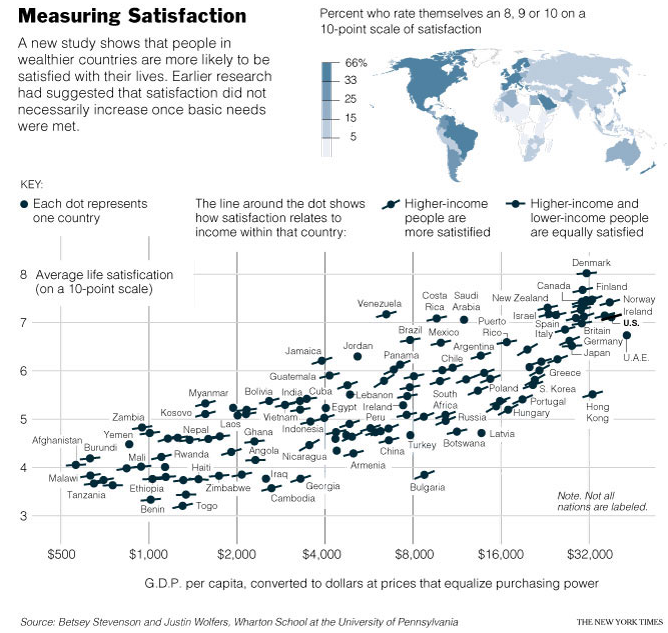
 In the Business section of the NY Times, Leonhardt points to a recent article by Betsey Stevenson and Justin Wolfers that disagrees with a classic paper published by Richard Easterlin in 1974, in which he argued that economic growth didn’t necessarily lead to more satisfaction. The prevailing idea as been that once a basic level of subsistence has been reached people care more about how much they make with respect to those around them than they do about their absolute level of income. An 'aspiration treadmill' makes people continuously dissatisfied (You own an iPod, now you want an iPod touch). Better public opinion data has been obtained over the past 34 years, and the bottom line is that income does matter, money indeed tends to bring happiness, even if it doesn’t guarantee it.
If anything...absolute income seems to matter more than relative income. In the United States, about 90 percent of people in households making at least $250,000 a year called themselves “very happy” in a recent Gallup Poll. In households with income below $30,000, only 42 percent of people gave that answer. But the international polling data suggests that the under-$30,000 crowd might not be happier if they lived in a poorer country.Here is a summary graphic from Leonhardt's article (click to enlarge):
Brain changes in dyslexia - different in Hong Kong and Chicago
Siok et al show that the brain changes associated with dyslexia in an alphabetic versus an ideographic language can be different. In alphabetic language, a reader sees a letter and associates it with a sound. Chinese characters correspond to syllables and require much more memorization. Both Chinese and English dyslexics find it harder to make their way through even fairly simple written material. This study suggests that their brain mechanics as they try to read may be as different as Chinese is from English. Here is their abstract:
Developmental dyslexia is a neurobiologically based disorder that affects approximately 5–17% of school children and is characterized by a severe impairment in reading skill acquisition. For readers of alphabetic (e.g., English) languages, recent neuroimaging studies have demonstrated that dyslexia is associated with weak reading-related activity in left temporoparietal and occipitotemporal regions, and this activity difference may reflect reductions in gray matter volume in these areas. Here, we find different structural and functional abnormalities in dyslexic readers of Chinese, a nonalphabetic language. Compared with normally developing controls, children with impaired reading in logographic Chinese exhibited reduced gray matter volume in a left middle frontal gyrus region previously shown to be important for Chinese reading and writing. Using functional MRI to study language-related activation of cortical regions in dyslexics, we found reduced activation in this same left middle frontal gyrus region in Chinese dyslexics versus controls, and there was a significant correlation between gray matter volume and activation in the language task in this same area. By contrast, Chinese dyslexics did not show functional or structural (i.e., volumetric gray matter) differences from normal subjects in the more posterior brain systems that have been shown to be abnormal in alphabetic-language dyslexics. The results suggest that the structural and functional basis for dyslexia varies between alphabetic and nonalphabetic languages.
Subscribe to:
Comments (Atom)