Bright light is used to treat winter depression and might also have positive effects on mood in some healthy individuals. We examined possible links between bright light exposure and social interaction using naturalistic data. For 20 days in winter and/or summer, 48 mildly seasonal healthy individuals wore a light meter at the wrist and recorded in real-time their behaviours, mood, and perceptions of others during social interactions. Possible short-term effects of bright light were examined using the number of minutes, within any given morning, afternoon or evening, that people were exposed to light exceeding 1000 lux (average: 19.6 min). Social interactions were labelled as having occurred under conditions of no, low or high bright light exposure. Independent of season, day, time, and location, participants reported less quarrelsome behaviours, more agreeable behaviours and better mood when exposed to high but not low levels of bright light. Given that the effects were seen only when exposure levels were above average, a minimum level of bright light may be necessary for its positive effects to occur. Daily exposure levels were generally low in both winter and summer. Spending more time outdoors and improving indoor lighting may help optimize everyday social behaviour and mood across seasons in people with mild seasonality.Figure - Quarrelsome behaviours (a) and agreeable behaviours (b) during time periods of no, low, or high levels of bright light exposure. Values are expressed as estimated least squares means of ipsatized frequencies, multiplied by a factor 100. Error bars represent standard errors of the mean. (* Significantly different from social interactions with low bright light exposure.)
Showing posts with label emotion. Show all posts
Showing posts with label emotion. Show all posts
Tuesday, February 26, 2008
Bright light and good moods...
We are more agreeable when the light is brighter: here is the abstract, and one figure, from "Exposure to bright light is associated with positive social interaction and good mood over short time periods: A naturalistic study in mildly seasonal people" published in the Journal of Psychology:

Monday, February 25, 2008
Watching an anesthetic block emotional memory
Here is an intriguing observation by Alkiri et al. We usually recall emotional pictures or events better than neutral ones. They found that low levels of the inhalation anesthetic sevoflurane could block this effect, and with PET imaging found a corresponding suppression of amygdala to hippocampal effective connectivity. Here is their abstract and one summary figure:
It is hypothesized that emotional arousal modulates long-term memory consolidation through the amygdala. Gaseous anesthetic agents are among the most potent drugs that cause temporary amnesia, yet the effects of inhalational anesthesia on human emotional memory processing remain unknown. To study this, two experiments were performed with the commonly used inhalational anesthetic sevoflurane. In experiment 1, volunteers responded to a series of emotional and neutral slides while under various subanesthetic doses of sevoflurane or placebo (no anesthesia). One week later, a mnemonic boost for emotionally arousing stimuli was evident in the placebo, 0.1%, and 0.2% sevoflurane groups, as measured with a recognition test. However, the mnemonic boost was absent in subjects who received 0.25% sevoflurane. Subsequently, in experiment 2, glucose PET assessed brain-state-related activity of subjects exposed to 0.25% sevoflurane. Structural equation modeling of the PET data revealed that 0.25% sevoflurane suppressed amygdala to hippocampal effective connectivity. The behavioral results show that 0.25% sevoflurane blocks emotional memory, and connectivity results demonstrate that this dose of sevoflurane suppresses the effective influence of the amygdala. Collectively, the findings support the hypothesis that the amygdala mediates memory modulation by demonstrating that suppressed amygdala effectiveness equates with a loss of emotional memory.Figure - The cerebral metabolic effects of 0.25% sevoflurane are shown. (A) Representative high-resolution PET scans. (B) Absolute (mean ± SD) regional metabolic changes (white bars, placebo, no anesthesia; dark bars, 0.25% sevoflurane; marked with * for P less than 0.05). (C) Relative percent decreases of regional metabolism. (D) Regional SPM results of sevoflurane induced metabolic suppression (Upper, sagittal; Lower, axial). E shows the regional thalamic finding (brain center) on a colorized MRI. The SPM effects are significant at P less than 0.001, uncorrected; displayed at P less than 0.005, with a 500-voxel extent.

Friday, February 01, 2008
Faith and Healing
 Jerome Groopman reviews Anne Harrington's new book "The Cure Within - A History of Mind-Body Medicine" in the NY Times Book review of Jan. 27. Harrington is professor and chair of the History of Science department at Harvard. Here is the final section of that review:
Harrington offers close observations of the interactions between the Harvard cardiologist Herbert Benson (and later the neuroscientist Richard Davidson of the University of Wisconsin) and the Dalai Lama and his Tibetan monks. She admits longing for scientific support for what is, in essence, an “Orientalist” conception, that the “Other” holds wisdom and therapeutic treasures beyond those imaginable to us in the West. Some of Harrington’s wish is fulfilled in the biology of the placebo response. Recent studies show that belief, even in inert treatments, can have profound benefits in relieving pain, likely via release of endorphins and other mediators in the brain. But despite several decades of concerted research in the field of psychoneuroimmunology, to my scrutiny no robust effects of meditation or other relaxation techniques that could combat illnesses like cancer or AIDS have been identified.
Harrington concludes with the questions that her students at Harvard regularly ask: Which mind-body narratives are “true”? Are all the stories we tell ourselves about illness equally valuable? Harrington has already answered these queries in part in the voice of the woman with breast cancer in the Stanford study. Yet, she has still been “haunted” over the years by unusual events, like the case of a man whose tumors seemed to melt “like snowballs on a hot stove” in response to a “worthlesss” cancer treatment that he nonetheless believed in. The physicist Freeman Dyson once noted that, to a scientist, an event like the spontaneous remission of a tumor is viewed as occurring at the asymptote of probability, one in several million, but through the eyes of a believer it becomes not mathematics but a miracle. Harrington shows us that, whatever science reveals about the cause and course of disease, we will continue to tell ourselves stories, and try to use our own metaphors to find meaning in randomness.
Thursday, January 31, 2008
George Lakoff on Obama vs. Hillary
Here are some succinct points made by George Lakoff, who has written on the power of metaphors in politics, and the importance of 'framing' political debates.
Monday, January 28, 2008
Why you think that $100 bottle of wine is better...
 This little bit of work notes the neural basis of some of our 'refined aesthetic preferences'...what your brain might be doing when you feel that something that costs more is better (even when you are unknowingly comparing identical items). Here is the abstract from Plassmann et al.:
Despite the importance and pervasiveness of marketing, almost nothing is known about the neural mechanisms through which it affects decisions made by individuals. We propose that marketing actions, such as changes in the price of a product, can affect neural representations of experienced pleasantness. We tested this hypothesis by scanning human subjects using functional MRI while they tasted wines that, contrary to reality, they believed to be different and sold at different prices. Our results show that increasing the price of a wine increases subjective reports of flavor pleasantness as well as blood-oxygen-level-dependent activity in medial orbitofrontal cortex, an area that is widely thought to encode for experienced pleasantness during experiential tasks. The paper provides evidence for the ability of marketing actions to modulate neural correlates of experienced pleasantness and for the mechanisms through which the effect operates.Figure: Neural correlates of liking ratings. (A) Activity in the mOFC and the midbrain correlated with the reported pleasantness of the six liquids at degustationtime. (B) Correlationof pleasantness ratings and BOLD responses

Wednesday, December 12, 2007
Subliminal Smells Can Guide Social Preferences
Here is the abstract of an interesting article by Li et al. in Psychological Science, followed by a figure showing the experimental paradigm:
It is widely accepted that unconscious processes can modulate judgments and behavior, but do such influences affect one's daily interactions with other people? Given that olfactory information has relatively direct access to cortical and subcortical emotional circuits, we tested whether the affective content of subliminal odors alters social preferences. Participants rated the likeability of neutral faces after smelling pleasant, neutral, or unpleasant odors delivered below detection thresholds. Odor affect significantly shifted likeability ratings only for those participants lacking conscious awareness of the smells, as verified by chance-level trial-by-trial performance on an odor-detection task. Across participants, the magnitude of this priming effect decreased as sensitivity for odor detection increased. In contrast, heart rate responses tracked odor valence independently of odor awareness. These results indicate that social preferences are subject to influences from odors that escape awareness, whereas the availability of conscious odor information may disrupt such effects.Figure - The experimental paradigm. First, participant specific odor detection thresholds were determined using an ascending-staircase procedure. Then, participants completed an odor-detection and likeability judgment task. In this example, the detection threshold was at dilution 20, so dilution 22 was used in the main task. In that task, participants sniffed a bottle, indicated whether or not it contained an odor, viewed a face stimulus, and finally rated the likeability of the face. For a subset of the participants, heart rate was recorded.

Wednesday, December 05, 2007
Emotion as Motion
Richie Davidson and Jeffrey Maxwell do some cute experiments to integrate two different literatures on our approach and withdrawal behaviors. One concerns the localization of approach and avoidance behaviors in the left and right hemispheres, respectively. The lateralization of these processes is very ancient, observed in primitive invertebrates. The other is a description of the general association of flexor (towards the body) movements with approach and extensor (away from the body) movements with avoidance. They do the simple experiment of measuring the reaction time for a subject to point a finger in response to the direction of a flashed image of an arrow pointing away (extension) or towards (flexion).
 Legend - Examples of target arrows linked to flexor/extensor movements. On each trial, a single target arrow appeared in either the left or the right target zone (box outline). These target arrows were always flanked by either two diamond distractors or two arrow distractors that fell outside the target zone. Down target arrows pointed both downward and toward the participant. Up target arrows pointed both upward and away from the participant. Down arrows were responded to via finger flexion (i.e., self-directed movements) and up arrows via finger extension (i.e., movements directed away from the self).
The hemispheres were differentially stimulated by presenting the stimuli to either the left (LVF) or right (RVF) visual field. Visual input from the LVF (i.e., the right side of the retinas) projects to visual cortex in the right hemisphere (RH), and visual input from the RVF (i.e., the left side of the retinas) projects to visual cortex in the left hemisphere (LH). Sure enough, facilitation of flexor (compared with approach) responses relative to extensor (compared with avoidant) responses was greater in the LH (i.e., RVF targets) than in the RH (i.e., LVF targets). This pattern of hemispheric specialization was observed to a greater degree the higher participants' self-reported level of daily positive affect and the lower their self-reported level of dispositional anxiety.
 Legend - Examples of target arrows linked to flexor/extensor movements. On each trial, a single target arrow appeared in either the left or the right target zone (box outline). These target arrows were always flanked by either two diamond distractors or two arrow distractors that fell outside the target zone. Down target arrows pointed both downward and toward the participant. Up target arrows pointed both upward and away from the participant. Down arrows were responded to via finger flexion (i.e., self-directed movements) and up arrows via finger extension (i.e., movements directed away from the self).
The hemispheres were differentially stimulated by presenting the stimuli to either the left (LVF) or right (RVF) visual field. Visual input from the LVF (i.e., the right side of the retinas) projects to visual cortex in the right hemisphere (RH), and visual input from the RVF (i.e., the left side of the retinas) projects to visual cortex in the left hemisphere (LH). Sure enough, facilitation of flexor (compared with approach) responses relative to extensor (compared with avoidant) responses was greater in the LH (i.e., RVF targets) than in the RH (i.e., LVF targets). This pattern of hemispheric specialization was observed to a greater degree the higher participants' self-reported level of daily positive affect and the lower their self-reported level of dispositional anxiety.
Tuesday, December 04, 2007
Experiencing beauty in art - a biological basis?
One of the most debated issues in aesthetics is whether beauty may be defined by some objective parameters or whether it merely depends on subjective factors. The first perspective goes back to Plato's objectivist view of aesthetic perception, in which beauty is regarded as a property of an object that produces a pleasurable experience in any suitable viewer. This stance may be rephrased in biological terms by stating that human beings are endowed with species-specific mechanisms that resonate in response to certain parameters present in works of art. The alternative stance is that the viewers' evaluation of art is fully subjective. It is determined by experience and personal values
The above text begins a paper in PLoS ONE from Rizzolatti and colleagues, and addresses this issue. Here is their abstract and one figure from the paper.
The above text begins a paper in PLoS ONE from Rizzolatti and colleagues, and addresses this issue. Here is their abstract and one figure from the paper.
Is there an objective, biological basis for the experience of beauty in art? Or is aesthetic experience entirely subjective? Using fMRI technique, we addressed this question by presenting viewers, naïve to art criticism, with images of masterpieces of Classical and Renaissance sculpture. Employing proportion as the independent variable, we produced two sets of stimuli: one composed of images of original sculptures; the other of a modified version of the same images. The stimuli were presented in three conditions: observation, aesthetic judgment, and proportion judgment. In the observation condition, the viewers were required to observe the images with the same mind-set as if they were in a museum. In the other two conditions they were required to give an aesthetic or proportion judgment on the same images. Two types of analyses were carried out: one which contrasted brain response to the canonical and the modified sculptures, and one which contrasted beautiful vs. ugly sculptures as judged by each volunteer. The most striking result was that the observation of original sculptures, relative to the modified ones, produced activation of the right insula as well as of some lateral and medial cortical areas (lateral occipital gyrus, precuneus and prefrontal areas). The activation of the insula was particularly strong during the observation condition. Most interestingly, when volunteers were required to give an overt aesthetic judgment, the images judged as beautiful selectively activated the right amygdala, relative to those judged as ugly. We conclude that, in observers naïve to art criticism, the sense of beauty is mediated by two non-mutually exclusive processes: one based on a joint activation of sets of cortical neurons, triggered by parameters intrinsic to the stimuli, and the insula (objective beauty); the other based on the activation of the amygdala, driven by one's own emotional experiences (subjective beauty).
Figure legend: The original image (Doryphoros by Polykleitos) is shown at the centre of the figure. This sculpture obeys to canonical proportion (golden ratio = 1∶1.618). Two modified versions of the same sculpture are presented on its left and right sides. The left image was modified by creating a short legs∶long trunk relation (ratio = 1∶0.74); the right image by creating the opposite relation pattern (ratio = 1∶0.36). All images were used in behavioral testing. The central image (judged-as-beautiful on 100%) and left one (judged-as-ugly on 64%) were employed in the fMRI study.

Thursday, November 22, 2007
Predicting election outcomes in 100 milliseconds!
Another example of a quick judgment turning out to be more accurate than a considered one... Ballew and Todorov showed study participants transient pictures of the winner and runner-up for recent United States gubernatorial elections. Rapid, unreflective judgments of competence based solely on facial appearance (of candidates participants did not recognize) predicted the actual outcomes of gubernatorial elections. Instructions to deliberate and make a good judgment led to less accurate predictions of the election outcomes. Here is their abstract :
Here we show that rapid judgments of competence based solely on the facial appearance of candidates predicted the outcomes of gubernatorial elections, the most important elections in the United States next to the presidential elections. In all experiments, participants were presented with the faces of the winner and the runner-up and asked to decide who is more competent. To ensure that competence judgments were based solely on facial appearance and not on prior person knowledge, judgments for races in which the participant recognized any of the faces were excluded from all analyses. Predictions were as accurate after a 100-ms exposure to the faces of the winner and the runner-up as exposure after 250 ms and unlimited time exposure. Asking participants to deliberate and make a good judgment dramatically increased the response times and reduced the predictive accuracy of judgments relative to both judgments made after 250 ms of exposure to the faces and judgments made within a response deadline of 2 s. Finally, competence judgments collected before the elections in 2006 predicted 68.6% of the gubernatorial races and 72.4% of the Senate races. These effects were independent of the incumbency status of the candidates. The findings suggest that rapid, unreflective judgments of competence from faces can affect voting decisions.Figure - An example of an experimental trial in the 250-ms presentation condition. Participants decided who was more competent.

Friday, November 16, 2007
Drug enhancement of athletic performance - with no drugs!
Given the gnashing of teeth in the sports world over role models outed for their drug use, this bit from an Italian group is fascinating. It turns out that after only a few administrations of a pain killer (morphine), a placebo or sham injection on the day of the athletic event has the same effect as taking the real drug! Does this count as illegal drug use before an athletic performance? Here is the abstract from Benedetti et al.:
The neurobiological investigation of the placebo effect has shown that placebos can activate the endogenous opioid systems in some conditions. So far, the impact of this finding has been within the context of the clinical setting. Here we present an experiment that simulates a sport competition, a situation in which opioids are considered to be illegal drugs. After repeated administrations of morphine in the precompetition training phase, its replacement with a placebo on the day of competition induced an opioid-mediated increase of pain endurance and physical performance, although no illegal drug was administered. The placebo analgesic responses were obtained after two morphine administrations that were separated as long as 1 week from each other. These long time intervals indicate that the pharmacological conditioning procedure has long-lasting effects and that opioid-mediated placebo responses may have practical implications and applications. For example, in the context of the present sport simulation, athletes can be preconditioned with morphine and then a placebo can be given just before competition, thus avoiding administration of the illegal drug on the competition day. However, these morphine-like effects of placebos raise the important question whether opioid-mediated placebo responses are ethically acceptable in sport competitions or whether they have to be considered a doping procedure in all respects.
Thursday, November 15, 2007
A hormone boost to generosity...
Yet another bit of work on the magic hormone, oxytocin, that makes us more affiliative, gentle, and trusting...the abstract from Zak et al. :
Human beings routinely help strangers at costs to themselves. Sometimes the help offered is generous—offering more than the other expects. The proximate mechanisms supporting generosity are not well-understood, but several lines of research suggest a role for empathy. In this study, participants were infused with 40 IU oxytocin (OT) or placebo and engaged in a blinded, one-shot decision on how to split a sum of money with a stranger that could be rejected. Those on OT were 80% more generous than those given a placebo. OT had no effect on a unilateral monetary transfer task dissociating generosity from altruism. OT and altruism together predicted almost half the interpersonal variation in generosity. Notably, OT had twofold larger impact on generosity compared to altruism. This indicates that generosity is associated with both altruism as well as an emotional identification with another person.
Wednesday, November 14, 2007
This is Your Brain on Politics
Marco Iacoboni, whose work I have mentioned before, has together with several collaborators performed brain imaging experiments on 20 swing voters who indicate willingness to vote for a candidate from either party in the Nov. 2008 presidential elections. They summarize their findings in an Op-Ed piece in the Nov. 11 New York Times. There is a slide show you might like to watch. While insiders in the imaging business go apoplectic over simplistic interpretations of averaged data taken from a small number of subjects using ambiguous protocols with dubious controls, some correlations do emerge that "make sense." (See these comments on the article as 'junk science'.) For example: anterior cingulate (conflict resolution) associates with Hillary Clinton; or amygdala (anxiety) and insula (disgust) correlates with viewing the words "Democrat" or "Republican" but not "independent". One bit I found interesting: "Barack Obama and John McCain have work to do. The scans taken while subjects viewed the first set of photos and the videos of Mr. McCain and Mr. Obama indicated a notable lack of any powerful reactions, positive or negative."
 Slide 2
Photos of Hillary Clinton elicited increased activity in the anterior cingulate cortex, a part of the brain that processes conflicting impulses, in swing voters who reported having an unfavorable opinion of her.
 Slide 2
Photos of Hillary Clinton elicited increased activity in the anterior cingulate cortex, a part of the brain that processes conflicting impulses, in swing voters who reported having an unfavorable opinion of her.
Monday, November 12, 2007
Susceptibility and Resistance to Social Defeat: Molecular Correlates
The research highlights section of the Nov. 1 issue of Nature points to an interesting article from Nester's group on a strain of mice susceptible to social stress. A description excerpted from a review by Hymen:
...mice are exposed to 10 bouts of social defeat in which c57bl/6 test mice are forced to intrude into space occupied by mice of a larger and more aggressive strain, leading to subordination of the test mice. Following this repeated stress, a subset of mice develop significant avoidance of social contact with mice of the same strain and exhibit other signs that are reminiscent of symptoms of human depression, including weight loss and loss of hedonic (pleasure) responses to sucrose. A strength of the social defeat stress model is that, at least in this mouse strain, the stressor convincingly separates the mice into two groups, a group that the authors designate “Susceptible,” which develop social avoidance, and a group described as “Unsusceptible,” which continue to interact with other mice at the same rate as never stressed controls. The model has other strengths. Repeated social defeat would appear to be a good model for some adverse human experience. Moreover, the traits that emerge in susceptible mice reverse only with chronic antidepressant treatment, which mirrors the requirements for treatment of depression and anxiety disorders with these drugs in humans.Figure 1. Neural Circuits Regulating Responses to Social Defeat
The mesolimbic dopamine pathway comprises a projection from the ventral tegmental area (VTA) of the midbrain to the nucleus accumbens (NAc) and to other forebrain structure, such as the amygdala and prefrontal cortex (PFC). These dopamine projections, which act as the neural substrates of the rewarding properties of food, mating behaviors, and addictive drugs, are now shown by Krishnan et al. (2007) to mediate the response of mice to social defeat. In mice susceptible to social defeat, expression of brain-derived neurotrophic factor (BDNF) increases in the VTA. The NAc is the recipient of increased BDNF release and shows enhanced downstream signaling via the BDNF receptor.

Tuesday, November 06, 2007
Drug craving? - Just zap your insula!
An important factor that contributes to drug-seeking in addicted individuals is the negative feelings that result from abstinence. Such mood states are monitored by the interoceptive sensory system, and particularly by a brain area called the insular cortex, known to process emotional information. Thus this abstract from Contreras et al. is of interest:
Addiction profoundly alters motivational circuits so that drugs become powerful reinforcers of behavior. The interoceptive system continuously updates homeostatic and emotional information that are important elements in motivational decisions. We tested the idea that interoceptive information is essential in drug craving and in the behavioral signs of malaise. We inactivated the primary interoceptive cortex in amphetamine-experienced rats, which prevented the urge to seek amphetamine in a place preference task. Interoceptive insula inactivation also blunted the signs of malaise induced by acute lithium administration. Drug-seeking and malaise both induced Fos expression, a marker of neuronal activation, in the insula. We conclude that the insular cortex is a key structure in the perception of bodily needs that provides direction to motivated behaviors.The therapeutic intervention was an injection of 2% lidocaine (a sodium channel blocker to inhibit nerve activity) into the left and right insula to cause a transient shutdown of insular nerve activity (injecting adjacent cortex was not effective). Although this is a sledgehammer approach with possible dire side effects, it suggests that therapeutic interventions in the insula may help to alleviate drug cravings, .
Tuesday, October 30, 2007
Sleep deprivation diminishes recall of neutral and positive, but not of negative, events.
We remember emotional events, particularly negative ones, better than neutral events. Sterpenich et al. show that while consolidation of neutral and posititive memories is diminished by sleep deprivation, recall of negative events is less compromised. They show that after sleep deprivation, recollection of negative, potentially dangerous, memories recruits an alternate amygdalo-cortical network, which would keep track of emotional information despite sleep deprivation. Here is their description of the work:
Declarative memories, which can be consciously and verbally retrieved, are initially critically dependent on the hippocampus. However, reliable retrieval of long-term memory depends on a process of consolidation, which partly occurs during sleep, when memories are thought to be progressively transferred to long-term cortical stores. Because people tend to remember emotional memories better than neutral ones, we wondered whether the emotional significance of a memory would enhance its consolidation in a sleep-dependent manner. During a first session, participants viewed pictures with neutral and emotional content without realizing that their memory of the pictures and their content would be tested later (called incidental encoding). Three days later, during a functional MRI scanning session, subjects indicated whether they recognized previously viewed and new pictures. Half of the subjects were totally sleep deprived during the first post-encoding night, but all subjects slept as usual during the second and third post-encoding nights. We show here that the recollection of emotional stimuli elicited larger responses in the hippocampus and various cortical areas in the well-rested group than in the sleep-deprived group, suggesting that emotional significance boosts memory consolidation of the information during sleep. Interestingly, in sleep-deprived subjects, recollection of negative items recruited another network including the amygdala, as if an alternate consolidation process allowed them to keep track of negative, potentially dangerous, information despite the cognitive aftermath of sleep deprivation.
Friday, October 12, 2007
Your Money and Your Brain
 I thought I would pass on this brief commentary by Joe Nocera in the NY Times (PDF here), which emphasizes comments by Jason Zweig on how our emotional brains are not very well suited for making rational financial decisions.
Monday, October 01, 2007
Emotion and Disorders of Emotion
You might want to check out this open access special focus issue of Nature Magazine on emotion and disorders of emotion. The starting editorial introduces the articles. Individual susceptibility to depression and anxiety in response to life stressors may be related to genetic variation, and I would point to the review article by Klaus-Peter Lesch and Turhan Canli. It explores how individual variation in the serotonin transporter gene may interact with personality, emotion regulation and social cognition.
Thursday, September 20, 2007
Mind Over Manual
 This is the title of an Op-Ed piece in the 9/13/2007 NY Times by Sally Satel which describes the difficulties and issues faced by the forthcoming revision (due in 2012) of the Diagnostic and Statistical Manual of Mental Disorders (PDF here). It faces issue such as the 40-fold jump in diagnosis of childhood bipolar disorder from 1994 to 2003. Some clips from the article:
We still don’t know how much of this increase represents long-overdue care of mentally ill youth and how much comes from facile labeling of youngsters who are merely irritable and moody...Part of the confusion stems from the lack of a discrete definition of juvenile bipolar illness in the diagnostic manual. But there is a deeper problem: despite the great progress being made in neuroscience, we still don’t have a clear picture of the brain mechanisms underlying bipolar illness — or most other mental illnesses... many patients meet several diagnostic definitions at once. Roughly half of adults with clinical depression, for example, also have symptoms that fit the definition of an anxiety disorder...the link between diagnosis and treatment is relatively weak. Antidepressants like Prozac help treat not only depression but also panic disorder, obsessive-compulsive disorder, bulimia and social phobia. This explains why clinicians often treat by symptom rather than diagnosis. Paranoia, for example, is treated with an antipsychotic drug whether it occurs in the context of schizophrenia, bipolar illness or methamphetamine use.
An updated manual..is unlikely to transform treatment substantially — after all, revising diagnoses is still just another way to describe mental conditions we don’t fully understand. But these refinements may well stimulate valuable new inquiry, enabling swifter progress in understanding the mechanisms of disease, better deployment of treatments we have and more efficient discovery of new ones.
Friday, September 07, 2007
The evil that men do - The Lucifer Effect
Robert Levine reviews the recent book "The Lucifer Effect: Understanding How Good People Turn Evil," by Philip Zimbardo, the man who did the famous Stanford Prison Experiment that has become a cornerstone of social psychology (PDF of review here).
 The 1971 Stanford Prison Experiment, in which subjects (ordinary college-age men) were assigned to play the role of a prisoner or guard, demonstrated that situations may be more powerful than personality traits in affecting behavior. Subjects playing the role of guards in the Stanford Prison Experiment were quickly transformed into abusers. This scene eerily evokes the photos taken decades later by the guards at Abu Ghraib prison in Iraq.
A clip from the review:
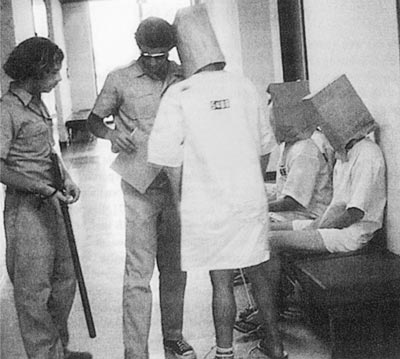 The 1971 Stanford Prison Experiment, in which subjects (ordinary college-age men) were assigned to play the role of a prisoner or guard, demonstrated that situations may be more powerful than personality traits in affecting behavior. Subjects playing the role of guards in the Stanford Prison Experiment were quickly transformed into abusers. This scene eerily evokes the photos taken decades later by the guards at Abu Ghraib prison in Iraq.
A clip from the review:
What, Zimbardo asks, leads ordinary people to do bad things, things they never would have imagined doing? Most evildoing, it becomes depressingly clear, is driven by rather ordinary social-psychological reactions. Zimbardo offers an extensive list and discussion of the toxic situational forces and normal psychological reactions to them that tend to activate the Lucifer effect. He provides a detailed, intelligent and workable program for resisting unwanted social influence, highlighting dangers and offering tangible prescriptions for neutralizing negative effects. There are, for example, mini-tutorials on how to distinguish between just and unjust authorities, on being careful not to sacrifice one's freedom for the illusion of security, and on learning to recognize when, where and how to stand up to unjust systems.
The final chapter is a gem. Here Zimbardo seamlessly demonstrates how the same social psychology that may exploit our worst instincts can be reconstrued to cultivate the best in ourselves. Altruism, like evil, is readily responsive to situational forces, and Zimbardo suggests strategies for tapping into these potentialities. He also presents a provocative, multidimensional taxonomy of heroism that I hope will stimulate long-overdue research and education in this area.
Thursday, September 06, 2007
More on "The Political Brain"
 As a followup on my Oct. 23 and July 11 posts on neuroimaging during political decisions I would like to point out David Brooks' review of Westen's book "THE POLITICAL BRAIN - The Role of Emotion in Deciding the Fate of the Nation." He suggests that Westen - even granted that he does a convincing job of showing how emotions can color political decisions - goes overboard in essentially suggesting that appeals to rationality should be thrown out altogether.
Westen:
...assert(s) that Democrats have been losing because they have been appealing to the rational part of the mind. They issue laundry lists of policies and offer arguments with evidence. They don’t realize how the images they are presenting set off emotional cues that undermine their own campaigns...For example, the right side of John Edwards’s mouth tends to curl up. “Humans innately dislike facial asymmetries,” Westen observes, “and this should have caught the eye of his advisers.” In Connecticut, Ned Lamont ran a commercial showing Joe Lieberman morphing into George Bush, but in the ad Lieberman was smiling. “Smiling faces innately activate parts of the brain (and facial mimicry on the part of the observer) that reinforce happiness, not distaste.”..Republicans...,are brilliant at using words and images that set off emotional cascades. Ronald Reagan used the word “confiscation” in reference to taxation, and was able to persuade people to agree to lower taxes. He called Nicaraguan contras “freedom fighters” and was able to secure them funding.Brooks suggests:
The core problem with Westen’s book is that he doesn’t really make use of what we know about emotion. He builds on the work of Antonio Damasio, without applying Damasio’s conception of how emotion emerges from and contributes to reason...In this more sophisticated view, emotions are produced by learning. As we go through life, we learn what cause leads to what effect. When, later on, we face similar situations, the emotions highlight possible outcomes, drawing us toward some actions and steering us away from others...In other words, emotions partner with rationality. It’s not necessary to dumb things down to appeal to emotions. It’s not necessary to understand some secret language that will key certain neuro-emotional firings. The best way to win votes — and this will be a shocker — is to offer people an accurate view of the world and a set of policies that seem likely to produce good results.
Subscribe to:
Posts (Atom)