I want to pass on some of the products of my TOC (tables of contents) scanning that I’m unlikely to develop into full posts, but that might be of interest to some readers.
Quenque does a piece focusing on San Diego State University psychologist Jean Twenge, who has compared decades of personality test results to conclude that younger generations are increasingly entitled, self-obsessed and unprepared for the realities of adult life. Critics have questioned her data and her results. A subsequent New York Times invitation for debate on social media and narcissism elicits a number of interesting views.
Novelist Janathan Franzen's extended screed in the Guardian on how the world is drifting towards disaster as we Tweet, Text, and spend has some choice passages, and draws a retort from Clive Thompson, who points out that similar hysteria has accompanied all new technology.
Steven Pinker's article in the New Republic, "Science Is Not Your Enemy" has drawn an avalanche of comment. I've already mentioned one retort by Ross Douthat. Douthat follows this up with a piece on Sam Harris' offer of $20,000 for the best rebuttal of his book on how science can determine human values. Leon Wieseltier rails against science invading the liberal arts.
In pieces more focused on brain science Gopnik goes after mindless brain scientists, while Eric Kandel offers a rosy view of the new science of mind. .
Monday, September 30, 2013
Friday, September 27, 2013
Aspects of our musical experience.
I want to pass on three recent articles I found interesting. The first is a piece by Kawakami in the New York Times on why we like sad music, sumarizing his article in Frontiers in Psychology. He and his collaborators found that when listening to sad music
...felt emotion did not correspond exactly to perceived emotion. Although the sad music was both perceived and felt as “tragic” (e.g., gloomy, meditative and miserable), the listeners did not actually feel the tragic emotion as much as they perceived it. Likewise, when listening to sad music, the listeners felt more “romantic” emotion (e.g., fascinated, dear and in love) and “blithe” emotion (e.g., merry, animated and feel like dancing) than they perceived. (Glinka's "La Séparation" is one of the pieces used).They suggest this may have something to do with vicarious emotions:
...when we listen to sad music (or watch a sad movie, or read a sad novel), we are inoculated from any real threat or danger that the music (or movie or novel) represents...If this is true, what we experience when we listen to sad music might be thought of as “vicarious emotions.” Here, there is no object or situation that induces emotion directly, as in regular life. Instead, the vicarious emotions are free from the essential unpleasantness of their genuine counterparts, while still drawing force from the similarity between the two.The second article, by Leman et al., examines how music can entrain the speed of beat synchronized walking. Subjects walked to the rhythm of different musical pieces all having a tempo of 130 beats per minute and a meter of 4 beats. Some music was "activating" in that it increased stride length and distance covered, while "relaxing music" had the opposite effect. They suggest that recurrent patterns of fluctuation affecting the binary meter strength of the music may entrain the vigor of the movement, a relationship between entrainment and expressiveness that might lead to applications in sports and physical rehabilitation. Finally, Koelsch et al. do an intersting examination of processing of hierarchical syntactic structure in music:
Hierarchical structure with nested nonlocal dependencies is a key feature of human language and can be identified theoretically in most pieces of tonal music. However, previous studies have argued against the perception of such structures in music. Here, we show processing of nonlocal dependencies in music. We presented chorales by J. S. Bach and modified versions in which the hierarchical structure was rendered irregular whereas the local structure was kept intact. Brain electric responses differed between regular and irregular hierarchical structures, in both musicians and nonmusicians. This finding indicates that, when listening to music, humans apply cognitive processes that are capable of dealing with long-distance dependencies resulting from hierarchically organized syntactic structures. Our results reveal that a brain mechanism fundamental for syntactic processing is engaged during the perception of music, indicating that processing of hierarchical structure with nested nonlocal dependencies is not just a key component of human language, but a multidomain capacity of human cognition.
Thursday, September 26, 2013
Theory of Mind and the mind of the market
The financial community has been in a striking tizzy over the fact that the Federal Reserve didn't do what they were predicting, i.e. start to dial back on their economic stimulus. The financial community also has not been very good at predicting or knowing when a financial bubble is growing. Perhaps work like this piece by Martino et al. casts some mechanistic light on this. They demonstrate that the ability to infer the intentions and mental states of other individuals (“theory of mind”) biases evaluation when people interact not with individuals but with complex modern institutions like financial markets, contributing to the formation of economics bubbles. Here is their summary:
The ability to infer intentions of other agents, called theory of mind (ToM), confers strong advantages for individuals in social situations. Here, we show that ToM can also be maladaptive when people interact with complex modern institutions like financial markets. We tested participants who were investing in an experimental bubble market, a situation in which the price of an asset is much higher than its underlying fundamental value. We describe a mechanism by which social signals computed in the dorsomedial prefrontal cortex affect value computations in ventromedial prefrontal cortex, thereby increasing an individual’s propensity to ‘ride’ financial bubbles and lose money. These regions compute a financial metric that signals variations in order flow intensity, prompting inference about other traders’ intentions. Our results suggest that incorporating inferences about the intentions of others when making value judgments in a complex financial market could lead to the formation of market bubbles.
Wednesday, September 25, 2013
Franz Schubert Marches caractéristiques, No. 2
This is second of the three four hands pieces played at a recent house concert at my Twin Valley Rd. home in Middleton, WI.
The joystick years - computer games and grey matter volume
Sian Lewis summarizes work by Kühn and Gallinat:
A new study has used voxel-based morphometry of MRI scans of adult video-game players to investigate whether there is a correlation between grey matter volume and the number of years spent playing video games ('joystick years'). They found that grey matter volume in the entorhinal cortex was altered and that the direction of change was influenced by the type of game played; logic or puzzle games tended to increase entorhinal grey matter volume, whereas action-based games had the opposite effect. Moreover, hippocampal volume was found to be greater in players with more 'joystick years', suggesting positive long-term effects on visual attention and navigation.
Tuesday, September 24, 2013
Clementi Sonata No. 2 in C for piano four hands
Here is the first of the four hands pieces performed at a concert at my home on Sept. 8.
Compassion - Bridging Practice and Science
Science magazine has an article by Kupferschmidt pointing to the work of Tania Singer, a director at the Max Planck Institute for Human Cognitive and Brain Sciences in Leipzig, who has embarked on an ambitious study involving 160 participants to find out whether meditation can make people more compassionate. He notes that meditation research does not have a very rigorous reputation, and some scientists are skeptical about the work, but Singer — who has long practiced meditation herself—hopes her study will be methodologically rigorous enough to withstand criticism. In 2004 Singer published a landmark paper in Science that showed that bilateral anterior insula (AI), rostral anterior cingulate cortex (ACC), brainstem, and cerebellum were activated when subjects received pain and also by a signal that a loved one experienced pain. AI and ACC activation correlated with individual empathy scores. Singer has just release a free 900-page e-book, entitled "Compassion - Bridging Practice and Science", that is quite amazing. I'm going to spend some time paging through it. Here is one clip from Kupferschmidt's commentary:
Numerous studies have shown that people can be "primed" to think more socially in various ways—from reading simple instructions to holding a warm cup of coffee. In one test, participants who listened to Bob Sinclar's hit song "Love Generation" were more likely to come up with words like "help" than those who listened to Sinclar's less uplifting song "Rock This Party." But Singer isn't interested in words; she wants to train people to act more socially in everyday life. And from personal experience, she believes meditation may be the way to do it. At its most basic, the technique simply involves focusing on a feeling. In one meditation exercise in her study, participants are told to imagine a person they love and to concentrate on positive feelings toward them. "May you be happy. May you be safe and sheltered. May you be healthy. May you live with a light heart," the teacher intones. Like bodybuilders increasing the weights they lift, meditators can intensify their compassionate feelings over time. Expert meditators can go very far, Singer says; rape victims may meditate on feeling compassion for their rapist, for instance. To measure meditation's effects, researchers in the ReSource Project determine the level of the stress hormone cortisol in participants' saliva, test their reaction times, have them fill out questionnaires, and shepherd them through virtual reality worlds while monitoring their heart rate. Each participant's brain is scanned for several hours five times over the course of the study. Participants also play computer games designed to evaluate their compassion level. In one of them, developed with Swiss economist Ernst Fehr, they have to guide a smiley along a winding path that leads to a treasure chest; they have blue or red keys to open gates of the same color. But another smiley is also wandering the screen, on its own quest to another treasure, and players have to decide whether to open gates for it, too. In a preliminary study in 2011, Singer showed that just one day of compassion meditation made people more likely to help the other smiley, whereas 1 day of memory training did not. Singer is also trying to better understand what goes on in the brain when it is feeling compassion. The activation patterns seen in the scanner leave open two possibilities: The feeling could be linked to the neurotransmitter dopamine and the brain's reward circuits (which, among many other things, makes you crave chocolate) or it could be linked to what she calls the affiliation network, which is activated for example when you view a picture of your partner or your own child, and is mediated by the neurotransmitters oxytocin or opioids. Singer admits that pinning down the neurobiology of compassion is difficult because the mental state it corresponds to remains fuzzy. A French Buddhist monk may have a very different concept of compassion than an African doctor or a British businessman, and there's friction between the classic third-person perspective of science and subjective experiences. "But we need the first-person experience as well as the third-person science," she says.
Monday, September 23, 2013
Poulenc Novelette No. 3
Here is the third of the Poulenc Novelettes, based on a theme by Manuel de Falla, a return to a more sonorous style, but with nice dissonances. It is one of the pieces played at a house concert Sept. 8, 2013, using the Steinway B at my Twin Valley Road home in Middleton, WI
Virtues of coffee and coffee shops.
I've been meaning to pass on these two articles that help me justify my addiction to breakfast and noon (but not dinner) coffee. Reynolds reviews a number of studies reporting at coffee consumption correlates with a 10% decrease in mortality over a 13 year period, reduced risk of developing type 2 diabetes and other diseases, and slower progression of dementia or Alzheimer's disease. O'Connor notes studies indicating that creative thinking is enhanced by ambient noise levels typical of a bustling coffee shop. The idea is that extreme quiet tends to sharpen focus, which can prevent thinking in the abstract. Moderate noise levels distract people enough so that they think more broadly. So, when you have been sitting at your keyboard for a long time and are beginning to feel a bit locked in, trying pulling up the coffitivity.com website, and see what it does for you.
Friday, September 20, 2013
Old farts perform more consistenly on cognitive tasks than younger adults.
Schmiedek et al. do a demonstration of something we more or less already knew...
People often attribute poor performance to having bad days. Given that cognitive aging leads to lower average levels of performance and more moment-to-moment variability, one might expect that older adults should show greater day-to-day variability and be more likely to experience bad days than younger adults. However, both researchers and ordinary people typically sample only one performance per day for a given activity. Hence, the empirical basis for concluding that cognitive performance does substantially vary from day to day is inadequate. On the basis of data from 101 younger and 103 older adults who completed nine cognitive tasks in 100 daily sessions, we show that the contributions of systematic day-to-day variability to overall observed variability are reliable but small. Thus, the impression of good versus bad days is largely due to performance fluctuations at faster timescales. Despite having lower average levels of performance, older adults showed more consistent levels of performance across days.
Thursday, September 19, 2013
Poulenc Novelette No. 2 - a bit on the wild side
Poulenc's first two novelettes, the one in C major that I posted yesterday, and today's second novelette in B-flat minor, were composed in 1927 and 1928, and first performed by Poulenc at a Paris concert in June of 1928. The second novelette is in many ways similar to a scherzo, and very different from the sonorous and melodic first and third. All demonstrate multi-layered piano writing. Poulenc was mainly a self taught composer, and he was was one of the first openly gay composers, dedicating many of his pieces to his lovers. His most immediate influences were Chabrier, Debussy, Satie, and Stravinsky. Stravinsky helped get his early music published.
The cognitive benefits of movement reduction.
This piece by Warburton et al. shows another example of how musical, artistic, or athletic performance can be enhanced by subtle mimicking of the final full-out performance. I certainly use this technique in my piano playing. I notice many more possible refinements, errors, and nuances to tweak during either imagining play or playing very slowly and softly than in the normal more robust performance. Their abstract:
In a number of domains, humans adopt a strategy of systematically reducing and minimizing a codified system of movement. One particularly interesting case is “marking” in dance, wherein the dancer performs an attenuated version of the choreography during rehearsal. This is ostensibly to save the dancer’s physical energy, but a number of considerations suggest that it may serve a cognitive function as well. In this study, we tested this embodied-cognitive-load hypothesis by manipulating whether dancers rehearsed by marking or by dancing “full out” and found that performance was superior in the dancers who had marked. This finding indicates that marking confers cognitive benefits during the rehearsal process, and it raises questions regarding the cognitive functions of other movement-reduction systems, such as whispering, gesturing, and subvocalizing. In addition, it has implications for a variety of topics in cognitive science, including embodied cognition and the nascent fields of dance and music cognition.
Wednesday, September 18, 2013
Some mindblog music - Poulenc Novelette No. 1
Since the beginning of this blog, I've passed on classical piano recordings I make, and I'm going to do the same with some of the pieces performed at a house concert this past Sept 8 using the Steinway B at my Twin Valley Rd. home in Middleton, Wisconsin.
Video game training enhances cognitive control in older adults
This work has received a lot of attention (google 'NeuroRacer' to see various accounts), the video game is of the same sort as those mentioned in my Aug. 22 post. The abstract from Gazzaley and collaborators:
Cognitive control is defined by a set of neural processes that allow us to interact with our complex environment in a goal-directed manner. Humans regularly challenge these control processes when attempting to simultaneously accomplish multiple goals (multitasking), generating interference as the result of fundamental information processing limitations. It is clear that multitasking behaviour has become ubiquitous in today’s technologically dense world, and substantial evidence has accrued regarding multitasking difficulties and cognitive control deficits in our ageing population. Here we show that multitasking performance, as assessed with a custom-designed three-dimensional video game (NeuroRacer), exhibits a linear age-related decline from 20 to 79 years of age. By playing an adaptive version of NeuroRacer in multitasking training mode, older adults (60 to 85 years old) reduced multitasking costs compared to both an active control group and a no-contact control group, attaining levels beyond those achieved by untrained 20-year-old participants, with gains persisting for 6 months. Furthermore, age-related deficits in neural signatures of cognitive control, as measured with electroencephalography, were remediated by multitasking training (enhanced midline frontal theta power and frontal–posterior theta coherence). Critically, this training resulted in performance benefits that extended to untrained cognitive control abilities (enhanced sustained attention and working memory), with an increase in midline frontal theta power predicting the training-induced boost in sustained attention and preservation of multitasking improvement 6 months later. These findings highlight the robust plasticity of the prefrontal cognitive control system in the ageing brain, and provide the first evidence, to our knowledge, of how a custom-designed video game can be used to assess cognitive abilities across the lifespan, evaluate underlying neural mechanisms, and serve as a powerful tool for cognitive enhancement.
Tuesday, September 17, 2013
Political extremism is supported by an illusion of understanding.
Fernback et. al. start their interesting article with some nice quotes:
The second study:
Bertrand Russell “The opinions that are held with passion are always those for which no good ground exists.”
Clint Eastwood “Extremism is so easy. You’ve got your position and that’s it. It doesn’t take much thought.”Here is their abstract, followed by a bit on the experimental details:
People often hold extreme political attitudes about complex policies. We hypothesized that people typically know less about such policies than they think they do (the illusion of explanatory depth) and that polarized attitudes are enabled by simplistic causal models. Asking people to explain policies in detail both undermined the illusion of explanatory depth and led to attitudes that were more moderate (Experiments 1 and 2). Although these effects occurred when people were asked to generate a mechanistic explanation, they did not occur when people were instead asked to enumerate reasons for their policy preferences (Experiment 2). Finally, generating mechanistic explanations reduced donations to relevant political advocacy groups (Experiment 3). The evidence suggests that people’s mistaken sense that they understand the causal processes underlying policies contributes to political polarization.Each of the experiments recruited 100-200 U.S. residents. In the first experiment, for example,
One hundred ninety-eight U.S. residents were recruited using Amazon’s Mechanical Turk and participated in return for a small payment. Participants were 52% male and 48% female, with an average age of 33.3 years. Participants’ reported political affiliations were 40% Democrat, 20% Republican, 36% independent, and 4% other.In this study
...we asked participants to rate how well they understand six political policies. After participants judged their understanding of each issue, we asked them to explain how two of the policies work and then to rerate their level of understanding. We expected that asking participants to explain the mechanisms underlying the policies would expose the illusion of explanatory depth and lead to lower ratings of understanding….This is the result obtained (motivated readers can obtain a PDF of the article with details from me).
The second study:
..was to examine whether the attitude-moderation effect observed in Experiment 1 was driven specifically by an attempt to explain mechanisms or merely by deeper engagement and consideration of the policies. To induce some participants to deliberate without explaining mechanisms, we asked one group to enumerate reasons why they held the policy attitude they did. Listing reasons why one supports or opposes a policy does not necessarily entail explaining how that policy works; for instance, a reason can appeal to a rule, a value, or a feeling…we predicted that asking people to list reasons for their attitudes would lead to less attitude moderation than would asking them to articulate mechanisms.The third experiment
...examined whether the moderating effect of mechanistic explanations on political attitudes demonstrated in Experiments 1 and 2 would extend to political decisions. As in Experiment 2, participants first rated their position on a given policy and then provided either a mechanistic explanation of it or reasons why they supported or opposed it. Next, they chose whether or not to donate a bonus payment to a relevant advocacy group. We predicted that participants’ initial level of support for the policy would be more weakly associated with their subsequent likelihood of donating in the mechanism condition than in the reasons condition because articulating mechanisms attenuates attitude extremity more than does listing reasons.
Monday, September 16, 2013
A pinch of l-dopa enhances learning to suppress excessive fear responses.
Haaker et al. make an interesting observation:
Traumatic events can engender persistent excessive fear responses to trauma reminders that may return even after successful treatment. In the psychotherapy of fear or anxiety disorders, patients make safety experiences that generate fear-inhibitory safety memories. Fear, however, frequently returns because safety memory retrieval fails. We find that safety memories can be strengthened and are more easily retrieved when adding a standard anti-Parkinson drug that augments brain levels of the neurotransmitter dopamine directly after a safety experience. In mice and humans, this treatment up-regulates an anti-fear area in the frontal cortex. Our findings open a unique avenue for improving psychotherapy.
Friday, September 13, 2013
Numerosity is represented in our parietal cortex.
Our primary sensory cortices are arranged topographically, and Harvey et al. have now tested the speculation that numerosity is also organized topographically by using ultrahigh-field functional brain scanning to demonstrate a numerosity map in the parietal cortex:
 Numerosity, the set size of a group of items, is processed by the association cortex, but certain aspects mirror the properties of primary senses. Sensory cortices contain topographic maps reflecting the structure of sensory organs. Are the cortical representation and processing of numerosity organized topographically, even though no sensory organ has a numerical structure? Using high-field functional magnetic resonance imaging (at a field strength of 7 teslas), we described neural populations tuned to small numerosities in the human parietal cortex. They are organized topographically, forming a numerosity map that is robust to changes in low-level stimulus features. The cortical surface area devoted to specific numerosities decreases with increasing numerosity, and the tuning width increases with preferred numerosity. These organizational properties extend topographic principles to the representation of higher-order abstract features in the association cortex.

Thursday, September 12, 2013
Scientific explanation of our subjective experience.....
Being a card carrying materialist, I've always felt that our mental life could be explained in physical terms. Although I consider myself a twinkie when it comes to appreciating deep philosophical debate, I really think Nagel's succinct summary of the main argument in his recent book "Mind and Cosmos" doesn't hold water, because it makes a basic category error that Metzinger has pointed out. More on that below, but first some clips of Nagel's summary, and a subsequent refutation by Kitcher.
The physical sciences can describe organisms like ourselves as parts of the objective spatio-temporal order – our structure and behavior in space and time – but they cannot describe the subjective experiences of such organisms or how the world appears to their different particular points of view. There can be a purely physical description of the neurophysiological processes that give rise to an experience, and also of the physical behavior that is typically associated with it, but such a description, however complete, will leave out the subjective essence of the experience – how it is from the point of view of its subject — without which it would not be a conscious experience at all.
So the physical sciences, in spite of their extraordinary success in their own domain, necessarily leave an important aspect of nature unexplained. Further, since the mental arises through the development of animal organisms, the nature of those organisms cannot be fully understood through the physical sciences alone. Finally, since the long process of biological evolution is responsible for the existence of conscious organisms, and since a purely physical process cannot explain their existence, it follows that biological evolution must be more than just a physical process, and the theory of evolution, if it is to explain the existence of conscious life, must become more than just a physical theory.Kitcher argues:
...Once he has set up the framework within which the possible positions will be placed, his arguments are not easy to resist. In my view, though, the framework itself is faulty.Contrary to the Newtonian vision in which everything would be explained on the basis of a small number of physical principles:
…since the 19th century — since Darwin, in fact — that has not been a convincing picture of how the sciences make their advances. Darwin did not supply a major set of new principles that could be used to derive general conclusions about life and its history: he crafted a framework within which his successors construct models of quite specific evolutionary phenomena. Model-building lies at the heart of large parts of the sciences, including parts of physics. There are no grand theories, but lots of bits and pieces, generating local insights about phenomena of special interest….The molecular biologist doesn’t account for life, but for a particular function of life (usually in a particular strain of a particular species). Nagel’s 19th-century predecessors wondered how life could be characterized in physico-chemical terms. That particular wonder hasn’t been directly addressed by the extraordinary biological accomplishments of past decades. Rather, it’s been shown that they were posing the wrong question: don’t ask what life is (in your deepest Newtonian voice); consider the various activities in which living organisms engage and try to give a piecemeal understanding of those.
First, philosophy and science don’t always answer the questions they pose — sometimes they get over them. Second, instead of asking what life and mind and value are, think about what living things and minds do, and what is going on in the human practices of valuing. This shift of perspective has already occurred in the case of life. A Nagel analog who worried about the fact that we lack a physico-chemical account of life, would probably be rudely dismissed; a kinder approach would be to talk about the ways in which various aspects of living things have been illuminated.
Nagel is in the grip of a philosophical perspective on science, once very popular, that the work of the last four decades has shown to be inadequate to cope with large parts of the most successful contemporary sciences. Because of that perspective, a crucial option disappears from his menu: the phenomena that concern him, mind and value, are not illusory, but it might nevertheless be an illusion that they constitute single topics for which unified explanations can be given. The probable future of science in these domains is one of decomposition and the provision of an enormous and heterogeneous family of models. Much later in the day, it may fall to some neuroscientist to explain the illusion of unity, a last twist on successful accounts of many subspecies of mental processes and functions. Or, perhaps, it will be clear by then that the supposed unity of mind and of value were outgrowths of a philosophical mistake, understandable in the context of a particular stage of scientific development, but an error nonetheless.I think the most coherent view of what is going on in our subjective mental experience is given by Thomas Metzinger in his book "The Ego Tunnel"….. I've extracted some points:
- What he calls the Ego Tunnel (or PSM) is a complex property of the global neural correlate of consciousness (NCC which are the subject of many books) - what make “Mineness” or “I” possible - a vastly reduced model of what is really 'out there.'
- It is a transparent mental image that allows the conscious experience of being a self to emerge. (Transparency is our not seeing the firing of neurons in our brain, only what they represent for us).
- The model at a given moment is transparent because the brain has no chance of discovering that is is a model - it is a higher order representation integrating its information in longer time window than the lower order information processing in smaller time windows.
- Our visual perception time window is much larger than the time windows of primary visual processing and so those more rapid underlying processes are completely invisible to it (the same thing as not being able to see the individual frames in a movie reel, because our visual integration time is much longer). It is a metabolically efficient, quick and dirty way of knowing only what our evolution has deemed it necessary for us to know.
-In this view, Consciousness is taken to be the space of attentional agency, that set of information currently active in our brains to which we can deliberately direct our high level attention. Low level attention is automatic and can be triggered by entirely unconscious events.
- Metzinger makes the further assertion that consciousness is epistemologically irreducible: one reality, one kind of fact, but two kinds of knowledge: first-person knowledge and third-person knowledge, that never can be conflated.
- There is a long list of ideas on why consciousness evolved, what it is good for, doing goal hierarchies and long-terms plans, enhancement of social coordination, etc....Old things in the evolution of consciousness are ultrafast and reliable (like qualities of sensory experience) and transparent. In contrast, abstract conscious thought is not transparent or fast, it is slow and unreliable, experienced as ‘made.’I like Metzinger's description of consciousness as a as a new kind of virtual organ - unlike the permanent hardware of the liver, kidney, or heart it is always present. Virtual organs form for a certain time when needed (like an immune response, or like desire, courage, anger)...they are a new computational strategy, that makes classes of facts globally available and allows attending, flexible reacting, within context. The fast acting hardware of our autonomic and neuroendocrine emotional chemistry evolved to support the new classes of transient virtual organs.
Wednesday, September 11, 2013
Language can boost unseen objects into visual awareness.
From Lupyan et al:

Linguistic labels (e.g., “chair”) seem to activate visual properties of the objects to which they refer. Here we investigated whether language-based activation of visual representations can affect the ability to simply detect the presence of an object. We used continuous flash suppression to suppress visual awareness of familiar objects while they were continuously presented to one eye. Participants made simple detection decisions, indicating whether they saw any image. Hearing a verbal label before the simple detection task changed performance relative to an uninformative cue baseline. Valid labels improved performance relative to no-label baseline trials. Invalid labels decreased performance. Labels affected both sensitivity (d′) and response times. In addition, we found that the effectiveness of labels varied predictably as a function of the match between the shape of the stimulus and the shape denoted by the label. Together, the findings suggest that facilitated detection of invisible objects due to language occurs at a perceptual rather than semantic locus. We hypothesize that when information associated with verbal labels matches stimulus-driven activity, language can provide a boost to perception, propelling an otherwise invisible image into awareness.A Methods note:
Continuous flash suppression was implemented using anaglyph images: participants wore red/cyan glasses and viewed stereograms containing a high-contrast red mask (∼9° × 9°) and—on object-present trials—a superimposed lower-contrast cyan object (Fig. 1A). Only the object was visible to the right eye and only the mask to the left. The dynamic mask comprised curved line segments, with frames randomly alternating at 10 Hz. Because similarity in spatial properties between stimuli and masks is important for effective suppression of stimuli (72), line segments were used to better mask the curvilinear character of the objects.

(A) Stimulus creation using continuous flash suppression. (B) Basic procedure of experiments 1 and 2.
Tuesday, September 10, 2013
A drug that alters dopamine receptors and risk-taking behaviors
Interesting observations from Norbury et al. on a drug that activates or enhances action of some dopamine receptors and also increases the probability of taking risky choices. (Maybe a receptor antagonist should be developed for hedge fund managers and investment bankers who keep crashing our economy!).
Trait sensation-seeking, defined as a need for varied, complex, and intense sensations, represents a relatively underexplored hedonic drive in human behavioral neuroscience research. It is related to increased risk for a range of behaviors including substance use, gambling, and risky sexual practice. Individual differences in self-reported sensation-seeking have been linked to brain dopamine function, particularly at D2-like receptors, but so far no causal evidence exists for a role of dopamine in sensation-seeking behavior in humans. Here, we investigated the effects of the selective D2/D3 agonist cabergoline on performance of a probabilistic risky choice task in healthy humans using a sensitive within-subject, placebo-controlled design. Cabergoline significantly influenced the way participants combined different explicit signals regarding probability and loss when choosing between response options associated with uncertain outcomes. Importantly, these effects were strongly dependent on baseline sensation-seeking score. Overall, cabergoline increased sensitivity of choice to information about probability of winning; while decreasing discrimination according to magnitude of potential losses associated with different options. The largest effects of the drug were observed in participants with lower sensation-seeking scores. These findings provide evidence that risk-taking behavior in humans can be directly manipulated by a dopaminergic drug, but that the effectiveness of such a manipulation depends on baseline differences in sensation-seeking trait. This emphasizes the importance of considering individual differences when investigating manipulation of risky decision-making, and may have relevance for the development of pharmacotherapies for disorders involving excessive risk-taking in humans, such as pathological gambling.
Monday, September 09, 2013
Nighttime light impairs our emotional responses.
I have done a number of posts (enter melanopsin in the search box to find them) on a second visual system, involving the visual pigment melanopsin in our retinal ganglion cells, that has been shown to influence mood,memory, and cognition. Bedrosian et al. now add more detail to this story, showing that noctural light exposure, particularly to blue light, impairs emotional responses:
Life on earth is entrained to a 24 h solar cycle that synchronizes circadian rhythms in physiology and behavior; light is the most potent entraining cue. In mammals, light is detected by (1) rods and cones, which mediate visual function, and (2) intrinsically photosensitive retinal ganglion cells (ipRGCs), which primarily project to the suprachiasmatic nucleus (SCN) in the hypothalamus to regulate circadian rhythms. Recent evidence, however, demonstrates that ipRGCs also project to limbic brain regions, suggesting that, through this pathway, light may have a role in cognition and mood. Therefore, it follows that unnatural exposure to light may have negative consequences for mood or behavior. Modern environmental lighting conditions have led to excessive exposure to light at night (LAN), and particularly to blue wavelength lights. We hypothesized that nocturnal light exposure (i.e., dim LAN) would induce depressive responses and alter neuronal structure in hamsters (Phodopus sungorus). If this effect is mediated by ipRGCs, which have reduced sensitivity to red wavelength light, then we predicted that red LAN would have limited effects on brain and behavior compared with shorter wavelengths. Additionally, red LAN would not induce c-Fos activation in the SCN. Our results demonstrate that exposure to LAN influences behavior and neuronal plasticity and that this effect is likely mediated by ipRGCs. Modern sources of LAN that contain blue wavelengths may be particularly disruptive to the circadian system, potentially contributing to altered mood regulation.
Friday, September 06, 2013
Better safe than sorry?...Anxiety and our body’s safety margin.
Sambo and Iannetti find interesting correlations between our anxiety and our interpersonal space boundaries:
The defensive peripersonal space represents a “safety margin” advantageous for survival. Its spatial extension and the possible relationship with personality traits have never been investigated. Here, in a population of 15 healthy human participants, we show that the defensive peripersonal space has a sharp boundary, located between 20 and 40 cm from the face, and that within such space there is a thin, “highest-risk area” closest to the face (i.e., an “ultra-near” defensive space). Single-subject analysis revealed clear interindividual differences in the extension of such peripersonal space. These differences are positively related to individual variability in trait anxiety. These findings point to the potential for measuring a range of defensive behaviors in relation to individual levels of anxiety. Such measures will allow developing procedures to test risk assessment abilities, particularly in professions that require reacting quickly to aversive stimuli near the body, such as firemen, policemen, and military officers. This may also lead to possible interventions to improve their performance under pressure.
Thursday, September 05, 2013
Dopamine, rewards, and the brain
The neurotransmitter dopamine is one we all seem to have heard about, claimed to be central to love, gambling, reward, addiction, etc. A recent article by Howe et al. shows a bit more nuance than previously assumed in what dopamine levels are signaling. They ramp up during navigation towards an expected reward. I thought I would pass on a clip from Niv's summary of their findings, followed by the Howe et al. abstract


a, Dopaminergic neurons in the midbrain project to all brain areas, most prominently to the striatum (black arrows). These cells fire at a constant rate of 3–5 spikes per second, with occasional phasic bursts or pauses on the occurrence of positive reward prediction errors (discovering that the local supermarket now supplies your favourite coffee beans, b) or negative reward prediction errors (sipping your coffee and finding that the milk has gone sour, c), respectively. The background (tonic) level of dopamine fluctuates slowly, possibly tracking the average rate of rewards (not shown). d, By measuring dopamine concentrations in the striatum of rats navigating mazes, Howe et al.1 reveal a third mode of dopaminergic signalling: when a prolonged series of actions must be completed to obtain a reward (for instance, all the steps it takes to make a cup of coffee), dopamine concentration ramps up gradually, at each point in time signalling the predicted distance from the goal.The abstract:
Predictions about future rewarding events have a powerful influence on behaviour. The phasic spike activity of dopamine-containing neurons, and corresponding dopamine transients in the striatum, are thought to underlie these predictions, encoding positive and negative reward prediction errors. However, many behaviours are directed towards distant goals, for which transient signals may fail to provide sustained drive. Here we report an extended mode of reward-predictive dopamine signalling in the striatum that emerged as rats moved towards distant goals. These dopamine signals, which were detected with fast-scan cyclic voltammetry (FSCV), gradually increased or—in rare instances—decreased as the animals navigated mazes to reach remote rewards, rather than having phasic or steady tonic profiles. These dopamine increases (ramps) scaled flexibly with both the distance and size of the rewards. During learning, these dopamine signals showed spatial preferences for goals in different locations and readily changed in magnitude to reflect changing values of the distant rewards. Such prolonged dopamine signalling could provide sustained motivational drive, a control mechanism that may be important for normal behaviour and that can be impaired in a range of neurologic and neuropsychiatric disorders.
Wednesday, September 04, 2013
Interesting…thinking about science enhances moral behavior.
There have been a number of high profile cases of dishonesty in reporting scientific results over the past ten years, but these errors in the conduct of the scientific method may not change public attitude towards scientific method itself. Ma-Kellams and Blascovich, using the usual cohort of university undergraduates as subjects (this time at Univ. of California Santa Barbara) show that exposure to science and experimental primes of science increase the likelihood of enforcing moral norms, Thinking about science had a moralizing effect on several domains: interpersonal violations, prosocial intentions, and economic exploitation. The experiments tested whether inducing thoughts about science could influence both reported, as well as actual, moral behavior by "priming" students with expose words like “logical,” “hypothesis,” “laboratory” and “theory.” They then judged the severity of a date-rape transgression, determined the level of altruistic activities they intended over the next month, and did a behavioral economic game that measures the level of altruistic motivation. The author's conclusions:
These studies demonstrated the morally normative effects of lay notions of science. Thinking about science leads individuals to endorse more stringent moral norms and exhibit more morally normative behavior. These studies are the first of their kind to systematically and empirically test the relationship between science and morality. The present findings speak to this question and elucidate the value-laden outcomes of the notion of science.
Tuesday, September 03, 2013
The social pathologies generated by connectivity and internet echo-chambers.
I have to pass on two zinger's from today's paper, a nice piece by Bruni, written during a Shanghai stay, on the ease of keeping your personal world cocoon intact through your iPad and ignoring the real world around you. And second, an article by Bilton on how many moments of our lives we are not really present because we are looking at a smartphone. Brief clips:
...Every experience is being mediated and conceived around how it can be captured and augmented by our devices...No place is this more apparent than our meals, where every portion leading up to, during and after a dining experience is being carved out by particular apps...People make dinner reservations on OpenTable; check in on Foursquare when they arrive at the restaurant; take a picture of their food to share on Instagram; post on Twitter a joke they hear during the meal; review the restaurant on Yelp; then, finally, coordinate a ride home using Uber.The article also points to a sobering video that has gone viral (18 million viewing as I write this). I have embedded it here: Maybe the situation isn't hopeless, because the iPhone is only really six years old, and Bilton cites a hopeful precedent:
In the late 1950s, televisions started to move into the kitchen from the living room, often wheeled up to the dinner table to join the family for supper. And then, TV at the dinner table suddenly became bad manners. Back to the living room the TV went.
Second language training reorganizes right hemisphere areas.
Hosoda et al. do a clear demonstration of how first and second languages mainly recruit different part of the brain. Training in a second language correlates with enlargement of parts of the right hemisphere, not the innately favored left hemisphere language areas used by the first language.
It remains unsettled whether human language relies exclusively on innately privileged brain structure in the left hemisphere or is more flexibly shaped through experiences, which induce neuroplastic changes in potentially relevant neural circuits. Here we show that learning of second language (L2) vocabulary and its cessation can induce bidirectional changes in the mirror-reverse of the traditional language areas. A cross-sectional study identified that gray matter volume in the inferior frontal gyrus pars opercularis (IFGop) and connectivity of the IFGop with the caudate nucleus and the superior temporal gyrus/supramarginal (STG/SMG), predominantly in the right hemisphere, were positively correlated with L2 vocabulary competence. We then implemented a cohort study involving 16 weeks of L2 training in university students. Brain structure before training did not predict the later gain in L2 ability. However, training intervention did increase IFGop volume and reorganization of white matter including the IFGop-caudate and IFGop-STG/SMG pathways in the right hemisphere. These “positive” plastic changes were correlated with the gain in L2 ability in the trained group but were not observed in the control group. We propose that the right hemispheric network can be reorganized into language-related areas through use-dependent plasticity in young adults, reflecting a repertoire of flexible reorganization of the neural substrates responding to linguistic experiences.
Monday, September 02, 2013
Nocebo pain facilitation occurs at spinal cord level.
I have had the impression that placebo and nocebo effects were the province of higher cortical brain machinations, the power of suggestion tweaking our subjective experience to feeling more or less pain than in the absence of an intervention. Geuter and Büchel now make the interesting observation this power of suggestion relays right down into the spinal cord, to alter its pain signalling pathways:
Nocebo hyperalgesia is an increase in subjective pain perception after a patient or subject underwent an inert treatment without any active ingredient. For example, verbal suggestion of increased pain can enhance both pain experience and responses in pain-related cortical brain areas. However, changes in cortical pain responses may be secondary to earlier amplification of incoming pain signals within the spinal cord. To test for a potential early enhancement of pain signals in the dorsal horn of the spinal cord, we combined a nocebo heat pain paradigm with spinal functional magnetic resonance imaging in healthy volunteers. We found that local application of an inert nocebo cream on the forearm increased pain ratings compared with a control cream, and also reduced pain thresholds on the nocebo-treated skin patch. On the neurobiological level, pain stimulation induced a strong activation in the spinal cord at the level of the stimulated dermatomes C5/C6. Comparing pain stimulation under nocebo to a control pain stimulation of the same physical intensity revealed enhanced pain-related activity in the ipsilateral dorsal horn of the spinal cord. Importantly, the activation of the main effect of pain and the nocebo effect spatially overlapped. The current study thus provides direct evidence for a pain-facilitating mechanism in the human spinal cord before cortical processing, which can be activated by cognitive manipulations such as nocebo treatments.
Friday, August 30, 2013
The Innovation of Loneliness
This is a wonderful succinct video that has gone viral, and I would encourage MindBlog readers to have a look at it. I can't imagine a more effective presentation of how connectivity can destroy real community.
"Life Enhancement"
A colleague sends me material he finds on longevity, life enhancement, etc. and I thought I would pass on two links on trendy compounds du jour, galantamine and theanine. The magazine on this site offers articles on various compounds suspected to be beneficial and actually lists supporting scientific references. This is a contrast with many sites that hawk some proprietary expensive mixture of amino acids or whatever, with no documentation or journal citations pointing to original research.
Thursday, August 29, 2013
Meditation factoids - enhancement of “good” genes expression, smoking reduction
Herbert Benson (of "relaxation response" fame) and collaborators have offered a study suggesting that meditation or relaxation down regulates expression of genes involved in inflammation and HPA stress axis (fight or flight) responses. Beneficial changes in genes regulating mitochondrial energy metabolism and insulin production were also noted. Here is their technical abstract:
The relaxation response (RR) is the counterpart of the stress response. Millennia-old practices evoking the RR include meditation, yoga and repetitive prayer. Although RR elicitation is an effective therapeutic intervention that counteracts the adverse clinical effects of stress in disorders including hypertension, anxiety, insomnia and aging, the underlying molecular mechanisms that explain these clinical benefits remain undetermined. To assess rapid time-dependent (temporal) genomic changes during one session of RR practice among healthy practitioners with years of RR practice and also in novices before and after 8 weeks of RR training, we measured the transcriptome in peripheral blood prior to, immediately after, and 15 minutes after listening to an RR-eliciting or a health education CD. Both short-term and long-term practitioners evoked significant temporal gene expression changes with greater significance in the latter as compared to novices. RR practice enhanced expression of genes associated with energy metabolism, mitochondrial function, insulin secretion and telomere maintenance, and reduced expression of genes linked to inflammatory response and stress-related pathways. Interactive network analyses of RR-affected pathways identified mitochondrial ATP synthase and insulin (INS) as top upregulated critical molecules (focus hubs) and NF-κB pathway genes as top downregulated focus hubs. Our results for the first time indicate that RR elicitation, particularly after long-term practice, may evoke its downstream health benefits by improving mitochondrial energy production and utilization and thus promoting mitochondrial resiliency through upregulation of ATPase and insulin function. Mitochondrial resiliency might also be promoted by RR-induced downregulation of NF-κB-associated upstream and downstream targets that mitigates stress.The second item: Posner and collaborators find that brief meditation training induces smoking reduction
More than 5 million deaths a year are attributable to tobacco smoking, but attempts to help people either quit or reduce their smoking often fail, perhaps in part because the intention to quit activates brain networks related to craving. We recruited participants interested in general stress reduction and randomly assigned them to meditation training or a relaxation training control. Among smokers, 2 wk of meditation training (5 h in total) produced a significant reduction in smoking of 60%; no reduction was found in the relaxation control. Resting-state brain scans showed increased activity for the meditation group in the anterior cingulate and prefrontal cortex, brain areas related to self-control. These results suggest that brief meditation training improves self-control capacity and reduces smoking.
Wednesday, August 28, 2013
More on the Neuro-Utopians
A recent article by Benjamin Fong. "Bursting the neuro-utopian bubble" was so widely reported that I have delayed mention of it. In that article he takes on the hubris of some proponents of Obama's "Brain Activity Map Project" that I have mentioned previously. In response to extensive feedback, Fong has issued a clarification of the core of his argument which is worth excerpting here:
One way to present my view would thus be to say that I would like to see a more comprehensive view of scientific inquiry that tames its more “religious” elements, which have gravitated to a particular position that accords the study of the brain a primary importance, and the investigation of psychosocial factors a definitively secondary one...I believe that the $100 million going to the Brain Initiative shows where our priorities lie. We are still far from rectifying a gross imbalance in funding and focus, one that has stemmed, in my view, from an ardent desire for an increasing instrumental control over the world and ourselves.
I attempted to consider two conceptions of scientific inquiry, one of which (science as agent of technological mastery) has come to dominate the other (science as critical examination of our current practices). Drawing on the tradition of critical social theory, I called one “instrumental” and the other “communicative.” My point in distinguishing these two forces was not to give preference to the subordinate party but to argue for the necessity of maintaining a healthy tension between them, especially when it comes to the problem of mental health. I thus heartily agree with many responders that we need both...my concern in the piece was not with “abuses” of science but with the very desire itself and what it unconsciously represses. One does not have to be a psychoanalyst to know that our desires often make us do things of which we are not aware.
In short, it was not my primary intention to argue against the advances of neuroscience, but simply to convey a philosophical wonder about the fact that the idea of changing human physiology — transforming the human being itself — is, at least in some circles, both more “scientific” and more “realistic” than changing human society.
Tuesday, August 27, 2013
Song of our warming planet
A colleague in the chaos seminar group here at the Univ. of Wisconsin sent around this video translating global warming data into a musical piece. I wanted to pass it on to you, because I find it very effective....
A Song of Our Warming Planet from Ensia on Vimeo.
The Beethoven mouse - a key to auditory transduction
I have to pass on this great montage cover and its legend from the journal Neuron. The article referenced described a gene mutation that leads to progressive hearing loss.

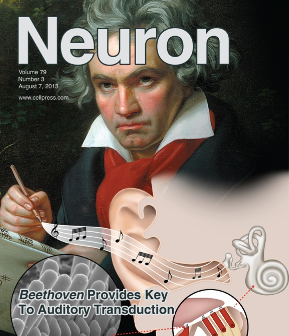
The Beethoven mouse, like its namesake the classical music composer Ludwig von Beethoven, suffers progressive hearing loss and eventual profound deafness. In this issue, Pan et al. examined sensory transduction in inner ear hair cells of Beethoven mice, which carry a point mutation in Transmembrane channel-like 1 gene (Tmc1). They report reduced calcium permeability and reduced single-channel conductance in Beethoven hair cells relative to hair cells that expressed wild type Tmc1. The Beethoven data demonstrate that TMC1 is a component of the hair cell transduction channel. The authors found that a closely related homolog, TMC2, also functions as a component of the transduction channel. The image shows Ludwig von Beethoven as portrayed by Joseph Stieler (1820). A cross-section of the ear, including external ear, middle, and inner ear, appears below. Within the inner ear is the spiral-shaped cochlea. The inset below shows the sensory organ, or organ of Corti. At the bottom right is a scanning electron micrograph of a hair bundle from an inner hair cell, which was the main focus of the Pan et al. study. Cover montage by Emily Mills.
Monday, August 26, 2013
Early experience shapes the amygdala’s sensitivity to race.
Here is a fascinating finding. Not surprising, I suppose, but Telzer et al. show that orphan human infants raised with exposure to only same-race faces (European or Asian) have heightened amygdala responses to out-group faces than those raised with exposure to same- and other-race faces. Later age of adoption is associated with greater biases to race.
In the current study, we investigated how complete infant deprivation to out-group race impacts behavioral and neural sensitivity to race. Although monkey models have successfully achieved complete face deprivation in early life, this is typically impossible in human studies. We overcame this barrier by examining youths with exclusively homogenous racial experience in early postnatal development. These were youths raised in orphanage care in either East Asia or Eastern Europe as infants and later adopted by American families. The use of international adoption bolsters confidence of infant exposure to race (e.g., to solely Asian faces or European faces). Participants completed an emotional matching task during functional MRI. Our findings show that deprivation to other-race faces in infancy disrupts recognition of emotion and results in heightened amygdala response to out-group faces. Greater early deprivation (i.e., later age of adoption) is associated with greater biases to race. These data demonstrate how early social deprivation to race shapes amygdala function later in life and provides support that early postnatal development may represent a sensitive period for race perception.
Thursday, August 22, 2013
Looking at the Posit Science brain renewal training program.
I recently did a post pointing to Patricia Marx's article on brain exercises meant to counter aging. The authors went through the training regime of Mike Merzenich's company "Posit Science." I just got the Kindle version of his new book (pub. date July 27, 2013) "Soft Wired - How the new science of brain plasticity can change your life." I got impatient with the excellent presentation of background material in parts I-III of the book that I am familiar with and noted that at the end of each chapter a URL pointed to a bibliography of original articles supporting its statements. On reaching part IV of the book, "The Brain in Retreat," after a brief scan of the text, I ditched reading the book and went straight to the richly annotated gold mine of references. Below, for example, are some slightly edited clips from the references for Chapter 19 "Losing Ground, Just By Having a Birthday!
How, more exactly, do mental and physical performance abilities change as we grow older?"...probably more than you wanted to know about how our brains and bodies lose it with aging.
I soon found that the references are a work in progress. Detailed literature citations disappear at chapter 22 then reappear with chapter 25, and then trying to pull up references for chapters 32-37 gets a "bad link" message. Both the book and the references detail hassles with getting patents on brain training exercises, forming first one, and then a second company. I would have been happy to be spared this information and would like to have seen some justification why patents and private profits were appropriate for research publicly funded by foundations and the government.
I was frustrated by Part V, "Strengthening, correction, and rejuvenation through brain training" because it was mainly a string of homilies on good living, an advertisement for Posit Science, and an account of Merzenich's personal regimes. What about actually explaing a few of the exercises??? The references did give the meat of studies testing the efficacy of various attention, memory, and language exercises.
I'm currently looking at some of the free exercises, and may get back to you if I decide to cough up the subscription fee for the whole set and really get into it.
Here then are samples from the
Merzenich Ch. 19 references:
-Several hundred studies have documented changes in processing speed associated with aging. There are many measured brain process “speeds;” they ALL slow down. See Salthouse TA (2000) Aging and measures of processing speed. Biol Psychol 45:35
-There is one interesting exception: The strength of fast inhibitory processes normally weaken, to the extent that the modulatory response characteristics of neurons in the cortex support faster successive-signal responding (because post-excitatory inhibition is weaker). This change confers no behavioral advantage because the responding in such an inhibition-impaired brain is so noisy that information that comes from signal processing with such degradation declines dramatically. See de Villers-Sidani et al (2010) Recovery of functional and structural age-related changes in the primary auditory cortex with operant training. PNAS 107:13900.
-The extensions of time required to identify successively presented inputs are, on the average, substantially longer in older populations…I identify the MIT professor Jim DiCarlo as making the most convincing arguments that the richer exploration of stimuli via repeated eye movements—more strongly expressed in young vs older individual—is a key to accurate recognition. For example, see DiCarlo JJ et al (2012) How does the brain solve visual object recognition? Neuron 73:415.
-We commonly record correlated changes in representational accuracy and speed in variously impaired (including aging) brains…The less accurate the brain’s neurological representation of what it sees or hears or feels, the longer it takes to “get the answer right,” i.e., to resolve what it is being seen or heard or felt.
-The degradation of our ability to suppress distractors of either external or internal origin with age has been repeatedly documented in behavioral and brain imaging studies; and the susceptibility to distractors has been shown to directly contribute to forgetfulness in older and otherwise-impaired individuals. See, as an introduction to this rapidly growing literature, Gazzaley A, D’Esposito M (2007) Top-down modulation and normal aging. Ann NY Acad Sci 1097:67.
-Many studies have shown that the strength of modulation of brain activity by attention is weaker in most neurologically and psychiatrically impaired populations. That modulation is largely controlled by the release of the neuromodulator acetylcholine. On the statistical average, acetylcholine-based modulation progressively weakens as the decades pass by. For an introduction to this literature, see, for example, Pekkonen E et al (2005) Cholinergic modulation of preattentive auditory processing in aging. Neuroimage 27:387The list goes on: references on contraction of useful field of vision, changes in driving abilities with aging, hearing loss, less vestibular control, less 'executive control'
-For documentation of the multifaceted decline into a more egocentric older life, see, for example, Orth U et al (2010) Tracking the trajectory of shame, guilt and pride across the life span. J Per Soc Psychol 99:1061; or McFarland C et al (1992) Biased recollections in older adults: The role of implicit theories of aging. J Pers Soc Psychol 62:837.
Wednesday, August 21, 2013
How the brain shifts between purpose and habit.
Gremel et al. do a nice explication of the brain's upstairs/downstairs story, illustrating with direct electrical recordings how the mouse brain switches between different action strategies (goal-directed and habitual). Goal directed action recruits the frontal cortex while habitual action correlates more with activity in a deeper subcortical structure, the striatum. More indirect imaging data show the story is almost surely same for us. It is the upstairs stuff that is more susceptible to aging, and most of us find it more of an effort to do novel versus habitual actions as we age.
Shifting between goal-directed and habitual actions allows for efficient and flexible decision making. Here we demonstrate a novel, within-subject instrumental lever-pressing paradigm, in which mice shift between goal-directed and habitual actions. We identify a role for orbitofrontal cortex (OFC) in actions following outcome revaluation, and confirm that dorsal medial (DMS) and lateral striatum (DLS) mediate different action strategies. Simultaneous in vivo recordings of OFC, DMS and DLS neuronal ensembles during shifting reveal that the same neurons display different activities depending on whether presses are goal-directed or habitual, with DMS and OFC becoming more and DLS less engaged during goal-directed actions. Importantly, the magnitude of neural activity changes in OFC following changes in outcome value positively correlates with the level of goal-directed behavior. Chemogenetic inhibition of OFC disrupts goal-directed actions, whereas optogenetic activation of OFC specifically increases goal-directed pressing. These results also reveal a role for OFC in action revaluation, which has implications for understanding compulsive behavior.

Tuesday, August 20, 2013
A brain correlate of near death hallucinations and visions?
Borjigin et al. make some fascinating observations on brain activity that occurs during the moments of cardiac arrest when brain glucose levels have dropped precipitously. Activity associated with information processing briefly increases 8-fold, a burst even after 'clinical death.' Maybe this is why some patients can recall conversation happening in the operating room.
The brain is assumed to be hypoactive during cardiac arrest. However, the neurophysiological state of the brain immediately following cardiac arrest has not been systematically investigated. In this study, we performed continuous electroencephalography in rats undergoing experimental cardiac arrest and analyzed changes in power density, coherence, directed connectivity, and cross-frequency coupling. We identified a transient surge of synchronous gamma oscillations that occurred within the first 30 s after cardiac arrest and preceded isoelectric electroencephalogram. Gamma oscillations during cardiac arrest were global and highly coherent; moreover, this frequency band exhibited a striking increase in anterior–posterior-directed connectivity and tight phase-coupling to both theta and alpha waves. High-frequency neurophysiological activity in the near-death state exceeded levels found during the conscious waking state. These data demonstrate that the mammalian brain can, albeit paradoxically, generate neural correlates of heightened conscious processing at near-death.
Monday, August 19, 2013
War of science and the humanities redux: Ross Douthat on The Scientism of Steven Pinker
I enjoyed a very well written article by Steven Pinker in the New Republic titled "Science is not your enemy", which argued that an increasing melding of science and the humanities should not be seen at a threat to, but rather as an expansion of, humanistic studies - enhanced by science's quest for intelligibility of the world and a quest for objectivity about its workings.
Ross Douthat writes a critique that nails more clearly than I would have the insidious naturalistic fallacy that still lurks in Pinker's prose, the conflating of "is" with "ought to be". He notes that Pinker offers a
...defensible-if-tendentious account of how the progress of science has undercut the world-pictures bequeathed to us by tradition, intuition and religion. Now an innocent reader might assume that the crack-up of these world pictures, with their tight link between cosmic design and human purposes, might make moral consensus more difficult to realistically achieve. After all, if our universe’s testable laws and empirical realities have no experimentally-verifiable connection to human ends and values, then one would expect rival ideas of the good to have difficulty engaging with one another fruitfully, escaping from the pull of relativism or nihilism, and/or grounding their appeals in anything stronger than aesthetic preference.But then cites the following passage from Pinker to point out that isn't where Pinker is going:
In other words, the worldview that guides the moral and spiritual values of an educated person today is the worldview given to us by science. Though the scientific facts do not by themselves dictate values, they certainly hem in the possibilities. By stripping ecclesiastical authority of its credibility on factual matters, they cast doubt on its claims to certitude in matters of morality. … The facts of science, by exposing the absence of purpose in the laws governing the universe, force us to take responsibility for the welfare of ourselves, our species, and our planet. For the same reason, they undercut any moral or political system based on mystical forces, quests, destinies, dialectics, struggles, or messianic ages. And in combination with a few unexceptionable convictions— that all of us value our own welfare and that we are social beings who impinge on each other and can negotiate codes of conduct—the scientific facts militate toward a defensible morality, namely adhering to principles that maximize the flourishing of humans and other sentient beings. This humanism, which is inextricable from a scientific understanding of the world, is becoming the de facto morality of modern democracies, international organizations, and liberalizing religions, and its unfulfilled promises define the moral imperatives we face today.Douthat:
This is an impressively swift march from allowing, grudgingly, that scientific discoveries do not “dictate” values to asserting that they “militate” very strongly in favor of … why, of Steven Pinker’s very own moral worldview! You see, because we do not try witches, we must be utilitarians! Because we know the universe has no purpose, we must imbue it with the purposes of a (non-species-ist) liberal cosmopolitanism! Because of science, we know that modern civilization has no dialectic or destiny … so we must pursue its “unfulfilled promises” and accept its “moral imperatives” instead!Douthat suggest Pinker is promulgating the Whig interpretation of history (from Wikipedia: Whig history ... is the approach to historiography which presents the past as an inevitable progression towards ever greater liberty and enlightenment, culminating in modern forms of liberal democracy and constitutional monarchy. In general, Whig historians emphasize the rise of constitutional government, personal freedoms and scientific progress. The term is often applied generally (and pejoratively) to histories that present the past as the inexorable march of progress toward enlightenment.)
Like Sam Harris, who wrote an entire book claiming that “science” somehow vindicates his preferred form of philosophical utilitarianism (when what he really meant was that if you assume utilitarian goals, science can help you pursue them), Pinker seems to have trouble imagining any reasoning person disagreeing about either the moral necessity of “maximizing human flourishing” or the content of what “flourishing” actually means — even though recent history furnishes plenty of examples and a decent imagination can furnish many more. Like his whiggish antecedents, he mistakes a real-but-complicated historical relationship between science and humanism for a necessary intellectual line in which the latter vindicates the former, or at least militates strongly in its favor.That's the nub of it. What authority does science have to define what "maximizing human flourishing" means?
Friday, August 16, 2013
Factoids on exercise and learning - the kind of exercise is important
In my scans of journals' tables of contents for potential MindBlog posts I keep an eye out for articles on exercise, probably the most life enhancing activity one can engage in. A large number of studies document enhancement of learning and memory in animals and people who exercise, and more structure is added to this effect by the study of Schmidt-Kassow et al., that shows that light to moderate physical activity while listening to equivalent nouns in German (familiar language) and Polish (the unfamiliar language) enhances the memorization of the unfamiliar words. Recall two days later was better for this group than for a group sitting quietly before the word presentations or another group that exercised just before the word presentations. Here is their abstract:
Acute physical activity has been repeatedly shown to improve various cognitive functions. However, there have been no investigations comparing the effects of exercise during verbal encoding versus exercise prior to encoding on long-term memory performance. In this current psychoneuroendocrinological study we aim to test whether light to moderate ergometric bicycling during vocabulary encoding enhances subsequent recall compared to encoding during physical rest and encoding after being physically active. Furthermore, we examined the kinetics of brain-derived neurotrophic factor (BDNF) in serum which has been previously shown to correlate with learning performance. We also controlled for the BDNF val66met polymorphism. We found better vocabulary test performance for subjects that were physically active during the encoding phase compared to sedentary subjects. Post-hoc tests revealed that this effect was particularly present in initially low performers. BDNF in serum and BDNF genotype failed to account for the current result. Our data indicates that light to moderate simultaneous physical activity during encoding, but not prior to encoding, is beneficial for subsequent recall of new items.Another study finds a different result for more strenuous exercise during reading for which retention was tested. Exercise decreased retention tested immediately after exercise but after two days retention was the same for exercise and non-exercise groups. Perhaps the low level of physiological arousal in the first study primed the brain for the intake of new information while more vigorous exercise overstimulated and monopolized more of the brain's attentional resources. (This second study had only 11 subjects in the test group, versus 105 used for the first study.)
Wednesday, August 14, 2013
Do you have a tidy or messy desk?
Vohs et al. have done an interesting experiment that suggests that physical order enhances healthy choices, generosity, and conventionality, while disorder correlates with greater creativity. I don't go with their "novel hypothesis" description, but the results describe my partner and myself rather well (I'm the tidy one). The abstract:
Order and disorder are prevalent in both nature and culture, which suggests that each environ confers advantages for different outcomes. Three experiments tested the novel hypotheses that orderly environments lead people toward tradition and convention, whereas disorderly environments encourage breaking with tradition and convention—and that both settings can alter preferences, choice, and behavior. A first experiment showed that relative to participants in a disorderly room, participants in an orderly room chose healthier snacks and donated more money. A second experiment showed that participants in a disorderly room were more creative than participants in an orderly room. A final experiment showed a predicted crossover effect: Participants in an orderly room preferred an option labeled as classic, but those in a disorderly room preferred an option labeled as new. Whereas prior research on physical settings has shown that orderly settings encourage better behavior than disorderly ones, the current research tells a nuanced story of how different environments suit different outcomes.Clips from the text:
Being in a clean room seemed to encourage people to do what was expected of them. Compared with participants in the messy room, they donated more of their own money to charity and were more likely to choose the apple over the candy bar....Being in a messy room led to something that firms, industries, and societies want more of: Creativity...Orderly environments promote convention and healthy choices, which could improve life by helping people follow social norms and boosting well-being. Disorderly environments stimulated creativity, which has widespread importance for culture, business, and the arts.
Tuesday, August 13, 2013
Imperceptible current applied to our scalp enhances general intelligence.
Here is yet another of the increasing number of articles examining the effects of very weak electrical stimulation of our frontal scalp with surface electrodes. I've done a number of posts on this topic, the most recent citing concerns over do it yourself kits now available to anyone. Santarnecchi et al. address the frequency-specific effect of stimulation with the main physiological brain rhythms by comparing performance during four tACS (transcranial alternating current stimulation) conditions — 5 Hz (θ band), 10 Hz (α band), 20 Hz (β band), and 40 Hz (γ band) — and a placebo, sham stimulation. Their summary:

-Online prefrontal γ-tACS selectively accelerated logical reasoning.
-Effects were frequency and task specific
-This contrasts with views of gamma-band activity as a byproduct of neuronal activity
-Gamma-band activity plays a functional role in fluid-intelligence-based reasoning
Everyday problem solving requires the ability to go beyond experience by efficiently encoding and manipulating new information, i.e., fluid intelligence (Gf). Performance in tasks involving Gf, such as logical and abstract reasoning, has been shown to rely on distributed neural networks, with a crucial role played by prefrontal regions. Synchronization of neuronal activity in the gamma band is a ubiquitous phenomenon within the brain; however, no evidence of its causal involvement in cognition exists to date. Here, we show an enhancement of Gf ability in a cognitive task induced by exogenous rhythmic stimulation within the gamma band. Imperceptible alternating current delivered through the scalp over the left middle frontal gyrus resulted in a frequency-specific shortening of the time required to find the correct solution in a visuospatial abstract reasoning task classically employed to measure Gf abilities (i.e., Raven’s matrices). Crucially, gamma-band stimulation (γ-tACS) selectively enhanced performance only on more complex trials involving conditional/logical reasoning. The present finding supports a direct involvement of gamma oscillatory activity in the mechanisms underlying higher-order human cognition.

Left Middle Frontal Gyrus
Monday, August 12, 2013
Evidence that the Lunar cycle influences human sleep.
I have kept a log for many years that has convinced me that I have roughly monthly oscillations in motivation and libido, but I've not come across convincing evidence for roughly lunar or monthly cycles in men in literature searches. So, I perk up on seeing the examination by Cajochen et al. of sleep behavior under highly controlled conditions of a circadian laboratory study protocol without time cues. They find that subjective and objective measures of sleep vary according to lunar periodicity (~29.5 days). Subjects in the study were seventeen healthy young volunteers (nine women and eight men; age range, 20–31 years; mean, 25.0 ± 3.6 years [SD]) and 16 healthy older volunteers (eight women and eight men; age range, 57–74 years; mean, 65.0 ± 5.5 years) Here is their abstract:


Endogenous rhythms of circalunar periodicity (∼29.5 days) and their underlying molecular and genetic basis have been demonstrated in a number of marine species. In contrast, there is a great deal of folklore but no consistent association of moon cycles with human physiology and behavior. Here we show that subjective and objective measures of sleep vary according to lunar phase and thus may reflect circalunar rhythmicity in humans. To exclude confounders such as increased light at night or the potential bias in perception regarding a lunar influence on sleep, we retrospectively analyzed sleep structure, electroencephalographic activity during non-rapid-eye-movement (NREM) sleep, and secretion of the hormones melatonin and cortisol found under stringently controlled laboratory conditions in a cross-sectional setting. At no point during and after the study were volunteers or investigators aware of the a posteriori analysis relative to lunar phase. We found that around full moon, electroencephalogram (EEG) delta activity during NREM sleep, an indicator of deep sleep, decreased by 30%, time to fall asleep increased by 5 min, and EEG-assessed total sleep duration was reduced by 20 min. These changes were associated with a decrease in subjective sleep quality and diminished endogenous melatonin levels. This is the first reliable evidence that a lunar rhythm can modulate sleep structure in humans when measured under the highly controlled conditions of a circadian laboratory study protocol without time cues.


Friday, August 09, 2013
Personal control enhances treatment effectiveness.
An interesting fragment, relating to the powerful vs helplessness theme of a recent post, subjects faced with alternative pain control drugs (both actually placebos) reported better pain relief if they chose the drug rather than having it chosen for them. From Geers et al.:
In modern health care, individuals frequently exercise choice over health treatment alternatives. A growing body of research suggests that when individuals choose between treatment options, treatment effectiveness can increase, although little experimental evidence exists clarifying this effect. Four studies were conducted to test the hypothesis that exercising choice over treatment alternatives enhances outcomes by providing greater personal control. Consistent with this possibility, in Study 1 individuals who chronically desired control reported less pain from a laboratory pain task when they were able to select between placebo analgesic treatments. Study 2 replicated this finding with an auditory discomfort paradigm. In Study 3, the desire for control was experimentally induced, and participants with high desire for control benefited more from a placebo treatment when they were able to choose their treatment. Study 4 revealed that the benefit of choice on treatment efficacy was partially mediated by thoughts of personal control. This research suggests that when individuals desire control, choice over treatment alternatives improves treatment effectiveness by enhancing personal control.
Thursday, August 08, 2013
Think your radiologist gets it right? The invisible gorilla strikes again.
A well known video shows the famous experiment of missing a gorilla walking through a basketball game when you have been instructed to count the number of times the ball is being passed during playing. (I can not refer you to a free viewing of this video, since the academic who originated it, Dan Simons, has copyrighted it, and aggressively pursues those who might wish to watch it without paying him for a DVD that contain it.) Anyway, an extension of his basic experiment gives you reason to feel even less confident about the expertise of high priced radiologists examining your X-rays. This from Drew et al.:
Researchers have shown that people often miss the occurrence of an unexpected yet salient event if they are engaged in a different task, a phenomenon known as inattentional blindness. However, demonstrations of inattentional blindness have typically involved naive observers engaged in an unfamiliar task. What about expert searchers who have spent years honing their ability to detect small abnormalities in specific types of images? We asked 24 radiologists to perform a familiar lung-nodule detection task. A gorilla, 48 times the size of the average nodule, was inserted in the last case that was presented. Eighty-three percent of the radiologists did not see the gorilla. Eye tracking revealed that the majority of those who missed the gorilla looked directly at its location. Thus, even expert searchers, operating in their domain of expertise, are vulnerable to inattentional blindness.
Wednesday, August 07, 2013
Degree of Musical Expertise Modulates Higher Order Brain Functioning
A piece like this one by Oechslin et al. gives me some hope that my piano playing and sight reading compensate for my aversion to spending any significant amount of time on anti-aging brain exercise regimes of the sort described in a recent post. Hopefully, if I keep up my piano playing as I age, I will be going ga-ga later rather than sooner. The abstract:
Using functional magnetic resonance imaging, we show for the first time that levels of musical expertise stepwise modulate higher order brain functioning. This suggests that degree of training intensity drives such cerebral plasticity. Participants (non-musicians, amateurs, and expert musicians) listened to a comprehensive set of specifically composed string quartets with hierarchically manipulated endings. In particular, we implemented 2 irregularities at musical closure that differed in salience but were both within the tonality of the piece (in-key). Behavioral sensitivity scores (d′) of both transgressions perfectly separated participants according to their level of musical expertise. By contrasting brain responses to harmonic transgressions against regular endings, functional brain imaging data showed compelling evidence for stepwise modulation of brain responses by both violation strength and expertise level in a fronto-temporal network hosting universal functions of working memory and attention. Additional independent testing evidenced an advantage in visual working memory for the professionals, which could be predicted by musical training intensity. The here introduced findings of brain plasticity demonstrate the progressive impact of musical training on cognitive brain functions that may manifest well beyond the field of music processing.
Tuesday, August 06, 2013
Be young in perception and behavior! Put yourself in a virtual child’s body!
Banakou et al. show that if we use some simple tricks to project ourselves into a 4-year old's body, we overestimate object sizes and more readily associate ourselves with child-like attributes:

An illusory sensation of ownership over a surrogate limb or whole body can be induced through specific forms of multisensory stimulation, such as synchronous visuotactile tapping on the hidden real and visible rubber hand in the rubber hand illusion. Such methods have been used to induce ownership over a manikin and a virtual body that substitute the real body, as seen from first-person perspective, through a head-mounted display. However, the perceptual and behavioral consequences of such transformed body ownership have hardly been explored. In the first experiment, immersive virtual reality was used to embody 30 adults as a 4-y-old child (condition C), and as an adult body scaled to the same height as the child (condition A), experienced from the first-person perspective, and with virtual and real body movements synchronized. The result was a strong body-ownership illusion equally for C and A. Moreover there was an overestimation of the sizes of objects compared with a nonembodied baseline, which was significantly greater for C compared with A. An implicit association test showed that C resulted in significantly faster reaction times for the classification of self with child-like compared with adult-like attributes. A second experiment with an additional 16 participants extinguished the ownership illusion by using visuomotor asynchrony, with all else equal. The size-estimation and implicit association test differences between C and A were also extinguished. We conclude that there are perceptual and probably behavioral correlates of body-ownership illusions that occur as a function of the type of body in which embodiment occurs.

Experimental setup. The body of the participant was substituted by a sex-matched virtual body, viewed from first-person perspective, onto which body and head movements were mapped in real time. The body could also be seen as reflected in a virtual mirror as shown. The body each participant viewed depended on the condition C (for child) or A (for adult) to which each one was assigned. (A) A female participant in a child’s body. (B) A female participant in a scaled-down adult’s body. (C) Participants’ body movements were tracked by 34 Optitrack markers.
Subscribe to:
Comments (Atom)