Thursday, December 11, 2008
Cool Brain Trick....
I pass on this link to you because of my interest in music, a scale that always seems to be going down, but not getting much lower. It’s an auditory equivalent of an old-fashioned barber pole.
Compendium of brain blogs...
MindBlog reader Kelly points us to this recent posting of "101 Fascinating Brain Blogs"
Wednesday, December 10, 2008
Changing our body image can change pain perception.
Some remarkable observations by Moseley et al. :
The feeling that our body is ours, and is constantly there, is a fundamental aspect of self-awareness. Although it is often taken for granted, our physical self-awareness, or body image, is disrupted in many clinical conditions. One common disturbance of body image, in which one limb feels bigger than it really is, can also be induced in healthy volunteers by using local anaesthesia or cutaneous stimulation. Here we report that, in patients with chronic hand pain, magnifying their view of their own limb during movement significantly increases the pain and swelling evoked by movement. By contrast, minifying their view of the limb significantly decreases the pain and swelling evoked by movement. These results show a top-down effect of body image on body tissues, thus demonstrating that the link between body image and the tissues is bi-directional.
Larger hippocampus and superior pathfinding in the blind
From Fortin et al, work that confirms how unnecessary vision is for the construction of spatial concepts:
In the absence of visual input, the question arises as to how complex spatial abilities develop and how the brain adapts to the absence of this modality. We explored navigational skills in both early and late blind individuals and structural differences in the hippocampus, a brain region well known to be involved in spatial processing. Thirty-eight participants were divided into three groups: early blind individuals (n = 12; loss of vision before 5 years of age; mean age 33.8 years), late blind individuals (n = 7; loss of vision after 14 years of age; mean age 39.9 years) and 19 sighted, blindfolded matched controls. Subjects undertook route learning and pointing tasks in a maze and a spatial layout task. Anatomical data was collected by MRI. Remarkably, we not only show that blind individuals possess superior navigational skills than controls on the route learning task, but we also show for the first time a significant volume increase of the hippocampus in blind individuals [F(1,36) = 6.314; P ≤ 0.01; blind: mean = 4237.00 mm3, SE = 107.53; sighted: mean = 3905.74 mm3, SE = 76.27], irrespective of whether their blindness was congenital or acquired. Overall, our results shed new light not only on the construction of spatial concepts and the non-necessity of vision for its proper development, but also on the hippocampal plasticity observed in adult blind individuals who have to navigate in this space.
Tuesday, December 09, 2008
Neural mechanisms underlying memory failure in older adults
Here is a fascinating bit of work from Stevens et al. When failing to encode information older, but not younger, adults show increased activity in brain regions mediating distraction. This continues the developing consensus that aging brains (as I woefully note for mine) have increasing difficulty ignoring distracting information that is irrelevant to the task at hand :
Older adults have reduced memory, primarily for recall, but also for recognition, particularly for unfamiliar faces. Behavioral studies have shown that age-related memory declines are due in part to distraction from impaired inhibition of task-irrelevant input during encoding. Functional magnetic resonance imaging (fMRI) has been used to uncover the sources of memory deficits associated with aging. To date, this work has focused on successful encoding, while the neural correlates of unsuccessful encoding are unknown. Here, we provide novel evidence of a neural mechanism underlying memory failures exclusively affecting older adults. Whereas both younger and older adults showed reduced activation of brain regions important for encoding (e.g., hippocampus) during unsuccessful encoding, only older adults showed increased activity in brain regions mediating distraction (e.g., auditory cortex) and in left prefrontal cortex. Further, these regions were functionally connected with medial parietal areas, previously identified as default mode regions, which may reflect environmental monitoring. Our results suggest that increased distraction from task-irrelevant input (auditory in this case), associated with the unfamiliar and noisy fMRI environment, may increase environmental monitoring. This in turn could hinder suppression of default mode processing, resulting in memory failures in older adults. These findings provide novel evidence of a brain mechanism underlying the behavioral evidence that impaired inhibition of extraneous input during encoding leads to memory failure in older adults and may have implications for the ubiquitous use of fMRI for investigating neurocognitive aging.
Prefrontal regions mediating resistance versus vulnerability to depression.
Koenigs et al., in a study of humans with focal brain lesions, address the causality of depressive symptoms by showing that lesions to different parts of our prefrontal cortex can either enhance or decrease our expression of those symptoms:
The neuroanatomical correlates of depression remain unclear. Functional imaging data have associated depression with abnormal patterns of activity in prefrontal cortex (PFC), including the ventromedial (vmPFC) and dorsolateral (dlPFC) sectors. If vmPFC and dlPFC are critical neural substrates for the pathogenesis of depression, then damage to either area should affect the expression of depressive symptoms. Using patients with brain lesions we show that, relative to nonfrontal lesions, bilateral vmPFC lesions are associated with markedly low levels of depression, whereas bilateral dorsal PFC lesions (involving dorsomedial and dorsolateral areas in both hemispheres) are associated with substantially higher levels of depression. These findings demonstrate that vmPFC and dorsal PFC are critically and causally involved in depression, although with very different roles: vmPFC damage confers resistance to depression, whereas dorsal PFC damage confers vulnerability.
Monday, December 08, 2008
Degraded surroundings degrade behavior
 Keizer et al. find support for the "Broken Windows Theory," that suggests that signs of disorderly and petty criminal behavior trigger more disorderly and petty criminal behavior, thus causing the behavior to spread. They find that if people see one norm or rule being violated (such as graffiti or a vehicle parked illegally), they're more likely to violate others--such as littering, or even stealing. Groningen citizens were given the opportunity to steal an envelope that obviously contained a 5 Euro note from a postbox. When the postbox was clean and tidy 13% took the bait; by contrast, 27% stole from a graffitied postbox and 25% from one with litter around it. Other tests showed that people are more likely to litter in the presence of graffiti or abandoned shopping trollies, and after hearing the crackle of illegal fireworks.
Does your cell phone signal damange your DNA? - round two
An exchange in the letters to the editor section of the Nov. 28 Science Magazine:
In her widely cited News of the Week story "Fraud charges cast doubt on claims of DNA damage from cell phone fields" (Science, 29 August, p. 1144), G. Vogel writes, "The only two peer-reviewed scientific papers showing that electromagnetic fields (EMFs) from cell phones can cause DNA breakage are at the center of a misconduct controversy at the Medical University of Vienna." Notwithstanding the allegations on both sides of the fence in this unresolved controversy, Vogel's opening comment and the title of her article are misleading. In fact, there are many other peer-reviewed papers from laboratories in at least seven countries, including the United States, showing that cell phone or similar low-intensity EMFs can break DNA or modulate it structurally [e.g., (1-9)].
Vini G. Khurana
Department of Neurosurgery
The Canberra Hospital
Australian National University
Canberra, ACT, Australia
E-mail: vgkhurana@gmail.com
References
1. R. J. Aitken, L. E. Bennetts, D. Sawyer, A. M. Wiklendt, B. V. King, Int. J. Androl. 28, 171 (2005).
2. W. Baohong et al., Toxicology 232, 311 (2007).
3. J. Y. Kim et al., Environ. Toxicol. 23, 319 (2008).
4. H. Lai, N. P. Singh, Int. J. Radiat. Biol. 69, 513 (1996).
5. S. Lixia et al., Mutat. Res. 602, 135 (2006).
6. R. Paulraj, J. Behari, Mutat. Res. 596, 76 (2006).
7. J. L. Phillips et al., Bioelectrochem. Bioenerget. 45, 103 (1998).
8. T. Nikolova et al., FASEB J. 19, 1686 (2005).
9. M. Mashevich et al., Bioelectromagnetics 24, 82 (2003).
Response
My intention was not to imply that there were only two papers showing any effects of EMFs. There are many publications that show effects of EMFs on DNA, but the citations listed here do not directly contradict the quoted sentence. Some see an effect in combination with other known agents that damage DNA. One finds an effect of microwaves, but in the range of microwave ovens and wireless LANs, not cell phones. Others look at DNA damage (for example, chromosome duplications), but not breakage. Several show mixed results: One finds a decrease in DNA breaks in three sets of exposed cells and an increase in one. Since the story was published, however, I have been made aware of a paper by Yao et al. (1), which also reported single-strand DNA breaks caused by EMFs equivalent to those from cell phones. I regret any misunderstanding the sentence caused.
Gretchen Vogel
Reference
1. K. Yao et al., Mol. Vision 14, 964 (2008).
Sunday, December 07, 2008
MindBlog has moved south...
 A personal note...I've spent the last week in transition between Madison Wisconsin (where it is 7 degrees farenheit right now) and Fort Lauderdale (where it is 72). I'll be here until mid-April. The picture is of one of my two Abyssinian kittens, looking out my condo window. The cats were great travelers in the car, watched the passing countryside as if they were dogs.
Friday, December 05, 2008
Foundations of neuroeconomics.
Clithero et al. offer an analysis and critique of the foundations of Neuroeconomics, the attempt to understand human economic behaviors in terms of underlying brain mechanisms.
Cyberchondria
An article by Markoff reminds me of the recent post on an example of the nocebo effect (Reading the drug side-effects label can make you sick). He describes a study by Microsoft suggesting that self-diagnosis by search engine frequently leads Web searchers to conclude the worst about what ails them.
They found that Web searches for things like headache and chest pain were just as likely or more likely to lead people to pages describing serious conditions as benign ones, even though the serious illnesses are much more rare...For example, there were just as many results that linked headaches with brain tumors as with caffeine withdrawal, although the chance of having a brain tumor is infinitesimally small.
Thursday, December 04, 2008
Resveratrol promotes repair of DNA breaks that occur on aging
Nicholas Wade reports on work of Sinclair and collaborators (reported in Cell) that sirtulin, an enzyme activated by the red wine compound resveratrol, promotes the repair of breaks in DNA that occur on aging. (Ten previous MindBlog posts on resveratrol can be retrieved by entering "resveratrol" in the search box in the left column.) Resveratrol has many different effects, only some of which are exerted through sirtuin. While some people have been taking resveratrol with no apparent side effects, Mindblog's self-experiment found it causing arthritic symptoms, and that experience was reported by several who commented on that post.
Ventral and dorsal pathways for language
Finding an analogy to our visual system's partition of visual information into dorsal 'where' and ventral 'what' streams, Saur et al combine MRI and diffusion tensor imaging to provide support for a language processing model in which a dorsal stream is involved in mapping sound to articulation, and a ventral stream in mapping sound to meaning. Here is their abstract:
Built on an analogy between the visual and auditory systems, the following dual stream model for language processing was suggested recently: a dorsal stream is involved in mapping sound to articulation, and a ventral stream in mapping sound to meaning. The goal of the study presented here was to test the neuroanatomical basis of this model. Combining functional magnetic resonance imaging (fMRI) with a novel diffusion tensor imaging (DTI)-based tractography method we were able to identify the most probable anatomical pathways connecting brain regions activated during two prototypical language tasks. Sublexical repetition of speech is subserved by a dorsal pathway, connecting the superior temporal lobe and premotor cortices in the frontal lobe via the arcuate and superior longitudinal fascicle. In contrast, higher-level language comprehension is mediated by a ventral pathway connecting the middle temporal lobe and the ventrolateral prefrontal cortex via the extreme capsule. Thus, according to our findings, the function of the dorsal route, traditionally considered to be the major language pathway, is mainly restricted to sensory-motor mapping of sound to articulation, whereas linguistic processing of sound to meaning requires temporofrontal interaction transmitted via the ventral route.
Wednesday, December 03, 2008
Destroying memories to strengthen them
Lee reports work with rats showing that the core mechanisms that strengthen memories have more in common with the mechanisms that support memory reconsolidation than those that participate in initial memory storage. Memories are dynamic, rather than static, in nature. The reactivation of a memory through re-exposure to salient training stimuli results in its destabilization, necessitating a restabilization process known as reconsolidation, a disruption of which leads to amnesia. He finds that one normal function of hippocampal memory reconsolidation in rats is to modify the strength of a contextual-fear memory as a result of further learning.
A summary figure from Rudy's review of the article:

A summary figure from Rudy's review of the article:

(a) The contextual-fear conditioning procedures that were used to study reconsolidation and memory strengthening are very similar. Note that the only difference between them is that the shock unconditioned stimulus was presented in phase II of the memory strengthening procedure, but the subject was only exposed to the context in the reconsolidation procedure. (b) Exposure to just a retrieval cue or a second conditioning trial will retrieve the established memory trace from long-term memory. This will result in the activation of the UPS, which will uncouple the synapses that support the trace, and the activation of Zip268 and the subsequent production of molecules, protein synthesis (PS), needed to rebuild or strengthen the trace.
The idea that retrieval can disrupt the synaptic basis of an established memory trace is counterintuitive. Nevertheless, the ubiquitin-proteasome system (UPS) has recently been identified as a key component of this process. Ubiquitin tags proteins for degradation and the proteasome degrades them. Retrieval of a contextual-fear memory is associated with polyubiquitinization of important postsynaptic density scaffolding proteins in the hippocampus.If proteolysis is prevented, then the memory trace should not degrade and would not have to be rebuilt from new protein.
Measuring the real-time chemistry of reward and aversion
fMRI studies suggest that nucleus accumbens (NAc) activation increases in response to stimuli of different hedonic valence, whereas physiological evidence suggests that NAc neurons show increases in activity for rewarding stimuli and pauses for aversive stimuli. Using cyclic voltammetry, Roitman et al. find that patterns of dopamine release and metabolic activity differentiate between rewarding and aversive stimuli. From their text:
It is controversial whether dopamine release in the NAc exclusively signals aspects of reward or serves a more broad purpose for signaling novelty or salience regardless of hedonic value...To dissociate salience or novelty from hedonic valence, we delivered brief intra-oral infusions of sucrose and quinine solutions to naive behaving rats and measured changes in dopamine concentration and pH in the NAc every 100 ms using fast-scan cyclic voltammetry. The pH measurements provide a measure of metabolic activity and thus an indirect measure of general neuronal activity.Appetitive (0.3 M sucrose) and aversive (0.001 M quinine) stimuli were delivered intra-orally to ensure equal exposure and transduction via the same sensory modality: the taste system. Each animal received both appetitive and aversive stimuli at unpredictable times to ensure comparable novelty and salience but opposing hedonic valence. This design elicited strong and consistent behavioral differences in hedonic expression with no evidence of anticipatory or conditioned responses. Voltammetric recordings permitted real-time detection of dopamine release and NAc activity, elucidating their role in signaling hedonic valence. The work makes clear that dopamine signaling and general activity in the NAc is exquisitely sensitive to both rewarding and aversive taste stimuli.
Tuesday, December 02, 2008
Teaching robots right from wrong
Cornelia Dean writes a brief article on people trying to develop intelligent battle robots that can behave more ethically in the battlefield than humans currently can. It focuses on the work of Ronald Arkin at Georgia Tech.
Daniel C. Dennett, a philosopher and cognitive scientist at Tufts University:
In the heat of battle, their minds clouded by fear, anger or vengefulness, even the best-trained soldiers can act in ways that violate the Geneva Conventions or battlefield rules of engagement. Now some researchers suggest that robots could do better...some of the potential benefits of autonomous fighting robots: For one thing, they can be designed without an instinct for self-preservation and, as a result, no tendency to lash out in fear. They can be built without anger or recklessness, Dr. Arkin wrote, and they can be made invulnerable to what he called “the psychological problem of ‘scenario fulfillment,’ ” which causes people to absorb new information more easily if it agrees with their pre-existing ideas.Noel Sharkey, a computer scientist at the University of Sheffield in Britain, has written that this is not a ‘Terminator’-style science fiction but grim reality. He would ban lethal autonomous robots until they demonstrate they will act ethically, a standard he said he believes they are unlikely to meet. Meanwhile, he said, he worries that advocates of the technology will exploit the ethics research to allay political opposition.
Dr. Arkin’s approach involves creating a kind of intellectual landscape in which various kinds of action occur in particular “spaces.” In the landscape of all responses, there is a subspace of lethal responses. That lethal subspace is further divided into spaces for ethical actions, like firing a rocket at an attacking tank, and unethical actions, like firing a rocket at an ambulance....because rules like the Geneva Conventions are based on humane principles, building them into the machine’s mental architecture endows it with a kind of empathy. He added, though, that it would be difficult to design “perceptual algorithms” that could recognize when people were wounded or holding a white flag or otherwise “hors de combat.”
Daniel C. Dennett, a philosopher and cognitive scientist at Tufts University:
“If we talk about training a robot to make distinctions that track moral relevance, that’s not beyond the pale at all,” he said. But, he added, letting machines make ethical judgments is “a moral issue that people should think about.”
The Psychology of Transcending the Present
Liberman and Trope suggest an underlying similarity in all of our mental operations that are not dealing with the here and now:
People directly experience only themselves here and now but often consider, evaluate, and plan situations that are removed in time or space, that pertain to others' experiences, and that are hypothetical rather than real. People thus transcend the present and mentally traverse temporal distance, spatial distance, social distance, and hypotheticality. We argue that this is made possible by the human capacity for abstract processing of information. We review research showing that there is considerable similarity in the way people mentally traverse different distances, that the process of abstraction underlies traversing different distances, and that this process guides the way people predict, evaluate, and plan near and distant situations.Here is one clip from the article on the interrelations among psychological distance dimensions:
Try to complete the sentence "A long time ago, in a ____ place." The tendency to complete it with "far away" rather than with "nearby" reflects not only a literary convention but also an automatic tendency of the human mind. Indeed, people use spatial metaphors to represent time in everyday language and reasoning. More generally, if psychological distance is reflected in different dimensions, then these dimensions should be mentally associated. Remote locations should bring to mind the distant rather than the near future, other people rather than oneself, and unlikely rather than likely events. Initial support for this hypothesis comes from a set of studies in which participants viewed landscape photographs containing an arrow that was pointing to either a proximal or a distal point on the landscape. Each arrow contained a word denoting either psychological proximity (e.g., tomorrow, we, sure) or psychological remoteness (e.g., year, others, maybe) (Figure below). Participants had to respond by pressing one of two keys as quickly and as accurately as possible. In one version of the task, they had to indicate whether the arrow pointed to a proximal or distal location. In another version, they had to identify the word printed in the arrow [Stroop task]. In both versions, participants responded faster to (i.e., processed more efficiently) distance-congruent stimuli (in which the spatially distant arrow contained a word that denoted large temporal distance, large social distance, or low likelihood and the spatially proximal arrow contained words that denoted temporal proximity, social proximity or high likelihood) than to distance-incongruent stimuli (in which spatially distal arrows contained words denoting proximity and spatially proximal arrows contained words denoting remoteness).Figure: Two examples of incongruent visual stimuli: a word denoting social proximity, "us," located far from the observer, and a word denoting social remoteness, "them," located near the observer. Because spatial distance is associated with temporal distance, social distance, and hypotheticality, participants are slower to indicate the location of the arrow and to identify the word on it with incongruent stimuli than with congruent stimuli "us" located near the observer and "them" located far from the observer.

Monday, December 01, 2008
Superorganisms
 Steve Jones writes an interesting review of E.O. Wilson's latest book, a collaboration with Bert Hölldobler: "THE SUPERORGANISM -The Beauty, Elegance, and Strangeness of Insect Societies"
Social insects have often been co-opted as models of human society. The right uses them to celebrate the power of hierarchy, the left that of community. Bees attract the liberal and optimistic (the spirit of the beehive), ants the conservative and the anything but (the city as ant heap).
Hölldobler and Wilson’s central conceit is that a colony is a single animal raised to a higher level. Each insect is a cell, its castes are organs, its queens are its genitals, the wasps that stung me are an equivalent of an immune system. In the same way, the foragers are eyes and ears, and the colony’s rules of development determine its shape and size. The hive has no brain, but the iron laws of cooperation give the impression of planning. Teamwork pays; in a survey of one piece of Amazonian rain forest, social insects accounted for 80 percent of the total biomass, with ants alone weighing four times as much as all its mammals, birds, lizards, snakes and frogs put together. The world holds as much ant flesh as it does that of humans.
A few simple rules produce what appears to be intelligence, but is in fact entirely mindless. Individuals are automatons. An ant stumbles on a tasty item and brings a piece back to the nest, wandering as it does and leaving a trail of scent. A second ant tracks that pathway back to the source, making random swerves of its own. A third, a fourth, and so on do the same, until soon the busy creatures converge on the shortest possible route, marked by a highway of pheromones. This phenomenon has some useful applications for the social animals who study it. Computer scientists fill their machines with virtual ants and task them with finding their way through a maze, leaving a coded signal as they pass until the fastest route emerges. That same logic helps plan efficient phone networks and the best use of the gates at J.F.K. In the phone system each message leaves a digital “pheromone” as it passes through a node, and the fastest track soon emerges. Swarm intelligence does wondrous things.
Neurotech
 Virginia Gewin offers a report on the growing neurotechnology industry.
Last year, global neurotechnology industry revenues rose 8.3% to US$130.5 billion, says NeuroInsights, a market-analysis firm based in San Francisco, California. Its Neurotechnology Industry 2008 Report, which profiled 500 public and private companies, divided the industry into three sectors: neuropharmaceuticals, neurodevices and neurodiagnostics.
Medtronic in Minneapolis, Minnesota...is developing deep-brain stimulation devices, the latest ones for epilepsy and depression.
The budding area of neurogenesis research..has prompted drug companies to look to start-ups and academia for talent... the development of small molecules to encourage neurogenesis — in which endogenous stem cells mature into neurons — is a "breakthrough area". Swiss-based drug giant AstraZeneca announced last month that it will collaborate with Columbia University's René Hen to explore novel neurogenesis-related depression and anxiety treatments.
Friday, November 28, 2008
What happy people don't do.
Rabin notes the work of John Robinson, who finds that:
Although people who describe themselves as happy enjoy watching television, it turns out to be the single activity they engage in less often than unhappy people.
The study relied primarily on the responses of 45,000 Americans collected over 35 years by the University of Chicago’s General Social Survey, and on published “time diary” studies recording the daily activities of participants.
“We looked at 8 to 10 activities that happy people engage in, and for each one, the people who did the activities more — visiting others, going to church, all those things — were more happy,” Dr. Robinson said. “TV was the one activity that showed a negative relationship. Unhappy people did it more, and happy people did it less.”
Slow Blogging....
From an article by Sharon Otterman:
The practice is inspired by the slow food movement, which says that fast food is destroying local traditions and healthy eating habits. Slow food advocates, like the chef Alice Waters of Chez Panisse in Berkeley, Calif., believe that food should be local, organic and seasonal...A Slow Blog Manifesto, written in 2006 by Todd Sieling, a technology consultant from Vancouver, British Columbia, laid out the movement’s tenets. “Slow Blogging is a rejection of immediacy,” he wrote. “It is an affirmation that not all things worth reading are written quickly.” ...Some slow bloggers like to push the envelope of their readers’ attention even further. Academics post lengthy pieces about literature and teaching styles, while techies experiment to see how infrequently they can post before readers desert them.
This approach is a deliberate smack at the popular group blogs like Huffington Post, the Daily Beast, Valleywag and boingboing, which can crank out as many as 50 items a day. On those sites, readers flood in and advertisers sign on. Spin and snark abound. Earnest descriptions of the first frost of the season are nowhere to be found.
Andrew Sullivan, perhaps the world’s best-read political blogger, talked about the burnout factor in an article in November’s Atlantic magazine called “Why I Blog.” He said in an interview posted on the magazine’s Web site that during the election, his readers became so addicted to his stream of posts that he sometimes set his blog to post automatically so he could go to lunch. When he took two days off to make sense of “the whole Sarah Palin thing,” his audience flipped, thinking he was dead or silenced.
“You can’t stop,” Mr. Sullivan said in the online interview. “The readers act as if you’ve cut off their oxygen supply, and they just flap around like a goldfish out of water until you plop them back in.”
Thursday, November 27, 2008
The Wall Street Bonus degrades rather than enhancing performance.
Dan Ariely, a professor of behavioral economics at Duke, reports interesting work showing that people perform better on tasks requiring cognitive skills when they are not offered huge rewards. Social pressure has the same effect that money has. It motivates people, especially when the tasks at hand require only effort and no skill. But it can provide stress, too, and at some point that stress overwhelms the motivating influence.
Contempt and disgust - sexual differences in brain responses
Aleman and Swart use fMRI measurements to note (slightly edited clip from the abstract) that:
Men display stronger brain activation than women to facial expressions of contempt in the medial frontal gyrus, inferior frontal gyrus, and superior temporal gyrus. Conversely, women showed stronger neural responses than men to facial expressions of disgust. The effect of stimulus sex differed for men versus women. Specifically, women showed stronger responses to male contemptuous faces (as compared to female expressions) in the insula and middle frontal gyrus. Contempt has been conceptualized as signaling perceived moral violations of social hierarchy, whereas disgust would signal violations of physical purity.They suggest that the results indicate a neural basis for sex differences in moral sensitivity regarding hierarchy on the one hand and physical purity on the other.
Wednesday, November 26, 2008
Reading the drug side-effects label can make you sick.
 An interesting article from the Wall Street Journal on the nocebo effect, which I have mentioned before, the opposite of the placebo effect. Numerous studies report that negative side effects of a medical condition or drug treatment are reported to occur more frequently by those who are aware of them than by those who are not.
Another herbal miracle drug fails to pan out....
The largest clinical trial to date finds no effect of ginkgo biloba on slowing memory loss or dementia in Alzheimer's.
Tuesday, November 25, 2008
Reversal of fear in the human brain
Schiller et al. do work on learned fear responses and their reversal:
Fear learning is a rapid and persistent process that promotes defense against threats and reduces the need to relearn about danger. However, it is also important to flexibly readjust fear behavior when circumstances change. Indeed, a failure to adjust to changing conditions may contribute to anxiety disorders. A central, yet neglected aspect of fear modulation is the ability to flexibly shift fear responses from one stimulus to another if a once-threatening stimulus becomes safe or a once-safe stimulus becomes threatening. In these situations, the inhibition of fear and the development of fear reactions co-occur but are directed at different targets, requiring accurate responding under continuous stress. To date, research on fear modulation has focused mainly on the shift from fear to safety by using paradigms such as extinction, resulting in a reduction of fear. The aim of the present study was to track the dynamic shifts from fear to safety and from safety to fear when these transitions occur simultaneously. We used functional neuroimaging in conjunction with a fear-conditioning reversal paradigm. Our results reveal a unique dissociation within the ventromedial prefrontal cortex between a safe stimulus that previously predicted danger and a "naive" safe stimulus. We show that amygdala and striatal responses tracked the fear-predictive stimuli, flexibly flipping their responses from one predictive stimulus to another. Moreover, prediction errors associated with reversal learning correlated with striatal activation. These results elucidate how fear is readjusted to appropriately track environmental changes, and the brain mechanisms underlying the flexible control of fear.
Figure: Striatum and amygdala BOLD responses throughout the discrimination and reversal task. A, Mean differential striatal (left and right caudate) and amygdala percent BOLD signal change in the different phases of the task. The differential responding is calculated as [face A – face B]. Positive scores correspond to stronger responses to face A, which was paired with the shock during acquisition (CS+). Negative scores correspond to stronger responses to face B, which was paired with the shock during reversal (new CS+). These BOLD responses were extracted from the CS+ greater than CS– in early acquisition contrast. B, Striatal activation is denoted by yellow circle. C, Left amygdala activation is denoted by yellow circle.

How we learn to value others
Behrens et al. use a combination of computational and neuroimaging techniques to address a key question in social neuroscience: how we learn to value some individuals more than others. The work demonstrates that demonstrates that social valuation is achieved using the same mechanisms that underlie the reward-based learning — that is, by associative learning. Their abstract:
Our decisions are guided by information learnt from our environment. This information may come via personal experiences of reward, but also from the behaviour of social partners. Social learning is widely held to be distinct from other forms of learning in its mechanism and neural implementation; it is often assumed to compete with simpler mechanisms, such as reward-based associative learning, to drive behaviour. Recently, neural signals have been observed during social exchange reminiscent of signals seen in studies of associative learning. Here we demonstrate that social information may be acquired using the same associative processes assumed to underlie reward-based learning. We find that key computational variables for learning in the social and reward domains are processed in a similar fashion, but in parallel neural processing streams. Two neighbouring divisions of the anterior cingulate cortex were central to learning about social and reward-based information, and for determining the extent to which each source of information guides behaviour. When making a decision, however, the information learnt using these parallel streams was combined within ventromedial prefrontal cortex. These findings suggest that human social valuation can be realized by means of the same associative processes previously established for learning other, simpler, features of the environment.
Monday, November 24, 2008
Potential flaws in unconscious bias tests
 An interesting article by John Tierney notes controversy over the way researchers have been using split-second reactions on a computer test (the Implicit Association Test, or I.A.T.) to diagnose an epidemic of racial bias. Critic Hart Blanton notes:
One can decrease racial bias scores on the I.A.T. by simply exposing people to pictures of African-Americans enjoying a picnic...Yet respondents who take this test on the Web are given feedback suggesting that some enduring quality is being assessed...People receiving feedback about their ‘strong’ racial biases are encouraged in sensitivity workshops to confront these tendencies as some ugly reality that has meaning in their daily lives. But unbeknownst to respondents who take this test, the labels given to them were chosen by a small group of people who simply looked at a distribution of test scores and decided what terms seemed about right. This is not how science is done.However,
In a new a meta-analysis of more than 100 studies, Dr. Greenwald, Dr. Banaji (two of the leading I.A.T. researchers) and fellow psychologists conclude that scores on I.A.T. reliably predict people’s behavior and attitudes, and that the test is a better predictor of interracial behavior than self-description. Their critics reach a different conclusion after reanalyzing the data in some of those studies, which they say are inconsistent and sometimes demonstrate the reverse of what has been reported. They have suggested addressing the scientific dispute over bias — and the researchers’ arguments about the legal implications for affirmative-action policies — by having the two sides join in an “adversarial collaboration.”
One critic, Philip Tetlock, a psychologist at the University of California, Berkeley, said he had found prominent research groups and scholars willing to mediate joint experiments. But so far nothing has happened — and each side blames the other. Dr. Greenwald says he tried proposing a joint experiment to Dr. Tetlock only to have it rejected. Dr. Tetlock says that he tried a counterproposal and offered to work out a compromise, but that the I.A.T. researchers had refused two invitations to sit down with independent mediators.
After all the mutual invective in the I.A.T. debate, maybe it’s unrealistic to expect the two sides to collaborate. But these social scientists are supposed to be experts in overcoming bias and promoting social harmony. If they can’t figure out how to get along with their own colleagues, how seriously should we take their advice for everyone else?
Cultural specificity in amygdala response to fear faces
From Chiao et al. :
The human amygdala robustly activates to fear faces. Heightened response to fear faces is thought to reflect the amygdala's adaptive function as an early warning mechanism. Although culture shapes several facets of emotional and social experience, including how fear is perceived and expressed to others, very little is known about how culture influences neural responses to fear stimuli. Here we show that the bilateral amygdala response to fear faces is modulated by culture. We used functional magnetic resonance imaging to measure amygdala response to fear and nonfear faces in two distinct cultures. Native Japanese in Japan and Caucasians in the United States showed greater amygdala activation to fear expressed by members of their own cultural group. This finding provides novel and surprising evidence of cultural tuning in an automatic neural response.
Friday, November 21, 2008
The innovative brain
 Lawrence et al. present preliminary neurocognitive data from matched groups of entrepreneurs and managerial controls that suggests that entrepreneurs represent an example of highly adaptive risk-taking behavior, with positive functional outcomes in the context of stressful economic decision-making. They suggest this 'functional impulsivity' may have evolutionary value as a means of seizing opportunities in a rapidly changing environment. Their neurocognitive tests distinguished the involvement of distinct processes in risky and risk-free decision-making. Referred to as 'hot' and 'cold' processes, these appear to be localized to distinct regions of the brain's frontal lobes. Risk-taking performance in the entrepreneurs was accompanied by elevated scores on personality impulsiveness measures and superior cognitive-flexibility performance. They conclude that entrepreneurs and managers do equally well when asked to perform cold decision-making tasks, but differences emerge in the context of risky or emotional decisions.
The pattern of performance seen on a gambling task in entrepreneurs reflects a behavioral index of risk-seeking or risk tolerance. Greater rewards (as well as greater losses) are available for those who bet more. If these impulsive risk-taking traits can be beneficial, can they be taught or otherwise imparted to the potential entrepreneur? What does it take to make an entrepreneur — is it an inherited, inbuilt characteristic, or is it acquired, and if so, can it be acquired by anyone? These cognitive processes are intimately linked to brain neurochemistry, particularly to the neurotransmitter dopamine. Using single-dose psychostimulants to manipulate dopamine levels, we have seen modulation of risky decision-making on this task9. Therefore, it might be possible to enhance entrepreneurship pharmacologically.
Alexithymia
I just learned a new word: Alexithymia, the inability to express feelings with words, or more generally deficiency in understanding, processing, or describing emotions. The condition is associated with less activation of the anterior cingulate cortex, involved in cognitive and emotional processing. Gu et al. show that the trait is also associated with less efficient voluntary control.
Thursday, November 20, 2008
Mozart's Symphony No. 40 in G minor - a new version
I just have to pass this on (from Andrews Sullivan's blog):
Towards a Moral Neuropolitics
Gary Olson writes an article on the neuroscience of empathy and mirror neuron systems, arguing that the morality that leads to progressive political possibilities is grounded in biology.
Making your tennis racquet part of your brain's body representation
Interesting work from Fourkas et al. in Cerebral Cortex:
Specific physical or mental practice may induce short- and long-term neuroplastic changes in the motor system and cause tools to become part of one's own body representation. Athletes who use tools as part of their practice may be an excellent model for assessing the neural correlates of possible bodily representation changes that are specific to extensive practice. We used single-pulse transcranial magnetic stimulation to measure corticospinal excitability in forearm and hand muscles of expert tennis players and novices while they mentally practiced a tennis forehand, table tennis forehand, and a golf drive. The muscles of expert tennis players showed increased corticospinal facilitation during motor imagery of tennis but not golf or table tennis. Novices, although athletes, were not modulated across sports. Subjective reports indicated that only in the tennis imagery condition did experts differ from novices in the ability to form proprioceptive images and to consider the tool as an extension of the hand. Neurophysiological and subjective data converge to suggest a key role of long-term experience in modulating sensorimotor body representations during mental simulation of sports.
Wednesday, November 19, 2008
Why do intelligent people live longer?
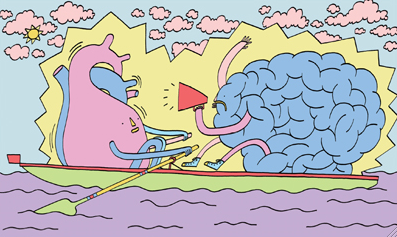 Ian Deary offers an interesting essay in Nature. Here are some clips:
Scores from cognitive-ability tests (intelligence tests or IQ tests) have validity that is almost unequalled in psychology. A general cognitive-ability factor emerges from measures of diverse mental tasks, something that hundreds of data sets since 1904 have replicated. People's rankings on intelligence tests show high stability across almost the whole lifespan, are substantially heritable and are associated with important life outcomes — including educational achievements, occupational success and morbidity and mortality. More thumping confirmatory studies of the link between intelligence and mortality have appeared...One of these contains nearly a million Swedish men tested at around age 19 during military induction and followed for almost 20 years. It shows a clear association: as intelligence test scores go up the scale, so too does the likelihood of survival over those two decades...Intelligence can predict mortality more strongly than body mass index, total cholesterol, blood pressure or blood glucose, and at a similar level to smoking4. But the reasons for this are still mysterious.
The field has focused on four non-exclusive possibilities for the link between intelligence and death. First, what occurs to many people as an obvious pathway of explanation, is that intelligence is associated with more education, and thereafter with more professional occupations that might place the person in healthier environments. Statistical adjustment for education and adult social class can make the association between early-life intelligence and mortality lessen or disappear. But not always.
Second, people with higher intelligence might engage in more healthy behaviours. Evidence is accruing that people with higher intelligence in early life are more likely to have better diets, take more exercise, avoid accidents, give up smoking, engage in less binge drinking and put on less weight in adulthood. But this too doesn't seem to be the whole story.
Third, mental test scores from early life might act as a record of insults to the brain that have occurred before that date. These insults — perinatal events, or the result of illnesses, accidents or deprivations before the mental testing — might be the fundamental cause behind both intelligence test scores and mortality risk. So far, little evidence supports this.
Fourth, mental test scores obtained in youth might be an indicator of a well-put-together system. It is hypothesized that a well-wired body is more able to respond effectively to environmental insults. This 'system integrity' idea has a parallel in the field of ageing, where some data suggest that bodily and cognitive functions age in concert. Some supporting evidence comes from the finding that simple reaction speed — the time taken to press a button when a stimulus appears — can displace intelligence test scores as an even better predictor of mortality risk.
There is also a search for other, non-cognitive psychological characteristics that are associated with living longer. For example, it seems that, independently of any association with intelligence, being more dependable or conscientious in childhood is also significantly protective to health. Children who scored in the top 50% of the population for intelligence and dependability were in one study more than twice as likely to survive to their late sixties as children scoring in the bottom half for both.
Religion and visual attention
Colzato et al. report a quirky study in PLoS ONE: "Losing the Big Picture: How Religion May Control Visual Attention"
Despite the abundance of evidence that human perception is penetrated by beliefs and expectations, scientific research so far has entirely neglected the possible impact of religious background on attention. Here we show that Dutch Calvinists and atheists, brought up in the same country and culture and controlled for race, intelligence, sex, and age, differ with respect to the way they attend to and process the global and local features of complex visual stimuli: Calvinists attend less to global aspects of perceived events, which fits with the idea that people's attentional processing style reflects possible biases rewarded by their religious belief system.
Tuesday, November 18, 2008
The way we age
I find myself returning again and again to a New Yorker article by Atul Gawande, "The Way We Age Now." (PDF here). It was the subject of a May 2007 post which included a few clips from the article. His descriptions of the natural processes that underlie changes in teeth, hair, skin, bones, muscles, joints, etc during agin are the most concise and clear that I have read.
Massive reorganization of visual cortex at the level of dendritic spines..
Keck et al. do elegant experiments to directly observe spine replacement in individual apical dendritic tufts of layer-5 pyramidal neurons, replacement that correlates with functional recovery over a period of months after lesioning the retinal input:
The cerebral cortex has the ability to adapt to altered sensory inputs. In the visual cortex, a small lesion to the retina causes the deprived cortical region to become responsive to adjacent parts of the visual field. This extensive topographic remapping is assumed to be mediated by the rewiring of intracortical connections, but the dynamics of this reorganization process remain unknown. We used repeated intrinsic signal and two-photon imaging to monitor functional and structural alterations in adult mouse visual cortex over a period of months following a retinal lesion. The rate at which dendritic spines were lost and gained increased threefold after a small retinal lesion, leading to an almost complete replacement of spines in the deafferented cortex within 2 months. Because this massive remodeling of synaptic structures did not occur when all visual input was removed, it likely reflects the activity-dependent establishment of new cortical circuits that serve the recovery of visual responses.
Monday, November 17, 2008
A novel theory of mental disorders
Benedict Carey writes a useful article on a radical new theory for explaining the psychotic spectrum:
...that an evolutionary tug of war between genes from the father’s sperm and the mother’s egg can, in effect, tip brain development in one of two ways. A strong bias toward the father pushes a developing brain along the autistic spectrum, toward a fascination with objects, patterns, mechanical systems, at the expense of social development. A bias toward the mother moves the growing brain along what the researchers call the psychotic spectrum, toward hypersensitivity to mood, their own and others’. This, according to the theory, increases a child’s risk of developing schizophrenia later on, as well as mood problems like bipolar disorder and depression.I strongly recommend that you read the article, which goes on to give a lucid explanation of how gene imprinting regulates this competition.
In short: autism and schizophrenia represent opposite ends of a spectrum that includes most, if not all, psychiatric and developmental brain disorders. The theory has no use for psychiatry’s many separate categories for disorders, and it would give genetic findings an entirely new dimension.
The theory leans heavily on the work of David Haig of Harvard. It was Dr. Haig who argued in the 1990s that pregnancy was in part a biological struggle for resources between the mother and unborn child. On one side, natural selection should favor mothers who limit the nutritional costs of pregnancy and have more offspring; on the other, it should also favor fathers whose offspring maximize the nutrients they receive during gestation, setting up a direct conflict.
Language evolution embedded in cooperative social context
 Another installment in the Nature series "Being Human" is offered by Szathmáry and Számadó , who put the case that language evolved in a highly social, cooperative context as one of a suite of uniquely human traits, meriting special status because of the opportunities that it opened up.
The subliminal power of logos
 An interesting article by Rob Walker in the New York Times Magazine: "The Brand-ness of Strangers."
In one study, each subject was shown 20 photographs of people in various situations and instructed to focus on facial expressions. Afterward, each subject was offered a bottle of water from a selection of four brands. The experiment had nothing to do with facial expressions and everything to do with which kind of water they chose: the subjects had been divided into groups, based on how many of the photos they viewed incidentally included a bottle of Dasani water. Among those who looked at Dasani-free pictures, about 17 percent chose that brand. But about 40 percent of those who viewed a group of pictures that included 12 with a Dasani presence made the brand their pick. Since subjects who actually noticed the brand in the pictures were eliminated from the results, that spike in popularity evidently came from exposure that the subjects weren’t even aware of.He discusses the very successful Ralph Lauren logo
Needless to say, a successful logo like Polo’s isn’t easy to create. But having attained and maintained such a level of familiarity, that logo may now be as effective as any of Ralph Lauren’s seductive ads — and for exactly the opposite reason: Not because it catches our attention, but because it doesn’t.
Sunday, November 16, 2008
Is the financial meltdown a guy thing?
 Dobrzynski asks whether traders have become prisoners of their endocrine systems — ruled by testosterone, the elixir of male aggressiveness, during a bull market; and by cortisol, a steroid that helps the body deal with stress, when the bears take over.
Friday, November 14, 2008
From Genes to Social Behavior
 The Nov. 7 issue of Science Magazine is a gold mine of articles on genetics and behavior. I'm giving you here a clip from from the introduction to this special issue by Jasny et al. that contains links to the individual articles.
When it comes to behavior, we have moved beyond genetic determinism. Our genes do not lock us into certain ways of acting; rather, genetic influences are complicated and mutable and are only one of many factors affecting behavior. In their editorial, Landis and Insel (p. 821) elaborate on this idea, explaining that proteins encoded by genes direct the formation of multicomponent neural circuits, which are the true substrates of behavior, as these circuits respond to internal and outside stimuli.Why do we study the genetic underpinnings of behavior? One reason is to understand how certain behaviors evolve. Conserved neural pathways can be tied to the evolution of social behaviors (Robinson et al., p. 896), and the conserved peptides oxytocin and vasopressin regulate social cognition and reproductive behaviors in many species (Donaldson and Young, p. 900). In a News story, Pennisi focuses on a region of chromosome 17 that has a complicated pattern of evolution in humans and other primates and is linked in unexpected ways to various disorders, including mental retardation, learning disabilities, and dementias.
Genetics can help us understand why identical circumstances can elicit different behavioral responses among individuals. Genetic differences are reflected in variations in behavior; activation of distinct versions of a hormone receptor gene, an example Donaldson and Young present, results in monogamous behavior in one species of vole but not in another. Conversely, as Robinson et al. describe, insights from recent work show that perceiving social information--such as bird songs or dominance behavior from cichlid fish--from another individual of the same species can itself alter gene expression in the brain, with downstream effects on physiology and behavior.
The potent genetic tools available for Drosophila have uncovered many genes that, when deleted, disrupt behaviors. This, in turn, has allowed dissection of the neural circuits that control essential behaviors. One of the best understood is a social activity necessary for reproduction--stereotypical mating behavior--as outlined by Dickson (p. 904). Genetic methods have also led to the understanding of another class of behaviors: those driven by the circadian clock. The genetic basis of the clock was elegantly worked out in Drosophila, followed by a similar achievement in mice. The reasons for these successes are outlined by Takahashi in his Perspective (p. 909), in which he also explains what tools will be needed to attain similar advances for other behaviors in mice.
Humans are not as genetically tractable as mice or flies, and human behavior is not as stereotypical. Holden's News story on the strengths and shortcomings of genetic studies of personality illustrates this point (p. 892). So do Cotton and some members of the Human Variome Project community in a Policy Forum (p. 861) that describes how the genes and loci associated with disorders of the nervous system are a particular challenge to geneticists and clinical neurologists in need of reliable diagnostic tests. And in a Perspective on a critical human social activity--politics--Fowler and Schreiber (p. 912) argue that genetics and neurobiology have much to teach us about how our leaders are chosen.
Some believe that psychology is the last frontier of genetic analysis. This special section provides a sampling of our early explorations.
Suffering Souls
A fascinating article in The New Yorker by John Seabrook on the search for the roots of psychopathy, the condition of moral emptiness that affects between fifteen to twenty-five per cent of the North American prison population, and is believed by some psychologists to exist in one per cent of the general adult male population. (Female psychopaths are thought to be much rarer.) Psychopaths don’t exhibit the manias, hysterias, and neuroses that are present in other types of mental illness. Their main defect, what psychologists call “severe emotional detachment”—a total lack of empathy and remorse—is concealed, and harder to describe than the symptoms of schizophrenia or bipolar disorder. It focuses on the work of Kent Kiehl, who has installed an fMRI scanner in a New Mexico prison. His theory, published in Psychiatry Research, in 2006, is that psychopathy is caused by a defect in what he calls “the paralimbic system,” a network of brain regions, stretching from the orbital frontal cortex to the posterior cingulate cortex, that are involved in processing emotion, inhibition, and attentional control.
Thursday, November 13, 2008
Most popular MindBlog posts...
I sometimes glance at several of the free services that offer to monitor activity on one's blog (Feedburner, Google Analytics, Quantcast, etc). I thought this compilation of the most widely read posts on this blog was interesting. You can find any of them by entering a few words of the title in the search box in the left column.

And, in this vein, here is the history of subscribers to the RSS feed of this blog:


And, in this vein, here is the history of subscribers to the RSS feed of this blog:

Sleep loss produces false memories.
From Diekelmann et al. :
People sometimes claim with high confidence to remember events that in fact never happened, typically due to strong semantic associations with actually encoded events. Sleep is known to provide optimal neurobiological conditions for consolidation of memories for long-term storage, whereas sleep deprivation acutely impairs retrieval of stored memories. Here, focusing on the role of sleep-related memory processes, we tested whether false memories can be created (a) as enduring memory representations due to a consolidation-associated reorganization of new memory representations during post-learning sleep and/or (b) as an acute retrieval-related phenomenon induced by sleep deprivation at memory testing. According to the Deese, Roediger, McDermott (DRM) false memory paradigm, subjects learned lists of semantically associated words (e.g., “night”, “dark”, “coal”,…), lacking the strongest common associate or theme word (here: “black”). Subjects either slept or stayed awake immediately after learning, and they were either sleep deprived or not at recognition testing 9, 33, or 44 hours after learning. Sleep deprivation at retrieval, but not sleep following learning, critically enhanced false memories of theme words. This effect was abolished by caffeine administration prior to retrieval, indicating that adenosinergic mechanisms can contribute to the generation of false memories associated with sleep loss.
Wednesday, November 12, 2008
Undoing cocaine's consequences.
In animal experiments stressful and aversive conditions can enhance drug-seeking and drug intake, while stress-reducing manipulations and nondrug rewards can reduce such behaviors. The acquisition of addiction-related behaviors such as sensitization and drug self-administration is attenuated in animals housed in enriched environments containing novel toys, food, and conspecifics with which to interact, compared with those housed in standard laboratory conditions. But, how is this relevant to treating drug-addicted humans, who present for treatment only after drug use is acquired? Recent work by Solinas et al. now suggests that environmental enrichment can still exert its beneficial effects on addiction-related behaviors even after they are established. Their abstract:
Environmental conditions can dramatically influence the behavioral and neurochemical effects of drugs of abuse. For example, stress increases the reinforcing effects of drugs and plays an important role in determining the vulnerability to develop drug addiction. On the other hand, positive conditions, such as environmental enrichment, can reduce the reinforcing effects of psychostimulants and may provide protection against the development of drug addiction. However, whether environmental enrichment can be used to “treat” drug addiction has not been investigated. In this study, we first exposed mice to drugs and induced addiction-related behaviors and only afterward exposed them to enriched environments. We found that 30 days of environmental enrichment completely eliminates behavioral sensitization and conditioned place preference to cocaine. In addition, housing mice in enriched environments after the development of conditioned place preference prevents cocaine-induced reinstatement of conditioned place preference and reduces activation of the brain circuitry involved in cocaine-induced reinstatement. Altogether, these results demonstrate that environmental enrichment can eliminate already established addiction-related behaviors in mice and suggest that environmental stimulation may be a fundamental factor in facilitating abstinence and preventing relapse to cocaine addiction.
During learning - competition between two memory systems.
An interesting bit of work from Lee et al.:
The multiple memory systems framework proposes that distinct circuits process and store different sorts of information; for example, spatial information is processed by a circuit that includes the hippocampus, whereas certain forms of instrumental conditioning depend on the striatum. Disruption of hippocampal function can enhance striatum-dependent learning in some paradigms, which has been interpreted as evidence that these systems can compete with one another in an intact animal. However, it remains unclear whether such competition can occur in the opposite direction, as suggested by the multiple memory systems framework, or is unidirectional. We addressed this question using lesions and genetic manipulations in mice. Impairment of dorsal striatal function with either excitotoxic lesions or transgenic inhibition of the transcription factor cAMP response element-binding protein, which disrupts striatal synaptic plasticity, impaired striatum-dependent cued learning but enhanced hippocampus-dependent spatial learning. Conversely, excitotoxic lesions of the dorsal hippocampus disrupted spatial learning and enhanced cued learning. This double dissociation demonstrates bidirectional competition that constitutes strong evidence for the parallel operation of distinct memory systems.
Tuesday, November 11, 2008
Enhanced logical consistency in autism.
Dolan's group has an interesting open access article in J. Neuroscience showing:
behavioral evidence that autism spectrum disorder (ASD) subjects show a reduced susceptibility to the framing effect and psycho-physiological evidence that they fail to incorporate emotional context into the decision-making process.From their introduction:
Logical consistency across decisions, regardless of how choices are presented, is a central tenet of rational choice theory and the cornerstone of modern economic and political science. Empirical data challenge this perspective by showing that humans are highly susceptible to the manner or context in which options are cast, resulting in a decision bias termed the "framing effect". We have previously shown that the amygdala mediates this framing bias, a finding that highlights the importance of incorporating emotional processes within models of human decision making. An ability to integrate emotional contextual information into the decision process provides a useful heuristic in decision making under uncertainty. This is a factor that is likely to assume considerable importance during social interactions in which information about others is often incomplete, ambiguous, and not easily amenable to standard inferential reasoning processes.
In this study, we investigated the effect of contextual frame on choice behavior of individuals with autistic spectrum disorder (ASD). Autism is a neurodevelopmental disorder characterized by deficits in social interaction, qualitative impairments in communication, and repetitive and stereotyped patterns of behavior, interests, and activities. From Kanner's earliest description, it has been recognized that individuals with ASD have a strong tendency to focus on parts rather than global aspects of objects of interest and are unable to integrate disparate information into a meaningful whole (weak central coherence theory).
We previously proposed that susceptibility to a framing bias reflects the operation of an affect heuristic. Here, we show that individuals with ASD, a condition characterized by marked behavioral inflexibility, demonstrate a decreased susceptibility to framing resulting in an unusual enhancement in logical consistency that is paradoxically more in line with the normative prescriptions of rationality at the core of the current economics theory. Furthermore, insensitivity in these subjects to a contextual framing bias was associated with a failure to express a differential autonomic response to contextual cues as indexed in skin conductance responses (SCRs), a standard measure of emotional processing. Our findings suggest that a more consistent pattern of choice in the ASD group reflects a failure to incorporate emotional cues into the decision process, an enhanced economic "rationality" that may come at a cost of reduced behavioral flexibility.
Using both sides of your brain.
Schmidt writes a review article on specializations of the two hemispheres, which are seen in all vertebrates. He gives several examples of interhemispheric switching, and then focuses on the example of song production in passerine birds.
Subscribe to:
Posts (Atom)