I saw this video (So Many Men, So Little Time - Miquel Brown) during happy hour at the local bar (Georgie's Alibi) several evenings ago and was totally transported back to my days of disco dancing in the late 1970's, early 1980's, getting hot and sweaty, tearing off the shirt, etc. The same moves at my current age would probably be life-threatening. I'll bet a number of you remember this kind of energy...
Showing posts with label music. Show all posts
Showing posts with label music. Show all posts
Thursday, January 24, 2008
Monday, January 21, 2008
A Debussy Ballade - music for the start of the week
The only downside of being in Ft. Lauderdale FL. (sunny, 81 degress on Saturday) versus Madison, WI. (-7 degress, cloudy) is that my Steinway B grand piano stays in Madison. I have now installed a credible Steinway upright in the Ft. Lauderdale condo and have decided to continue on it the sort of video recordings I had been doing in Madison. I may re-record this piece on the better piano when I get back to Madison in the spring.
Friday, January 11, 2008
Please Clap, Talk or Shout at Any Time
Bernard Holland reviews Kenneth Hamilton's book, “After the Golden Age,” a detailed reflection on concert behavior in the 19th and early 20th centuries published recently by Oxford University Press. Fascinating bits of information about a bygone era before our current time, when
Concertgoers like you and me have become part police officer, part public offender. We prosecute the shuffled foot or rattled program, the errant whisper or misplaced cough. We tense at the end of a movement, fearful that one of the unwashed will begin to clap, bringing shame on us all. How serious we look, and how absurd we are.A number of fascinating facts:
...the silence at a London performance of Liszt’s “Dante” Symphony represented not rapt attention but audience distaste.
...hardly anybody played more than one movement of a Beethoven sonata at a time.
...Audience participation was taken for granted in the 1840s. The pianist Alexander Dreyschock was criticized for playing “so loud that it made it difficult for the ladies to talk,”...Concerts were different back then. Liszt could get away with the radical idea of “one man, one recital,” but musical events were usually variety shows in the manner of vaudeville. The star pianist or violinist was just an occasionally recurring act in a parade of singers, orchestra players, quartets and trios. When Liszt did his solo acts, there was none of the march-on, march-off stage ritual of today. Liszt greeted patrons at the door, mingled in the audience and schmoozed with friend and stranger alike.
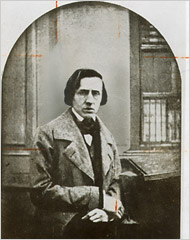
...Whole recitals also took place between acts of an opera or movements of a symphony. When Chopin played his E minor Piano Concerto in Warsaw in 1830, other pieces were inserted between the first two movements. Perhaps the most celebrated such interruption was at the 1806 premiere of Beethoven’s Violin Concerto in Vienna, where the soloist thrilled listeners by playing his violin upside down and on one string.

Tuesday, January 08, 2008
More on laughing rats...and human chanting?
This is a sequel to my March 20 and June 18, 2007, posts on laughing rats. Rats use ultrasonic communication, with 50-kHz vocalizations indicating an animal's positive subjective state. Wöhr and Schwarting now show that show that 50-kHz signals (either natural 50-kHz calls, which had been previously recorded from other rats, or artificial sine wave stimuli, which were identical to these calls with respect to peak frequency, call length and temporal appearance) can induce approach behaviors. The effect is more pronounced in juvenile rats. It is commonly assumed that humans have lost this mechanism, but I wonder if the powerful bonding emotions induced in groups of humans doing very low frequency vocal chants, which surely have harmonics in the 50-mHz range, might be a evolutionary derivative of this early mammalian behavior . Here are several Tibetan master chants offered by the free sound project. Do they chill you out?
Monday, January 07, 2008
Why can't we perform perfectly?
Some fascinating experiments by Tumer and Brainar on songbirds inform me on why I am not able to perform a completely learned and exhaustively practiced piano piece the same way each time I bang it out.... from the Nature Editor's review of their article:
The abstract from Rumer and Brainar:Why is it that even the best-trained athletes and musicians cannot perform perfectly? One thought is that residual variability in performance is 'noise' that reflects fundamental limits on our ability to control our movements. Experiments using the exceptionally well-rehearsed songs of adult songbirds as a model point to an alternative explanation. Computerized monitoring of the apparently stereotyped songs of adult Bengalese finches revealed minuscule variations in performance. When the birds were given corrections each time the song varied beyond a certain limit, they rapidly learned to adapt their vocalizations. The implication is that once learned, songs can be maintained despite subtle changes to the vocal system due to factors such as ageing. So behavioural 'noise', rather than simply being a nuisance, may reflect experimentation by the nervous system to refine performance.

Significant trial-by-trial variation persists even in the most practiced skills. One prevalent view is that such variation is simply 'noise' that the nervous system is unable to control or that remains below threshold for behavioural relevance. An alternative hypothesis is that such variation enables trial-and-error learning, in which the motor system generates variation and differentially retains behaviours that give rise to better outcomes. Here we test the latter possibility for adult bengalese finch song. Adult birdsong is a complex, learned motor skill that is produced in a highly stereotyped fashion from one rendition to the next. Nevertheless, there is subtle trial-by-trial variation even in stable, 'crystallized' adult song. We used a computerized system to monitor small natural variations in the pitch of targeted song elements and deliver real-time auditory disruption to a subset of those variations. Birds rapidly shifted the pitch of their vocalizations in an adaptive fashion to avoid disruption. These vocal changes were precisely restricted to the targeted features of song. Hence, birds were able to learn effectively by associating small variations in their vocal behaviour with differential outcomes. Such a process could help to maintain stable, learned song despite changes to the vocal control system arising from ageing or injury. More generally, our results suggest that residual variability in well learned skills is not entirely noise but rather reflects meaningful motor exploration that can support continuous learning and optimization of performance.
Wednesday, December 26, 2007
Another difference in the brains of musicians...
Being a performing musician myself (cf. the YouTube video below), I'm always fascinated by work of the sort recently done by Chen et al. They show that musicians use the prefrontal cortex to a greater degree than nonmusicians to deconstruct and organize a rhythm's temporal structure. Here is their abstract (I will spare you the MRI images this time), followed by a bit of free music...
Much is known about the motor system and its role in simple movement execution. However, little is understood about the neural systems underlying auditory–motor integration in the context of musical rhythm, or the enhanced ability of musicians to execute precisely timed sequences. Using functional magnetic resonance imaging, we investigated how performance and neural activity were modulated as musicians and nonmusicians tapped in synchrony with progressively more complex and less metrically structured auditory rhythms. A functionally connected network was implicated in extracting higher-order features of a rhythm's temporal structure, with the dorsal premotor cortex mediating these auditory–motor interactions. In contrast to past studies, musicians recruited the prefrontal cortex to a greater degree than nonmusicians, whereas secondary motor regions were recruited to the same extent. We argue that the superior ability of musicians to deconstruct and organize a rhythm's temporal structure relates to the greater involvement of the prefrontal cortex mediating working memory.Haydn Fantasia:
Monday, December 24, 2007
J. S. Bach - Christmas Oratorio - Schlafe, mein Liebster
John Eliot Gardiner leads the Monteverdi Choir and the English Baroque Soloists, with Bernarda Fink in "Schlafe, mein Liebster," from Bach's Christmas Oratorio (BWV 248).
Schlafe, mein Liebster, genieße der Ruh,
Wache nach diesem vor aller Gedeihen!
Labe die Brust,
Empfinde die Lust,
Wo wir unser Herz erfreuen!
Sleep now, my dearest, enjoy now thy rest,
Wake on the morrow to flourish in splendor!
Lighten thy breast,
With joy be thou blest,
Where we hold our heart's great pleasure!
Schlafe, mein Liebster, genieße der Ruh,
Wache nach diesem vor aller Gedeihen!
Labe die Brust,
Empfinde die Lust,
Wo wir unser Herz erfreuen!
Sleep now, my dearest, enjoy now thy rest,
Wake on the morrow to flourish in splendor!
Lighten thy breast,
With joy be thou blest,
Where we hold our heart's great pleasure!
Sunday, December 16, 2007
Good feelings.....
A bit off the track for this blog, but it is the season for good feelings, so I pass on this alternative video for the new new Erasure single "I Could Fall In Love With You" (which I saw during happy hour yesterday at a video bar, and then found on YouTube).
Friday, December 07, 2007
Tuesday, December 04, 2007
Evolutionary origins of dance and art...
 Natalie Angier does a fascinating piece on evolutionary perspectives on how human dance and art originated. Here are some (slightly edited) clips from her article in the Nov. 27 NY Times science section (whole text here), which emphasize the work of Ellen Dissanayake, an independent scholar affiliated with the University of Washington:
...the creative drive has all the earmarks of being an adaptation on its own. The making of art consumes enormous amounts of time and resources, an extravagance you wouldn’t expect of an evolutionary afterthought. Art also gives us pleasure, she said, and activities that feel good tend to be those that evolution deems too important to leave to chance.
What might that deep-seated purpose of art-making be? Geoffrey Miller and other theorists have proposed that art serves as a sexual display, a means of flaunting one’s talented palette of genes... Ms. Dissanayake has other ideas. To contemporary Westerners, she said, art may seem detached from the real world, an elite stage on which proud peacocks and designated visionaries may well compete for high stakes. But among traditional cultures and throughout most of human history, she said, art has also been a profoundly communal affair, of harvest dances, religious pageants, quilting bees, the passionate town rivalries that gave us the spires of Chartres, Reims and Amiens...engaging in what Ms. Dissanayake calls “artifying,” people can be quickly and ebulliently drawn together, and even strangers persuaded to treat one another as kin. Through the harmonic magic of art, the relative weakness of the individual can be traded up for the strength of the hive, cohered into a social unit ready to take on the world.
She suggests that many of the basic phonemes of art, the stylistic conventions and tonal patterns, the mental clay, staples and pauses with which even the loftiest creative works are constructed, can be traced back to the most primal of collusions — the intimate interplay between mother and child.
After studying hundreds of hours of interactions between infants and mothers from many different cultures, Ms. Dissanayake and her collaborators have identified universal operations that characterize the mother-infant bond. They are visual, gestural and vocal cues that arise spontaneously and unconsciously between mothers and infants, but that nevertheless abide by a formalized code: the calls and responses, the swooping bell tones of motherese, the widening of the eyes, the exaggerated smile, the repetitions and variations, the laughter of the baby met by the mother’s emphatic refrain. The rules of engagement have a pace and a set of expected responses, and should the rules be violated, the pitch prove too jarring, the delays between coos and head waggles too long or too short, mother or baby may grow fretful or bored.
To Ms. Dissanayake, the tightly choreographed rituals that bond mother and child look a lot like the techniques and constructs at the heart of much of our art. “These operations of ritualization, these affiliative signals between mother and infant, are aesthetic operations, too,” she said in an interview. “And aesthetic operations are what artists do. Knowingly or not, when you are choreographing a dance or composing a piece of music, you are formalizing, exaggerating, repeating, manipulating expectation and dynamically varying your theme.” You are using the tools that mothers everywhere have used for hundreds of thousands of generations.
In art, as in love, as in dancing the hora, if you don’t know the moves, you really can’t fake them.
Friday, November 30, 2007
Brain changes associated with congenital amusia
 About four percent of the population has congenital amusia, a lifelong disability that prevents otherwise normal functioning individuals from developing basic musical skills. The condition has also been variously termed note deafness, tone deafness, or tune deafness. Here is an interesting abstract from Hyde et al. on the amusic brain, along with one figure from the paper:
Congenital amusia (or tone deafness) is a lifelong disorder characterized by impairments in the perception and production of music. A previous voxel-based morphometry (VBM) study revealed that amusic individuals had reduced white matter in the right inferior frontal gyrus (IFG) relative to musically intact controls. However, this VBM study also revealed associated increases in gray matter in the same right IFG region of amusics. The objective of the present study was to better understand this morphological brain anomaly by way of cortical thickness measures that provide a more specific measure of cortical morphology relative to VBM. We found that amusic subjects (n = 21) have thicker cortex in the right IFG and the right auditory cortex relative to musically intact controls (n = 26). These cortical thickness differences suggest the presence of cortical malformations in the amusic brain, such as abnormal neuronal migration, that may have compromised the normal development of a right frontotemporal pathway.Figure - Group cortical thickness differences. Results from the statistical analysis of data from 21 amusics versus 26 controls are displayed at each vertex of the surface of a standardized brain in terms of a t statistical color map. A, Areas of significant thickness increases in the amusic brain relative to controls. B, areas of significant thickness decreases in the amusic brain relative to controls. Predicted group cortical thickness differences are in pink, and nonpredicted differences in green as follows: right superior precentral gyrus (a), right lateral occipital gyrus (b), right inferior precentral gyrus (c), right middle frontal gyrus (d), left inferior temporal gyrus (e), right anterior cingulate (f), right medial orbital frontal gyrus (g), right inferior temporal gyrus (h), left medial orbital frontal gyrus (i).

Thursday, November 15, 2007
Conductors’ Ears and Eyes Stay Equally Alert
 Here is an interesting tidbit that makes perfect sense to me as a pianist, from Eric Nagourney reporting in the NY Times on the Society for Neuroscience Meetings:
To concentrate on a difficult task that involves listening, people tend to unconsciously divert their attention from what they are seeing. But music conductors, a new study reports, are not as apt to be distracted in this way....The researchers, who presented their findings at a recent conference of the Society for Neuroscience, used magnetic resonance imaging to compare how 20 conductors and 20 nonmusicians handled complex auditory tasks...The researchers were from Wake Forest University Baptist Medical Center and the University of North Carolina at Greensboro. They were especially interested in learning whether their subjects would continue shifting resources as the demands of listening became more complex, said the lead author, Dr. W. David Hairston of Wake Forest...The volunteers were placed in an M.R.I. scanner and asked to listen to different notes over headphones while keeping their eyes open. As the notes were played closer and closer together, they were asked to say which they heard first...In both groups, activity in the parts of the brain involved with seeing decreased, but as the task became more difficult, only the nonmusicians turned off more of their visual processing...Part of the explanation may lie in the need for conductors to make extensive use of both their eyes and ears, to read the score and “to keep track of who’s playing what,” Dr. Hairston said.
Thursday, November 08, 2007
Tuesday, November 06, 2007
Thursday, November 01, 2007
Our Brains on Music, and Musicophilia
 Steven Pinker has called music useless, with no adaptive value. Oliver Sacks and Daniel Levitin beg to differ. I'm currently reading and enjoying Oliver Sacks' new book: Musicophilia: Tales of Music and the Brain. I'm linking you to a review of this book by Laura Garwin in the current issue of Nature that notes that our brains seem to be finely tuned to music, and asks of what use are our musical powers and passions? She also reviews Levitin's "This is Your Brain on Music: Understanding a Human Obsession." I also thoroughly enjoyed reading this book this past spring, it has a very accessible introduction of the fundamentals of music structure and brain mechanisms associated with music processing.
Wednesday, October 24, 2007
Reverie
I'm incredulous that over 38,000 people have viewed a recording of Debussy's Reverie that I put on YouTube, and 79 people have made comments (which led me to record a second version). There was also a video response that I thought I would pass on, another video titled "Reverie":
Saturday, October 20, 2007
The well-tempered web
I wanted to pass on this link to an engaging article by New Yorker music critic Alex Ross, on his experience with classical music culture on the web. The Internet may be killing the pop CD, but it's helping classical music. The article contains very useful links to many music sites.


Thursday, October 11, 2007
Radiohead - the modern troubadours?
 An article in the Arts section of today's NY Times temporarily stirred me out of my curmudgeonly old fart persona. Just as a federal jury in Minnesota last week decided that a mother found liable for copyright infringement for sharing music online should pay damages amounting to about $9,250 apiece for 24 songs, the British Rock group Radiohead has made their latest album "In Rainbows" available for download, letting their fans decide how much they want to pay for it. This has brought a new climax in the pricing pandemonium in the on-line music industry summed up by Radiohead manager Bryce Edge:
Digital technology has reintroduced the age of the troubadour. You are worth what people are prepared to give you in the digital age because they can get it for nothing.In another departure from convention:
...the band declined to send out early copies of the music for reviewers and has not settled on a traditional single to push to radio stations. As a result, programmers are improvising. In San Francisco, for instance, the rock station KITS-FM, Live 105, has the entire album on its Web site (live105.com) and will let fans vote to determine which songs merit airplay.
I just checked out this site, and proceeded to buy and download the new album.
Tuesday, October 09, 2007
Musicians have enhanced subcortical processing
Musical training is known to modify cortical organization. Musacchia et al. show that:
...such modifications extend to subcortical sensory structures and generalize to processing of speech. Musicians had earlier and larger brainstem responses than nonmusician controls to both speech and music stimuli presented in auditory and audiovisual conditions, evident as early as 10 ms after acoustic onset. Phase-locking to stimulus periodicity, which likely underlies perception of pitch, was enhanced in musicians and strongly correlated with length of musical practice. In addition, viewing videos of speech (lip-reading) and music (instrument being played) enhanced temporal and frequency encoding in the auditory brainstem, particularly in musicians. These findings demonstrate practice-related changes in the early sensory encoding of auditory and audiovisual information.
Monday, September 24, 2007
This week's music - Debussy, Minuette from Suite Bergmanesque
Recorded Sept. 13 on my Steinway B at Twin Valley.
Subscribe to:
Posts (Atom)