Showing posts with label genes. Show all posts

Thursday, April 19, 2007

Bipolar disorder - related to a disorder in the Clock gene?

Coyle offers a review in the April 10 issues of PNAS of a paper by Roybal et al. showing that mutation of the clock gene in mice causes them to show symptoms of bipolar behavior. I give you Coyle's summary:
Bipolar disorder, also known as manic-depressive illness, is characterized by episodes of mania and episodes of depression usually interspersed with periods of relatively normal mood. During the manic phase, affected individuals exhibit elevated mood, irritability, increased activity, reduced sleep, hypersexuality, and increased goal-directed activities. Bipolar disorder in its various forms affects >3% of the population and is associated with a high risk for suicide, substance abuse, and vocational disability. Although several animal models for major depressive disorder have been developed, there are no plausible models for bipolar disorder. In this issue of PNAS, Roybal et al. describe the results of a systematic analysis of the behavior of a mouse with a deletion of exon 19 in the Clock gene, which shows remarkable parallels to the symptoms observed in individuals in an episode of mania. The Clock mutant mice exhibit hyperactivity, decreased sleep, reduced anxiety, and increased response to cocaine, sucrose, and medial forebrain bundle stimulation. Furthermore, many of these behaviors can be reversed by transfection of the ventral tegmental area (VTA) dopaminergic neurons with WT Clock gene or by treatment with therapeutic doses of lithium (Li+), a commonly prescribed mood stabilizer.

And the abstract of the article:
Circadian rhythms and the genes that make up the molecular clock have long been implicated in bipolar disorder. Genetic evidence in bipolar patients suggests that the central transcriptional activator of molecular rhythms, CLOCK, may be particularly important. However, the exact role of this gene in the development of this disorder remains unclear. Here we show that mice carrying a mutation in the Clock gene display an overall behavioral profile that is strikingly similar to human mania, including hyperactivity, decreased sleep, lowered depression-like behavior, lower anxiety, and an increase in the reward value for cocaine, sucrose, and medial forebrain bundle stimulation. Chronic administration of the mood stabilizer lithium returns many of these behavioral responses to wild-type levels. In addition, the Clock mutant mice have an increase in dopaminergic activity in the ventral tegmental area, and their behavioral abnormalities are rescued by expressing a functional CLOCK protein via viral-mediated gene transfer specifically in the ventral tegmental area. These findings establish the Clock mutant mice as a previously unrecognized model of human mania and reveal an important role for CLOCK in the dopaminergic system in regulating behavior and mood.

Monday, April 16, 2007

Gregariousness of early-adolescent mice influenced by genetic background

Panskepp et al have studied two inbred mouse strains whose infants on weaning show high versus low levels of gregarious social behavior, They controlled a host of behavioral variables during the course of adolescent development to demonstrate specific differences in social motivations among juveniles of the two mouse strains — behavioral variations that could only be explained by genetic differences. Young mice from the gregarious strain seek environments that predict the possibility of a social encounter and avoid places where they have experienced social isolation. The review by Devitt edited for this post quotes the senior author Lahvis: "There is an association between high-pitched calls in mice and positive experience. The quality and quantity of the call are tightly associated with the nature of the interaction itself."

As the mice neared sexual maturity, the genetic influence on social behavior ebbed and the animals became much more responsive to social cues such as gender...the initial genetic predisposition apparently gets masked by reproductive maturity.
Their work suggests that genetic influences on juvenile social behavior may be quite distinct from genetic factors that affect adult social behavior, a finding the potentially useful for understanding social evolution, as well as developing more realistic animal models of pervasive developmental disorders, such as autism.

Monday, March 12, 2007

Monday, November 20, 2006

Enhancing Cognition after Stress with Gene Therapy

This is the title of an article from Sapolsky's laboratory. Sapolsky is an amazing off the wall guy. His book "Why Zebras Don't Get Ulcers" is a classic on the biology of stress. He also has written fascinating stuff on aging. In this article he and his coworkers describe a clever trick for diminishing the impairment of memory acquisition and retrieval caused by the adrenal steroid hormones secreted during stress (glucocorticoids, or GCs). Estrogen, known to enhance spatial memory performance, can block the deleterious effects of GCs. The laboratory constructed a chimeric gene ("ER/GR") containing the hormone-binding domain of the GC receptor and the DNA binding domain of the estrogen receptor; as a result, ER/GR transduces deleterious GC signals into beneficial estrogenic ones. A deleterious effect of immobilization stress on spatial memory acquisition and retrieval in male rats was blocked by hippocampal expression of the ER/GR transgene. ER/GR also blocks the suppressive effects of GCs on expression of brain-derived neurotrophic factor (BDNF), a growth factor central to hippocampal-dependent cognition and plasticity, instead producing an estrogenic increase in BDNF expression. These experiments don't mean we are going to be able to use gene therapy to reverse the effects of stress on memory in humans any time soon. The clever tricks for getting transgenes into specific parts of rat brains don't yet exist for us humans.

Tuesday, October 31, 2006

Relationship between genetic variations in serotonin transporter, brain activity, and depression.

The effect of life stress on depression is moderated by a repeat length variation in the transcriptional control region of the serotonin transporter gene, which renders carriers of the short variant vulnerable for depression. Canli et al. have investigated the underlying neural mechanisms of these epigenetic processes in individuals with no history of psychopathology by using multimodal magnetic resonance-based imaging, genotyping, and self-reported life stress and rumination. Based on functional MRI and perfusion data, They found support for a model in which life stress interacts with the effect of serotonin transporter genotype on amygdala and hippocampal resting activation, two regions involved in depression and stress. Life stress also differentially affected, as a function of serotonin transporter genotype, functional connectivity of the amygdala and hippocampus with a wide network of other regions, as well as gray matter structural features, and affected individuals' level of rumination. They suggest that these interactions may constitute a neural mechanism for vulnerability toward, or protection against, depression.

Monday, October 30, 2006

Hereditary family signature of facial expression

Facial expressions of emotions are universal, but individual differences create a facial expression "signature" for each person. Pelig et al have examined whether there might be a unique family facial expression signature. Using two types of analyses, they show a correlation between movements of congenitally blind subjects with those of their relatives in think-concentrate, sadness, anger, disgust, joy, and surprise and provide evidence for a unique family facial expression signature. In the analysis "in-out family test," a particular movement was compared each time across subjects. Results show that the frequency of occurrence of a movement of a congenitally blind subject in his family is significantly higher than that outside of his family in think-concentrate, sadness, and anger. In the analysis "the classification test," in which congenitally blind subjects were classified to their families according to the gestalt of movements, results show 80% correct classification over the entire interview and 75% in anger. Analysis of the movements' frequencies in anger revealed a correlation between the movements' frequencies of congenitally blind individuals and those of their relatives. Pelig suggest that their study anticipates discovering genes that influence facial expressions, understanding their evolutionary significance, and elucidating repair mechanisms for syndromes lacking facial expression, such as autism.


Figure: Similar movements, described in detail in Table 2 of the paper, in born-blind participants (Left) and their sighted relatives (Right). Rows 1 and 2 show typical movements of the lips while the lips touch each other (as if chewing). Row 3 shows raising the right eyebrow only. Row 4 shows biting the lower lip while the mouth shows left asymmetry. Row 5 shows rolling the upper lip inside. In row 6 a "U" shape is created in the area between the lower lip and the chin. The chin is stretched and goes forward. The edges of the mouth are embedded and the lower lip is stretched. In row 7 the tongue protrudes and touches both lips.

Monday, October 16, 2006

A genetic change in brain growth factor alters anxiety behavior in mice (and humans?)

Brain derived neurotrophic factor (BDNF) regulates neuronal survival, differentiation, and synaptic plasticity. There has been speculation that its genetic alteration might contribute to affective and anxiety disorders. A report by Chen et al. in the Oct. 6 issue of Science now shows that a genetic mutation in humans that changes a single amino acid (valine to methionine) in BDNT can be reproduced in transgenic mice. Transgenic mice heterozygous for the Met allele, like humans, have smaller hippocampal volumes and perform poorly on hippocampal-dependent memory tasks.

Subsequent analyses of these mice elucidated a phenotype that had not been established in human carriers: increased anxiety. When placed in conflict settings, transgenic mice homozygous for the Met allele displayed increased anxiety-related behaviors in three separate tests, suggesting a genetic link between BDNF and anxiety. Some genetic association studies in humans have found that the Met allele has been associated with increased trait anxiety, but other studies have not replicated these findings. The anxiety-related phenotype may have been easier to observe in mice for two reasons: First, mice were subjected to conflict tests to elicit the increased anxiety-related behavior, whereas human studies relied on questionnaires. Second, the anxiety-related phenotype was only present in mice homozygous for the Met allele, which suggested that association studies that focused primarily on humans heterozygous for the Met allele may not detect an association. In this context, another human genetic polymorphism in the serotonin transporter (5HTLPR) is associated with depression only in homozygote subjects with past trauma histories.

Friday, October 13, 2006

A neural network that shares a common genetic origin with human intelligence.

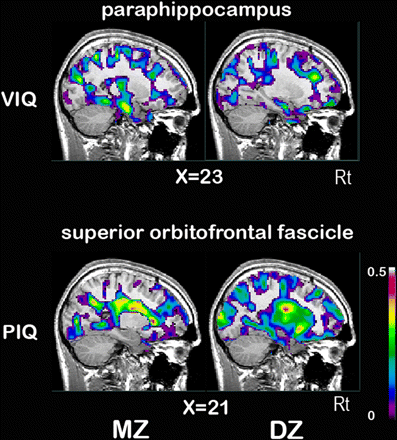
Pol et al. have explored the genetic influence on focal gray matter (GM, nerve cell bodies) and white matter (WM, myelin covered axon tracts) densities in magnetic resonance brain images of 54 monozygotic and 58 dizygotic twin pairs and 34 of their siblings. To explore the common genetic origin of focal GM and WM areas with intelligence, they obtained cross-trait/cross-twin correlations in which the focal GM and WM densities of each twin are correlated with the psychometric intelligence quotient of his/her cotwin. They found genes to significantly influence WM density of the superior occipitofrontal fascicle, corpus callosum, optic radiation, and corticospinal tract, as well as GM density of the medial frontal, superior frontal, superior temporal, occipital, postcentral, posterior cingulate, and parahippocampal cortices. Moreover, their results showed that verbal (VIQ) and nonverbal (performance) (PIQ) intelligence quotient share a common genetic origin with an anatomical neural network involving the frontal, occipital, and parahippocampal GM and connecting GM of the superior occipitofrontal fascicle, and corpus callosum.


Figure legend: Cross-trait/cross-twin correlations for GM and WM density and VIQ/PIQ in MZ and DZ twin pairs ranging from 0 to 0.5. The cross-trait/cross-twin correlations were significant for GM density with VIQ in the right parahippocampal gyrus and for WM density with PIQ in the right superior occipitofrontal fascicle. A significant cross-trait/cross-twin correlation indicates that the genes influencing GM and WM density partly overlap with the genes that influence VIQ/PIQ. Note that, for illustration purposes, positive cross-correlations as shown here were not thresholded for significance. By definition, the cross-correlations in voxels that were not significantly determined by genetic factors could not become significant (because both factors, i.e., GM and WM density and VIQ and PIQ measures, have to be determined by genes to allow for inferences that possible mutual genes determine that association). Negative cross-correlations (data not shown) were present, but none of these reached significance.

Monday, September 18, 2006

Innate Imitation of Facial Expressions by Newborn Monkeys

Almost 30 years ago, Meltzoff and coworkers reported that 2- to 3-wk-old human infants responded with corresponding matching behaviors to specific human facial gestures, such as mouth opening, tongue protrusion, and lip protrusion. We are born with a computational model that transforms visual information into motor commands, a phenomenal connection between self and others exists from birth. This innate link brings us experientially into a world of others. There seems to be a clear evolutionary rationale for this: in highly social primates the imitation of affiliative and other facial gestures could be a basis of bonding to caretakers and fine tuning complex social interactions. (See my Feb. 10 post on the mirror system of neurons that might underlie this behavior).

The evolutionary origins of this mirroring behavior may extend further back that we have thought. The capacity of neonates to imitate adult facial movements has been thought to be limited to humans and perhaps the ape lineage. Now Ferrari et al report the behavioral responses of infant rhesus macaques (Macaca mulatta) to human facial and hand gestures: lip smacking, tongue protrusion, mouth opening, hand opening, and opening and closing of eyes.

Here are pictures they provide of monkey infants tested 1-3 days after birth, imitating mouth opening and tongue protrusion. By day 7 the imitation behavior had largely disappeared, unlike human and chimpanzee behaviors. This might be because these monkeys mature very rapidly, and by one week may already be leaving their mothers for short periods of time.


Wednesday, August 23, 2006

An RNA gene expressed during cortical development evolved rapidly in humans

I can't say it any better than the abstract by Pollard et al. does:

"The developmental and evolutionary mechanisms behind the emergence of human-specific brain features remain largely unknown. However, the recent ability to compare our genome to that of our closest relative, the chimpanzee, provides new avenues to link genetic and phenotypic changes in the evolution of the human brain. We devised a ranking of regions in the human genome that show significant evolutionary acceleration. Here we report that the most dramatic of these 'human accelerated regions', HAR1, is part of a novel RNA gene (HAR1F) that is expressed specifically in Cajal–Retzius neurons in the developing human neocortex from 7 to 19 gestational weeks, a crucial period for cortical neuron specification and migration. HAR1F is co-expressed with reelin, a product of Cajal–Retzius neurons that is of fundamental importance in specifying the six-layer structure of the human cortex. HAR1 and the other human accelerated regions provide new candidates in the search for uniquely human biology."

The work suggests that protein-coding genes may not be the movers and shakers of human evolution. Rather, the non-coding 'dark matter' of genomes may harbour most of these vital changes, such as the set of 49 HAR regions - with HAR1 having accrued 18 changes in sequence since our divergence from chimpanzees, whereas only 1 or 2 substitutions would have been expected by chance.

Monday, July 31, 2006

Living longer and better.....

The July 30 Sunday New York Times has a fascinating article comparing longevity and health in men over the period 1850-2000 (data taken mainly from military records).

"Humans in the industrialized world have undergone a form of evolution that is unique not only to humankind, but unique among the 7,000 or so generations of humans who have ever inhabited the earth. The difference does not involve changes in genes, as far as is known, but changes in the human form. It shows up in several ways, from those that are well known and almost taken for granted, like greater heights and longer lives, to ones that are emerging only from comparisons of health records. The biggest surprise emerging from the new studies is that many chronic ailments like heart disease, lung disease and arthritis are occurring an average of 10 to 25 years later than they used to. There is also less disability among older people today, according to a federal study that directly measures it. And that is not just because medical treatments like cataract surgery keep people functioning. Human bodies are simply not breaking down the way they did before. Even the human mind seems improved. The average I.Q. has been increasing for decades, and at least one study found that a person’s chances of having dementia in old age appeared to have fallen in recent years. The proposed reasons are as unexpected as the changes themselves. Improved medical care is only part of the explanation; studies suggest that the effects seem to have been set in motion by events early in life, even in the womb, that show up in middle and old age."

"In 1900, 13 percent of people who were 65 could expect to see 85. Now, nearly half of 65-year-olds can expect to live that long. People even look different today. American men, for example, are nearly 3 inches taller than they were 100 years ago and about 50 pounds heavier."

"Today’s middle-aged people are the first generation to grow up with childhood vaccines and with antibiotics. Early life for them was much better than it was for their parents, whose early life, in turn, was much better than it was for their parents. And if good health and nutrition early in life are major factors in determining health in middle and old age, that bodes well for middle-aged people today. Investigators predict that they may live longer and with less pain and misery than any previous generation."

There is also the concern, however, that obesity could lead to so much diabetes and heart disease that life expectancy could level off or even decline within the first half of this century.


Graphic: credit and copyright, N.Y. Times

Thursday, July 27, 2006

Face Blindness - hereditary prosopagnosia

One of the most striking consequences of damage to the medial occipitotemporal region of the brain can be the loss of the ability to recognize familiar faces. Patients know only that a face is a face, and can name its parts. There is a website devoted to this disorder. The accquired condition is rare, and inherited or congenital forms of prosopagnosia have been assumed to be even more rare. Kennerknecht et al., however, have now shown that in one group of 689 students, 17 (~2.5%) had congenital prosopagnosia. It turns out that this condition can easily go undiagnosed, because subjects develop alternate strategies for identifying people — they remember their clothes, mannerisms, gait, hairstyle or voice, and by using such techniques, many can compensate quite well. Bakalar, in a review of this work in the July 18 New York Times, notes that people with face blindness can typically understand facially expressed emotions — they know whether a face is happy or sad, angry or puzzled. They can detect subtle facial cues, determine gender and even agree with everyone else about which faces are attractive and which are not. In other words, they see the face clearly, they just do not know whose face they are looking at, and cannot remember it once they stop looking. A specific gene for the disorder has not been found, but evidence is mounting that the trait is inherited. The pedigrees that have been established so far are compatible with autosomal dominant inheritance.”

Tuesday, July 25, 2006

Nice and Nasty Rats.... Religion and Science

Today's science section of the New York Times has several articles worth noting.

Some remarkable experiments were started in the former Soviet Union in 1959 by Dmitri Belyaev, who decided to study the genetics of domestication and find what qualities were selected for by the neolithic farmers who developed most major farm species about 10,000 years ago. He decided to select for a single criterion: tameness. Starting by breeding silver foxes from the wild, after only eight generations animals that would tolerate human presence became common, and after 40 years and the breeding of 45,000 foxes, a group had emerged that were as tame and as eager to please as a dog. The tame silver foxes had begun to show white patches on their fur floppy ears, rolled tails and smaller skulls, like many other domesticated species. They also exhibited the unusual ability of dogs to understand human gestures (something Chimpanzees can't manage at all). Belyaev also bred a parallel colony of vicious foxes, but realizing that genetics can be better studied in smaller animals, he started working with local wild rats. In only sixty generations separate breeds of very tame and very ferocious rats were obtained. Paabo's laboratory in Germany is now crossing the tame and aggressive strains to find genetic sites that correlate with these behaviors. Such sites could then be examined in tame and aggressive individuals in other mammalian species, including humans... Perhaps an important part of homminid evolution was a human self-domestication that involved ostracizing (blocking the breeding of) individuals who were too aggressive.

The article by Dean in the same NYTimes issue provides a review of recent books on the clash between religion and science, and the debate over whether faith in God can coexist with faith in the scientific method. Professors of either faith or science acknowledge that they cannot prove that God either does or does not exist. Evolutionary psychological explanation of why religious belief seems to be universal among Homo sapiens are still "just-so" stories, very far from being proved.

The book by Lewis Wolpert "Six Impossible Things Before Breakfast: The Evolutionary Origins of Belief" (published in England, due in the U.S. in January) looks quite interesting:

"Dr. Wolpert writes about the way people think about cause and effect, citing among other work experiments on how we reason, how we assess risk, and the rules of thumb and biases that guide us when we make decisions. He is looking into what he calls “causal belief” — the idea that events or conditions we experience have a cause, possibly a supernatural cause.

Human reasoning is “beset with logical problems that include overdependence on authority, overemphasis on coincidence, distortion of the evidence, circular reasoning, use of anecdotes, ignorance of science and failures of logic,” he writes. And whatever these traits may say about acceptance of religion, they have a lot to do with public misunderstanding of science.

So, he concludes, “We have to both respect, if we can, the beliefs of others, and accept the responsibility to try and change them if the evidence for them is weak or scientifically improbable.”

This is where the scientific method comes in. If scientists are prepared to state their hypotheses, describe how they tested them, lay out their data, explain how they analyze their data and the conclusions they draw from their analyses — then it should not matter if they pray to Zeus, Jehovah, the Tooth Fairy, or nobody.

Their work will speak for itself."

Monday, July 17, 2006

The Dali Lama and evolutionary science. He’s an awesome guy, but……

The Dali Lama deserves great credit for his efforts to integrate the insights of modern science and spiritual traditions, and he deals with this in his recent book, “The Universe in a Single Atom.” However, I really don’t think some of his critiques of the evolutionary theory and the limitations of science and materialism get it quite right....

Take for example, chapter 5, ''Evolution, Karma, and the world of sentience' While it is quite extraordinary that someone in his position has learned so much, it is also not surprising that he seems to be unaware of work that counters many of his perceived shortcomings of "Darwinian evolutionary theory."

pg 104 "that mutations..take place naturally is unproblematic..that they are purely random strikes me as unsatisfying. It leaves open the question of whether this randomness is best understood as an objective feature of reality or better understood as indicating some kind of hidden causality."

This doesn't compute for me. Ionizing cosmic radiation hitting a nucleotide and altering its replication is random, as are a number of low frequency errors made by enzymic processes involved in replication. We at least have a handle on what we mean by random. There are countless examples of how statistically small random changes can lead to complex results (like eyes, or different kinds of hormone and neurotransmitter receptors). "Hidden causality' , on the other hand, is a complete deus ex machina, or wild card, with no presently known means of evaluation within a materialistic scientific world view. If something pops up, great, but until then......

pg 104, "For modern science, at least from a philosophical point of view, the critical divide seems to be between inanimate matter and the origin of living organisms, while for Buddhism the critical divide is between non-sentient matter and the emergence of sentient beings." Aren't we talking about apples and oranges? I'm not understanding the usefulness of trying so hard to unify things, as (on pg. 111) "On the whole, I think the Darwinian theory...gives a fairly coherent account of the evolution of human life on earth. At the same time, I believe that karma can have a central role in understanding the origination of Buddhism calls "sentience", through the media of energy and consciousness."

pg. 115 "I find it [Darwinian account] leaves one crucial area unexamined, the origin of sentience." Virtually all descriptions of the evolution of the nervous system (Dennett's in "Consciousness Explained", for example) view the increasingly complexity of the nervous system - and the gradient of increasing sentience, consciousness, or whatever - as Darwinian adaptations that increase survival fitness of the organism.

pg. 114 "I feel that this inability or unwillingness fully to engage the question of altruism is perhaps the most important drawback of Darwinian...." There are now abundant models of how 'selfish' genes and organisms can generate altruistic behaviors. There is even a recent computer model of simple automata (agents with a limited set of receptors and elementary actions) that evolve various cooperative strategies. (Nature, 20:1041, 2006). See also my 5/26/06 post on "Cooperation, Punishment, and the Evolution of Human Institutions"

Anyway, enough. I won't ramble on. He really is an extraordinary guy. I totally support the idea that buddhist psychological insight offers some correlates with modern cognitive neuroscience, as between Buddha's foundations of mindfulness and steps in the evolution of the brain (mentioned in my "Beast Within" essay at dericbownds.net).

Saturday, July 15, 2006

Genes, cognition, and dyslexia.

Learning to read and write places unusual demands on the brain: explicit awareness of the structural elements of language and their relation to arbitrary visual symbols, rapid temporal processing, fine motor control, and visual acuity. Because sophisticated reading and writing systems appeared only a few thousand years ago, it is very unlikely that reading skills were shaped directly by Darwinian selection. Spoken or sign language, on the other hand, is acquired virtually effortlessly during the first few years of life, and is supported by brain specializations that evolved over hundreds of thousands of years.

It is interesting that studies on several European, Canadian, and American families have found genetic changes that correlate with reading disorders, or dyslexia, independent of general cognitive performance. Fisher and Francks, in Trends in Cognitive Sciences, 10:250 (2006), provide an overview of four prominent examples (genes DYX1C1, KIAA0319, DCDC2, and ROBO1). These are not "genes for reading". None are specific to reading-related neuronal circuits, or even to the human brain. They do have intriguing roles in neuronal migration or connectivity. Individual genes do not specify behavioral outputs, cognitive skill, or even particular neural circuits. They "influence brain development and function interactively by affecting processes such as proliferation and migration of neurons, programmed cell-death, axonal pathfinding, connectivity, levels of neurotransmitters/receptors, and so on."

Sunday, July 02, 2006

Genes that regulate risk taking, addiction, obesity, sexual desire and orientation....

It is hard to ignore increasing evidence that significant personality variations can be inherited. We are not (to use the title of Steven Pinker's 2002 book) "blank slates."

An article by Amy Harmon in the June 15 N.Y.Times provides a nice table summary of a few of the genes known to influence behavior in humans and other animals:

INSIG2 - Obesity - A common gene variant that is associated with significantly increased risk of becoming fat among the more than 25 million Americans who carry it. Herbert et al. (2006) "A Common Genetic Variant Associated with Adult and Childhood Obesity". Science 312:279-283.

neuroD2 - Risk-taking - Mice lacking neuroD2 have a greatly reduced sense of fear. Variants of the human version of this gene may lead to risk-taking behaviors. Lin et al. "The dosage of neuroD2 transcription factor regulates amygdala development and emotional learning" Proceedings of the National Academy of Science 41:14877-14882

CYP2A6 - Nicotine Addiction - People with certain forms of this gene smoke more and are more likely to become addicted to cigarettes. Tailoring treatments based on which form of CYP2A6 a person has may help him or her quit. Minematsu et al. (2006) "Limitation of cigarette consumption by CYP2A6*4, *7 and *9 polymorphisms" European Respiratory Journal 27:289-292. Malaiyandi et al. (2006) "Impact of CYP2A6 genotype on pretreatment smoking behavioral and nicotine levels and usage of nicotine replacement therapy". Molecular Psychiatry (2006): 400–409.

AVPR1a and SLC6A4 - Dance talent - Variants of these genes are correlated with creative dance performance. Bachner-Melman et al. "AVPR1a and SLC6A4 Gene Polymorphisms Are Associated with Creative Dance Performance". PLoS Genetics 1(3): e42

DRD2 - Anorexia - Variants of this receptor for the neurotransmitter dopamine have been preliminarily linked to the risk of developing anorexia. Bergen et al. (2005) "Association of Multiple DRD2 Polymorphisms with Anorexia Nervosa" Neuropsychopharmacology 30, 1703-1710.

DRD4 - Sexual desire - Another dopamine receptor gene that is linked in this study with sexual desire and performance. Zion et al. (2006) "Polymorphisms in the dopamine D4 receptor gene (DRD4) contribute to individual differences in human sexual behavior: desire, arousal and sexual function". Molecular Psychiatry (published online ahead of print)

fruitless - Sexual orientation - Male and female fruit flies make different forms of this gene. Males carrying the female gene do not court females. Females carrying the male gene are attracted to other females. Demir and Dickson (2005). "fruitless Splicing Specifies Male Courtship Behavior in Drosophila" Cell 121:785-794.

Monday, June 19, 2006

Changes in genes and fearful behavior caused by early life stress can be reversed.

The information in our genes can be permanently altered by 'epigenetic' modifications, such as adding methyl groups to DNA. Infant rats that receive abundant licking and grooming from their mothers in their first week of life show increased methylation of their glucocorticoid receptor (GR) genes, and increased production of the GR in several tissues involved in the hypothalamic-pituitary-adrenal (HPA) response to stress. Infants that do not receive as much care show decreased methylation and are more fearful as adults under conditions of stress. Weaver et al. centrally infused the brains of these more fearful adults with the essential amino acid L-methionine, a precursor to S-adenosyl-methionine that serves as the donor of methyl groups for DNA methylation. They found that methionine infusion reversed the effect of maternal behavior on DNA methylation, GR expression, and hypothalamic-pituitary-adrenal and behavioral responses to stress, suggesting a causal relationship among epigenomic state, GR expression, and stress responses in the adult offspring. Their results demonstrate that, despite the inherent stability of the epigenomic marks established early in life through behavioral programming, they are potentially reversible in the adult brain.

Thursday, May 25, 2006

Stressing out or Chilling out changes how our genes are expressed in an immediate and dynamic way.

Bittman et al., in "Recreational music-making modulates the stress response and alters individual gene expression," have followed the expression of 45 genes associated with stress, immune, and inflammation responses after one hour of a stress induction protocol (solving a 500 piece puzzle while being told at 10 minute intervals that other subjects were doing better). Subjects were then split into three groups for a further hour: one continued the stressful situation, the second read a newspaper, and the third participated in a recreational music making session (the clavinova connection). In the latter group 19 genes expression changes caused by stress were significantly reversed. None were reversed in the group continuing the stress test and 6 reversed in the group just reading a newspaper.

Monday, April 24, 2006

Brain's Reward Pathway Involved in Mood Disorders

A recent Science article by Berton et. al. shows that long lasting fearful and withdrawal behaviors that are induced in mice by bullying and intimidation are enabled by a nerve growth factor (BDNF, brain derived neurotrophic factor) acting in the mesolimbic dopamine reward pathway in the brain. When a genetic trick is used to knock out DBNT production in just this area, mice are no longer intimidated by bullies. Elsewhere in the brain BDNF is associated with an opposite effect, antidepressant actions. The authors point out that the brain's reward system has been slighted in research on emotional disorders, even though the inability to experience rewarding feelings is a hallmark of depression and emotional withdrawal.

Monday, April 03, 2006

Intellectual Ability and Brain Cortex Development in Children

Shaw et. al. have recently published a fascinating study in Nature Magazine that shows that the trajectory of change in the thickness of the cerebral cortex during its development, rather than cortical thickness itself, is most closely related to level of intelligence. Previous studies attempting to correlate thickness or size of frontal cortical regions with intelligence had provided mixed results. Compared to children with average scores, cortex starts out thinner
in children with IQ scores above 120 but later grows thicker. A review of this work by Miller quotes Shaw: "The cortex gets thicker during childhood and reaches a peak and then gets thinner." But the timing of these events was dramatically different in the "superior" group. "the cortex in these children started out thinner, on average, than in the other groups. Then it grew rapidly, starting around age 7, and peaked in thickness around 11 before falling off. Cortical thickness peaked between 7 and 8 years of age in the average-IQ group, and a year or two later in the high-IQ group. By early adulthood, the cortex in all three groups was roughly the same thickness."